Get Full Government Meeting Transcripts, Videos, & Alerts Forever!
Get email alerts on the Public Safety Alpr topic
No spam. Unsubscribe anytime.
Beaufort County committee backs ARPA purchase of license-plate readers despite civil‑liberty concerns
Summary
The finance committee recommended that county council approve an ARPA-funded purchase of license-plate‑reading cameras and software for the sheriff’s office totaling about $262,291, with one member objecting over privacy and retention concerns. Capt. Brian Baird said the system aims to aid investigations of drive‑by shootings and stolen vehicles; the vendor would retain data for 30 days under the proposed contract.
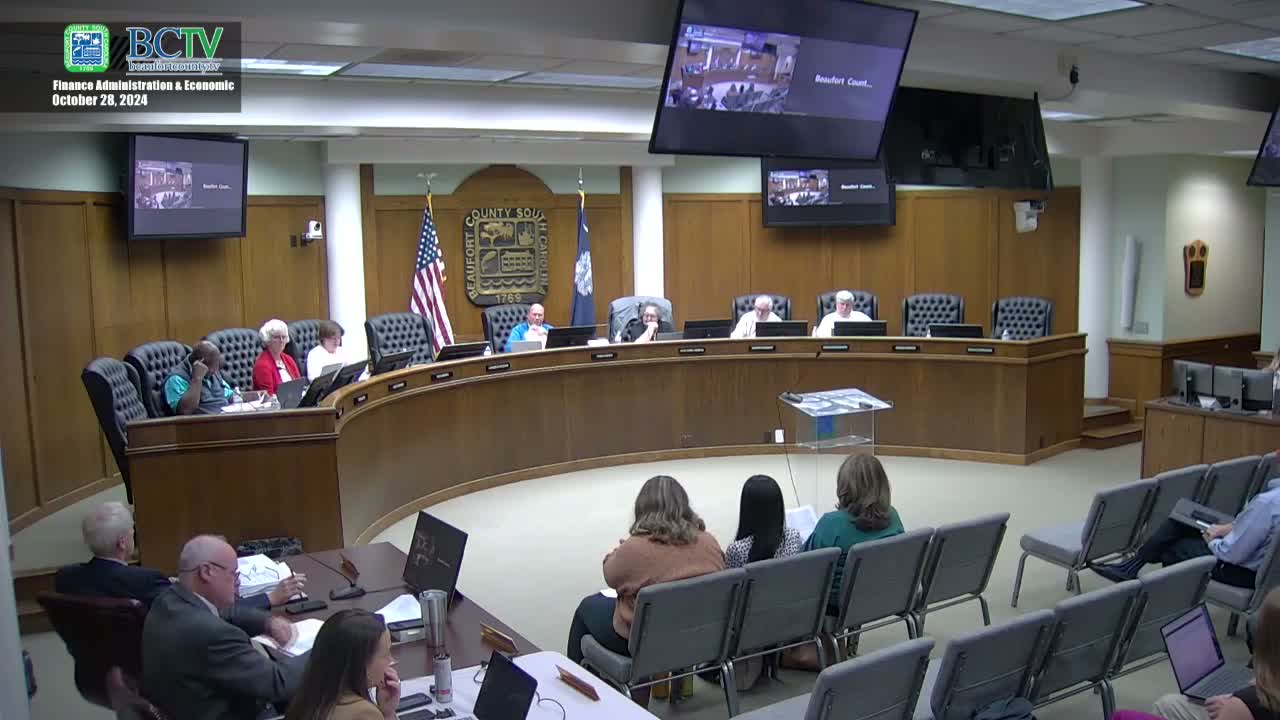
The Beaufort County Finance, Administration and Economic Development Committee on Monday voted to forward to county council a recommendation to use $262,291.34 in ARPA funds to buy license‑plate‑reading (LPR) cameras and related services for the Beaufort County Sheriff’s Office, a measure the committee approved with one recorded objection.
Captain Brian Baird of the sheriff’s office told the committee that, after demonstrations from three vendors, staff recommend a combination of Recor LPR units and a Verkada command connector to integrate camera feeds. Baird said the sheriff’s office initially identified about 65 candidate locations countywide but narrowed the project to roughly 23 cameras at about 20 sites so the county could match municipal deployments and fit available ARPA funding. He described a first‑year outlay near $230,000 and lower recurring licensing costs in year two that bring the total to the $262,291 figure on the agenda.
“The sheriff directed me to start researching ways to deal with this increase in gun violence,” Baird said, pointing to recent drive‑by shootings and several cases where ALPR footage helped other jurisdictions solve violent crimes or recover stolen vehicles.
The proposal drew a sustained discussion about civil‑liberty risks, data retention and oversight. A county attorney speaking for the sheriff’s legal team said the proposed contract limits data retention to 30 days and places the raw data with a third‑party vendor (not the sheriff’s office) to reduce some FOIA and custody concerns. The attorney said access within the sheriff’s office would be restricted, CJIS controls would apply, and an audit trail would record who searches or exports data.
Opponents pressed for broader public safeguards. A council member urged the county to convene a citizen advisory panel and to consider state legislation expected next year; another asked about ALPR error rates and AI components used by vendors. The sheriff’s office responded that operations would be investigative and event‑driven (for example, used to follow up on shootings, stolen vehicles or missing persons), that officers would corroborate any LPR “pop” before making stops, and that both Recor and Verkada systems include internal audit logging.
After debate, Chair marked the motion carried to forward the recommendation to council; the chair also recorded one objection (Councilman Bartholomew). The item will be considered by full county council on Dec. 9, with the sheriff’s office planning to finalize contracting shortly thereafter if council approves.
What it means: The county aims to expand investigative capacity across unincorporated areas by aligning sheriff deployments with municipal camera projects. Supporters said the system helps rapidly identify stolen vehicles and support shooting investigations; critics said the county should set stronger public governance and transparency guardrails before obligating ARPA funds.
Next steps: The committee’s recommendation will go to Beaufort County Council for consideration on Dec. 9. If approved, the sheriff’s office plans to execute contracts before the ARPA obligation deadline and begin installations in January.