Get Full Government Meeting Transcripts, Videos, & Alerts Forever!
Get email alerts on the Board Votes topic
No spam. Unsubscribe anytime.
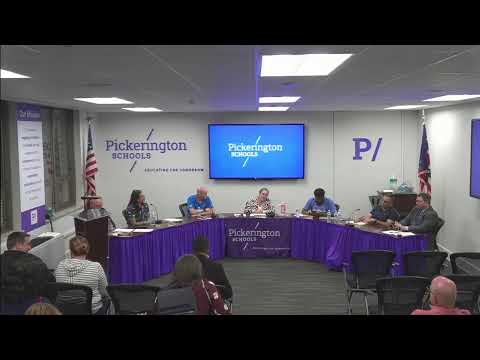
Pickerington Local board approves consent agenda, appropriations and a one-year student board member pilot
Summary
The board approved minutes, permanent appropriations, a donation, a lengthy consent agenda and a one-year student board member pilot (passed 3–2). One classified contract with a board connection was voted separately.
At its April 27 meeting the Pickerington Local School District board approved multiple routine financial and personnel items and voted to establish a one-year student board member pilot beginning in the 2026–27 school year.
Treasurer Walsh presented the treasurer's report and the board approved the April 13, 2026, meeting minutes and a revision to FY26 permanent appropriations to reflect special-education and unexpected trust-account donations. The board also accepted a donation from the Saiweta Foundation to create a scholarship in the district; all roll-call votes for these items passed.
Superintendent Charlie Smialek presented a lengthy consent agenda of personnel recommendations, certified and classified contracts, resignations and supplemental positions for 2026–27. The board approved consent items 1–4 by roll call. One classified contract that had a connection to a board member was discussed and voted on separately and was approved.
On a separate action the board approved establishing a student board member position to begin in the 2026–27 school year as a one-year pilot. The roll-call vote on that motion was 3 in favor and 2 opposed (Henson: yes; LaGrasso: yes; Holstein: no; Newman: yes; Olszewski: no). Trustees said the position will be reviewed after the pilot year and emphasized communications safeguards and policy compliance for staff-student interactions.
Several items were noted as second readings (two job descriptions) and trustees approved the Pickerington Early Learning Center Handbook for 2026–27 on first read as required. The board closed the business portion of the meeting and moved back toward executive session for the stated Ohio Revised Code purpose.
Votes recorded in the meeting transcript match the roll-call confirmations read aloud during the meeting.