Get Full Government Meeting Transcripts, Videos, & Alerts Forever!
Get email alerts on the Traffic Safety topic
No spam. Unsubscribe anytime.
Council approves three speed humps on Boerne Avenue after resident safety appeal
Summary
After residents described cut‑through traffic and hazards for children, Rosenberg City Council approved installation of three speed humps on Boerne Avenue and discussed petition and study requirements; the measure was funded at an estimated $8,700 for the three humps.
The Rosenberg City Council voted to install three speed humps on Boerne Avenue between West Street and 1st Street after residents described growing cut‑through traffic and safety risks for children.
Resident Welland Schulte, who said he and his wife have lived on Boerne since 1971, presented a neighborhood map and told the council that Boerne is the only route in the block without speed humps, pointing to school bus stops and young pedestrians as reasons for traffic calming. "A good example this afternoon — a 12‑ to 14‑year‑old walking from the bus stop, looking at his phone — that kid could have easily got hurt," Schulte said.
City staff and councilors reviewed the procedural history: a traffic study completed about two years earlier did not meet the city’s policy thresholds for speed or crash data, staff said, but council members noted 78% petition support in the earlier submission. Council discussed whether a fresh petition or a new traffic study was required and compared staff‑time costs of in‑house traffic counts with the city’s authority to revive earlier petitions at council request. Staff estimated the installation cost at about $8,700 for three humps.
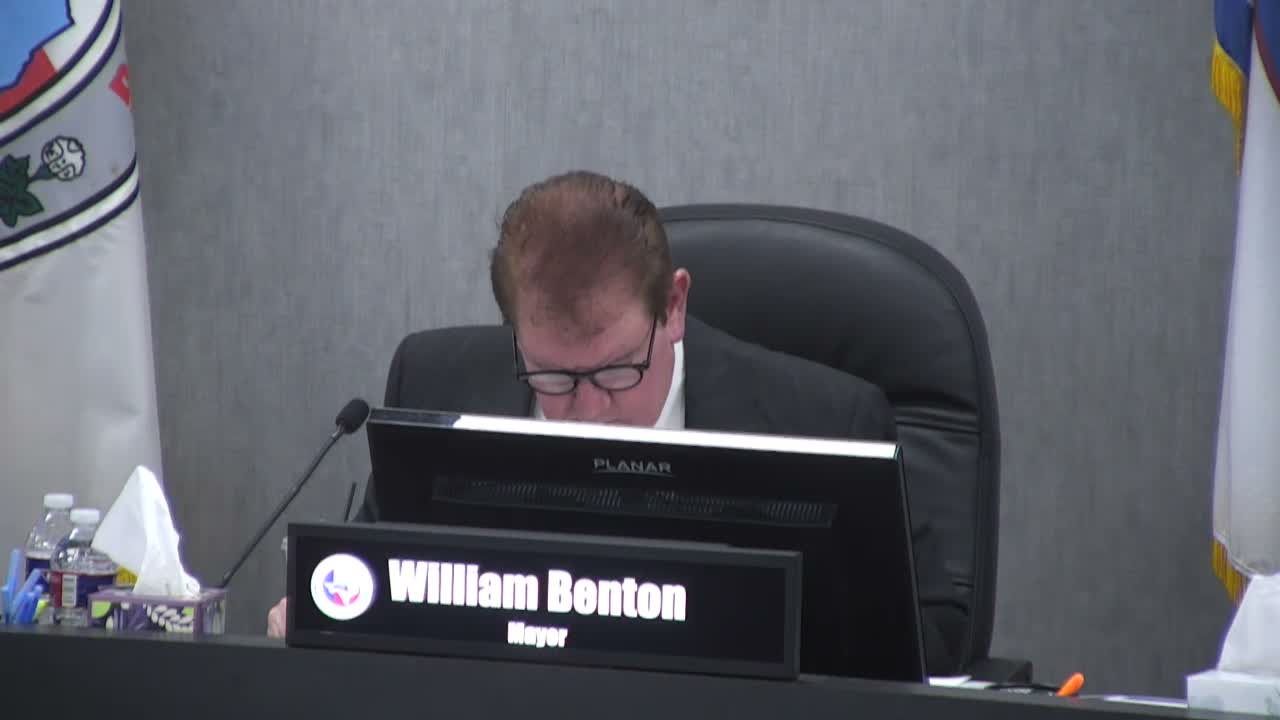
Several councilors emphasized neighborhood safety. "I've seen it and witnessed it myself — it's a drag strip," the mayor said during debate. Other members urged balancing procedural fairness for petitioning neighborhoods with the need to protect pedestrians.
After roughly 20 minutes of discussion the council moved, seconded and approved the measure. The council recorded six votes in favor and one abstention. Council directions include coordinating with staff and the contractor to schedule installation in the coming weeks.
The council will monitor the installation and may direct removal or alterations if problems arise. The council did not direct a new traffic study as a precondition to this approval.