Get AI Briefings, Transcripts & Alerts on Local & National Government Meetings — Forever.
Washington officials present final Comprehensive Climate Action Plan with 135 measures, 33 near‑term priorities
Loading...
Summary
State Commerce and Ecology staff outlined the final Comprehensive Climate Action Plan (CCAP) developed under the federal Climate Pollution Reduction Grant. The CCAP lists 135 measures across seven sectors, highlights 33 near‑term priorities, and identifies workforce, financing and data needs for implementation.
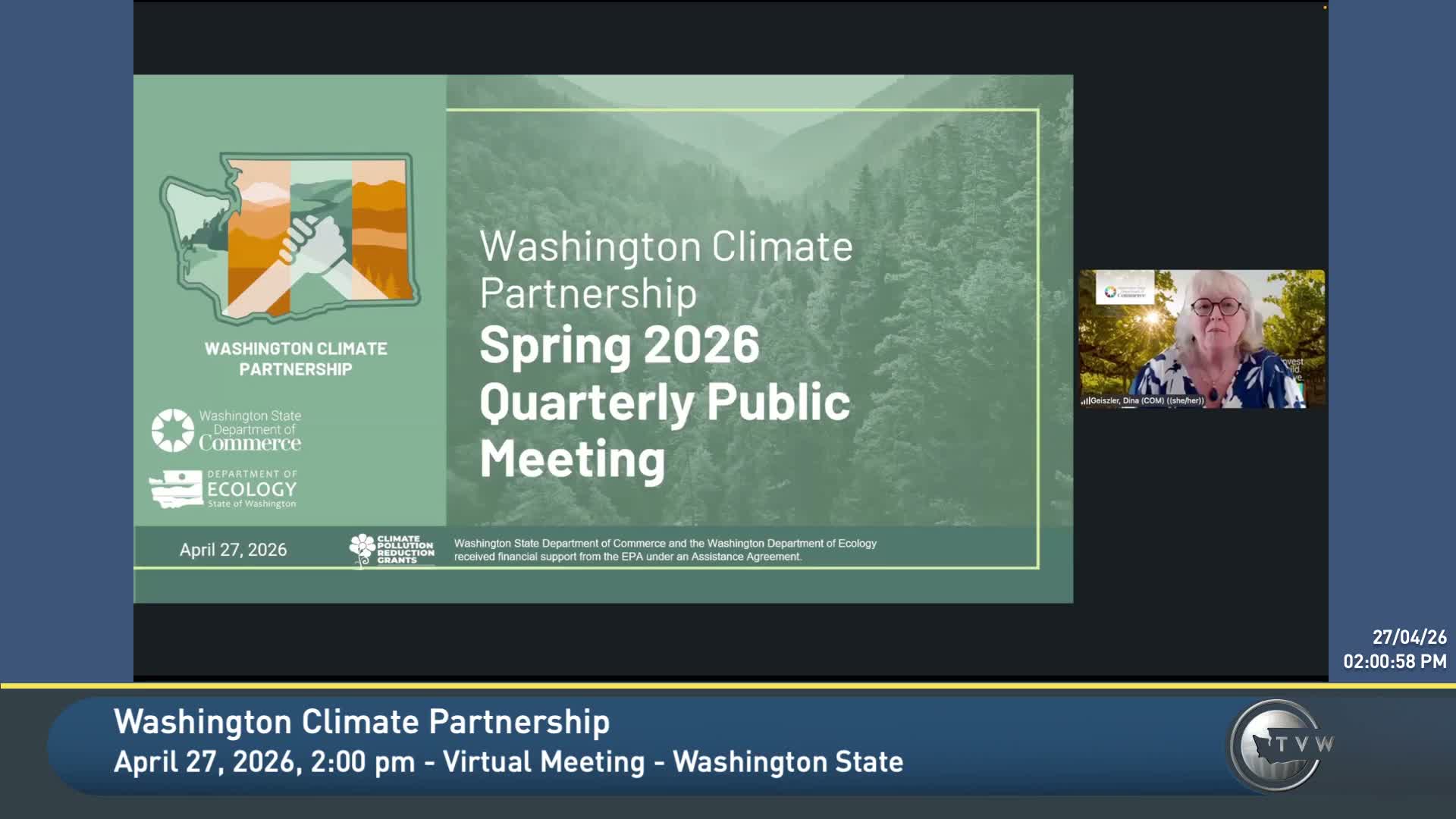
Washington state officials on the Climate Pollution Reduction Grant (CPRG) team on a public call unveiled the final Comprehensive Climate Action Plan, a planning document that compiles 135 greenhouse‑gas reduction measures across seven economic sectors and flags 33 high‑priority measures for near‑term action.
Riley Ellison, Climate Pollution Reduction Planning Lead at the Washington Department of Ecology, said the CCAP was developed over nearly two years using greenhouse‑gas modeling, stakeholder engagement and review of existing state laws. ‘‘This plan identifies multiple pathways and actions for climate action to reduce emissions and meet our statewide greenhouse gas limits,’’ Ellison said, adding that the CCAP aims to deliver community co‑benefits such as lower energy costs and improved public health.
Sarah Pagoda, federal policy and program alignment manager at the Washington State Department of Commerce, walked through seven cross‑cutting recommendations distilled from the plan. They include building out transmission and in‑state clean energy resources, expanding electrification and clean fuels where electrification is not feasible, maximizing conservation and material efficiency, advancing measurable carbon dioxide removal, using existing authority to fill regulatory gaps (for example, zero‑emission vehicle standards and aligning environmental review with climate laws), supporting local and tribal implementation, and improving planning and data systems.
Pagoda highlighted a measure example for the electric power sector—deploying demand response resources and ‘‘virtual power plants’’ to coordinate distributed energy resources such as rooftop solar, batteries and smart thermostats. She also pointed to an agriculture‑focused measure to subsidize proven soil amendments (compost, biochar, rock dust) that sequester carbon and improve soil health.
The CCAP incorporates updated modeling and scenario projections to 2050, which project household savings from cleaner vehicles and home‑energy upgrades, public‑health benefits from reduced pollution, job growth in construction and transportation, and overall economic output increases tied to a cleaner economy, Ellison said. The modeling team will present a deeper dive at the program’s next quarterly public meeting scheduled for July 27.
On process and participation, the team said the plan includes extensive public engagement—an approximately 10‑month public survey with over 600 responses, more than 30 engagement events, and a public comment period that yielded roughly 215 comments. The final CCAP includes an appendix summarizing feedback; officials acknowledged some public comments could not be posted via the agency’s regular public comment portal because multiple agencies were coordinating the effort.
Pagoda also described financing approaches the CCAP recommends. She spotlighted the Washington State Green Bank as a priority financing mechanism and noted the legislature monetized $25,000,000 for the Green Bank in the 2026 session. The plan itself does not include follow‑on implementation funding, officials said; the CPRG team intends to work with state agencies and the legislature to align funding requests with the CCAP’s priorities, and the state offers a free federal grant‑writing program to help local governments and tribes pursue external funds.
Officials emphasized the CCAP is a state planning and alignment tool rather than a regulatory edict for local governments. ‘‘We focused on state‑level actions and on how the state can support local action,’’ Ellison said, adding that measures list primary implementers so local governments can sort measures relevant to their authorities and capacities.
Next steps include continued public engagement across the state, development of a CCAP measure navigator tool to help users sort measures by sector, implementer and benefits, and a status report due at the end of the CPRG grant period (approximately July 2027). The slide deck and recording will be posted to the program’s website and a Q&A document will be distributed after the meeting.