Get Full Government Meeting Transcripts, Videos, & Alerts Forever!
Get email alerts on the Municipal Finance topic
No spam. Unsubscribe anytime.
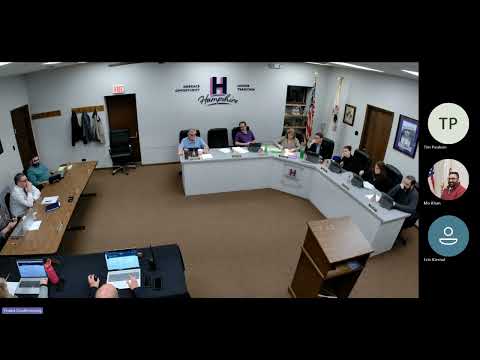
Hampshire board adopts ordinance shifting village fiscal year to calendar year
Summary
The Hampshire Village Board approved an ordinance to change its fiscal year to the calendar year with a short transition year; trustees also approved related text amendments to the municipal code to align dates and duties with Illinois statute.
The Hampshire Village Board voted unanimously to change the village’s fiscal year from its current cycle to the calendar year, adopting an ordinance the board said will create a short transition year before the new schedule begins.
Board Chair (voice labeled 'Chair') introduced the ordinance and invited staff to explain logistics. A staff member noted the first year of the change is a short year and the ordinance is effective May 1 for that transition period. Trustees pressed staff on effective dates and whether appropriation language would conform with state statute; counsel and staff said the ordinance and related municipal-code edits track the state statute and that the code section affected is 26-13.
Trustees moved and seconded the ordinance and the board approved the measure on a roll-call vote with five affirmative votes. Chair then asked for and obtained approval of text amendments to the municipal code to implement the switch, saying the amendments would ensure the municipal code reflects the new fiscal schedule.
The board did not identify a separate appropriation tied to the short year in the meeting discussion; trustees were told the changes were primarily calendar and verbiage updates that align local practice with state rules. The board said staff will include explicit vote-threshold language in future ordinance drafts when statutory definitions (for example, corporate authority vs. board majority) affect required tallies.
The ordinance takes effect as stated in the text adopted by the board; staff were directed to process the code amendments to reflect the new calendar-year schedule.