Get AI Briefings, Transcripts & Alerts on Local & National Government Meetings — Forever.
School board adopts maximum 50% phased increase to impact fees after lengthy presentation
Loading...
Summary
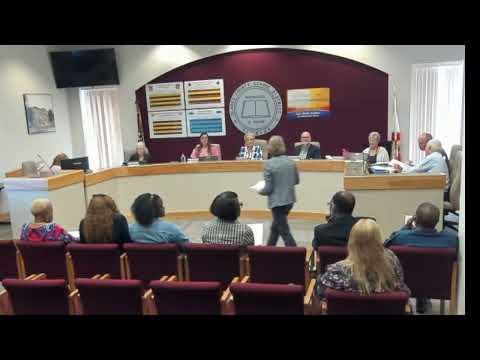
After a staff-led presentation and questions from board members, the Glades County School Board voted to adopt a phased 50% increase to the district’s school impact fee (the statutory maximum). The increase is to be implemented in increments over four years and applies only to new building permits.
The Glades County School Board voted to adopt the highest allowable increase in school impact fees, approving a phased 50% rise that the presenters said would be implemented over four years and apply only to new permits.
Board member 8 moved to approve the “potential impact fee of 50% increase” shown in Table 7 of the draft study; a second followed and the motion carried after members voiced agreement. The presenters had explained that state rules restrict increases to once every four years and cap increases at 50% when a district already has a fee in place.
Consultant presenter (speaker 6) told the board the study uses a consumption-based student-generation methodology and includes credits for ad valorem (property tax) spending already used to pay for schools. She said the district’s 2008 ordinance set a single-family fee of $4,140.60 and that a full 50% increase phased over four years would raise the single-family fee to approximately $6,210.75, with annual increments phased as required by statute.
Board members questioned how fees would be administered and spent. Presenter (speaker 6) said the county’s impact fees would be collected countywide and pooled for systemwide needs rather than held by zone; she also said the study was partially funded by a Department of Commerce grant of about $40,000 and that additional study or county cooperation may affect total program costs. A board member asked whether the district could keep the same fee without repeating the study; presenters responded that state law requires periodic review and that a new study is required to implement fees.
Several members voiced concerns about housing affordability and potential competitive dynamics with neighboring counties that have lower or suspended fees; one board member warned that high fees could push development to neighboring Blaise County. The presenters provided comparison numbers for surrounding counties, noting variation in adopted fees and in jurisdictions where fees remain in abeyance.
The board’s action sets the school fee at the maximum permissible increase and directs staff to coordinate with county officials and complete the statutory steps necessary for adoption, including ordinance language and the required 90-day window before fees take effect. The board did not vote on county-level fees for parks, EMS or transportation; presenters noted each category is adopted on its own schedule and the county makes the final adoption decisions for countywide fees.
Next steps include final ordinance drafting, coordination with the county commission, and staff follow-up on the study’s financial tables so the board can confirm the phased amounts that will appear in the ordinance.