Get Full Government Meeting Transcripts, Videos, & Alerts Forever!
Get email alerts on the Immigration Trust Act topic
No spam. Unsubscribe anytime.
St. Charles issues citywide proclamation reaffirming compliance with Illinois Trust Act, outlines outreach after immigration concerns
Summary
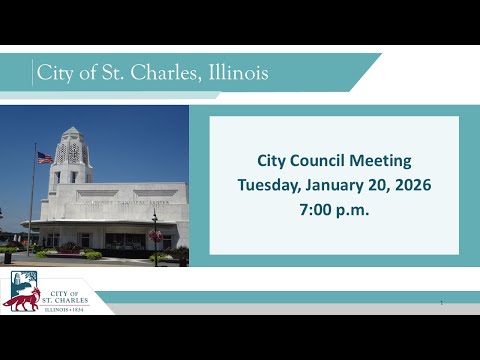
At its Jan. 20 meeting the St. Charles City Council and Mayor Clint Hall issued a proclamation reaffirming the city's compliance with the Illinois Trust Act, heard legal guidance from King County State's Attorney Jamie Mosser and Police Chief Likens about the limits of local authority in immigration enforcement, and announced outreach resources for residents.
Mayor Clint Hall and the St. Charles City Council on Jan. 20 issued a proclamation affirming that the city "fully complies with the Illinois Trust Act and all applicable state and federal laws" and pledged steps intended to reassure residents concerned about federal immigration enforcement.
The proclamation — which the mayor said would be signed by him and all 10 council members — was accompanied by presentations from Police Chief Likens and Jamie Mosser, King County State's Attorney, who both described legal limits on how local law enforcement may interact with federal immigration operations.
"Our officers do not stop, we do not question, we do not detain or arrest individuals solely to determine their immigration status," Police Chief Likens told the council, adding that the department will not engage in civil immigration enforcement and will act on federal warrants only when required by a valid judicial warrant or court order. He urged residents to continue calling 911 when they need police assistance, saying: "If you need help ... call us. That's what we're there for."
State's Attorney Jamie Mosser summarized the constitutional and statutory framework she advises local law enforcement to follow, distinguishing federal immigration authority from the state's role. Mosser said recent state legislation creating a civil remedy for certain enforcement actions (for example, arrests within 1,000 feet of courthouses or other protected locations) provides a private civil path but does not empower police to prevent federal civil immigration actions.
"If you want that house bill ... to be enforced, that cannot be enforced by the police department," Mosser said, describing the new remedy as civil in nature. Mosser also cautioned that prosecuting federal agents criminally is difficult under existing case law and said she is drafting proposed amendments to the Trust Act to give local prosecutors and law enforcement more clarity and, in limited circumstances, additional authority to protect community safety.
Mayor Hall said the proclamation was intended to find language all council members could support and to address concerns raised in recent public comment. He described practical steps the city is taking to reach residents, including a bilingual website, business cards summarizing the Trust Act and local resources, social workers available to help families, targeted outreach by school resource officers, and partnerships with faith and nonprofit groups.
"No person will be denied police, fire or emergency medical services based on their immigration status," the proclamation states, and the mayor said the cards and website will explain what the Trust Act does and does not do.
Public comment at the meeting reflected a range of views. Resident Paul McMahon asked whether police would protect a homeowner's rights if federal agents attempted to enter without a warrant; Mayor Hall directed the question to Chief Likens, who reiterated the department's role and encouraged callers to contact police in such circumstances. Kathy Brenz praised stronger actions taken by neighboring municipalities — citing an Evanston resolution that identified city properties that should not be used as staging areas for civil immigration enforcement — and urged St. Charles to consider signage and other steps private owners could use to limit use of property for enforcement operations. Patty Gowrie, a longtime resident and retired nurse, urged visible signals of welcome to immigrant neighbors after describing an emotional encounter at a local preserve.
Mayor Hall and the council acknowledged the limits of municipal authority under the supremacy clause but emphasized outreach, education, and supportive services. The mayor said the city will continue to refine training for police on the Trust Act and related case law and that he and council members are willing to meet with residents and community groups to answer questions.
The proclamation is a policy statement and not an ordinance; the mayor and state attorney repeatedly distinguished symbolic or local ordinances from enforceable legal steps. Mosser and the mayor both suggested legislative change at the state level if more local authority is desired.
Next steps announced by the city include maintaining and expanding the bilingual website with resources, distributing explanatory business cards in English and Spanish, continued training of police staff on the Trust Act and any subsequent amendments, and ongoing meetings with community organizations to strengthen trust and communication.