Get Full Government Meeting Transcripts, Videos, & Alerts Forever!
Get email alerts on the Downtown Planning topic
No spam. Unsubscribe anytime.
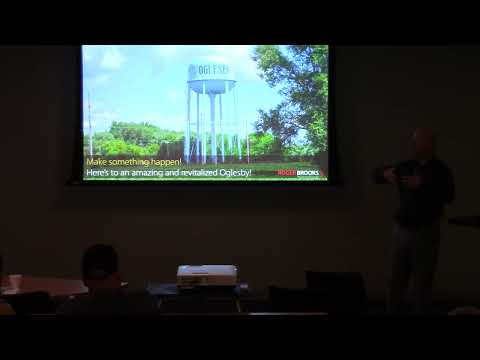
Presenter recommends 13-member downtown planning team, two-way streets and angled parking
Summary
A presenter recommended forming a compact downtown planning team capped at 13 people to prioritize plaza-area projects, urged outreach to property owners about restaurant and outdoor-space opportunities, and advised keeping Walnut Street two-way while using angled parking where street width allows; the speaker cited transportation grants and referenced a $300,000 plaza grant.
A presenter at the meeting urged the town to form a small, focused downtown planning team — “it should never be more than 13 people,” the presenter said — and to prioritize early involvement from elected officials, college representatives, downtown business and property owners, tourism staff and the city clerk or administrator.
The presenter said a compact group will avoid “meetings for the sake of meetings” and move quickly to turn recommendations into projects. He recommended that the team examine Roger’s earlier suggestions, conduct site visits and consider having staff or a consultant (the presenter specifically asked if Robert could return for “deep dives”) to study how proposed actions would work on the ground.
On parking and traffic, a questioner asked whether Walnut Street should retain parallel parking and two-way traffic or be converted to angled parking — a change that could require acquiring alley space or property. The presenter recommended keeping Walnut Street two-way to preserve access to parks and maintain two-way access both into and out of downtown. He said angled (angle-in) parking “will increase retail sales” where the street has sufficient width but warned many downtowns lack that width. The presenter also called parallel parking unpopular and noted that a modest amount of congestion can benefit downtown retail because slower traffic tends to increase spending.
The presenter stressed outreach to property owners, saying plaza-front businesses and properties should be “right at the table” because they have “a tremendous opportunity” to host restaurants and outdoor seating and to benefit nearby blocks. He emphasized that improvements around the plaza would help surrounding blocks and urged the team to consider a geographic scope that could stretch from Woodland to Spring and potentially toward Washington School.
On costs and funding, the presenter described the plan as affordable and pointed to external funding sources: “There’s transportation grants,” he said, and added, “we just got $300,000 grant to Double Plaza,” using that award as an example of available grant support. He also mentioned wayfinding and signage as a likely expense, saying wayfinding “might cost ‘25’” in the transcript (the speaker’s figure was unclear), and recommended pursuing grants to offset signage and related costs.
A resident attending the meeting noted a promotional opportunity: Illinois television spots already feature Matheson State Park alongside other destinations, and the resident urged the town to better link downtown marketing to that existing exposure. The presenter closed by comparing the town to visitor-driven downtowns such as Jackson Hole and encouraged residents to seize the opportunity created by proximity to nearby state parks.
The meeting ended with the presenter thanking attendees and asking for any final questions; no formal motions or votes were recorded in the transcript.