Get Full Government Meeting Transcripts, Videos, & Alerts Forever!
Get email alerts on the Transgender Visibility topic
No spam. Unsubscribe anytime.
Podcast panel urges everyday visibility and safety for transgender and non‑binary Westford residents
Summary
A Westford DEI Committee podcast episode for Transgender Day of Visibility urged everyday acceptance — using names and pronouns, sharing welcoming businesses, and expanding supports — and highlighted crisis‑line and PFLAG resources for youth and parents.
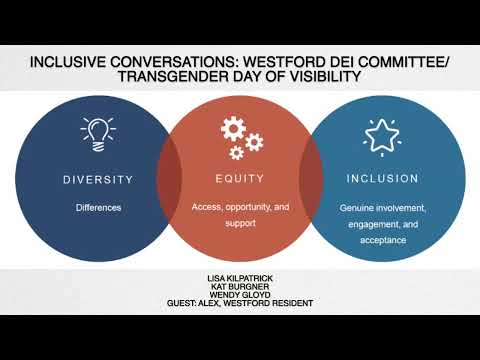
Lisa Kilpatrick of the Westford Diversity, Equity and Inclusion Committee and fellow committee members Kat Bergner and Wendy Gloyd hosted a podcast conversation with Alex, a non‑binary Westford resident, about Transgender Day of Visibility and what practical visibility means in daily life.
Alex said visibility is ‘‘when people I interact with…hear and accept me the same way as someone who identifies as cis would be heard and accepted,’’ and urged simple acts such as using someone’s name and pronouns without interrogation. Alex described accepting, patient corrections as distinct from intentional misgendering and urged that speakers judge intent when mistakes occur.
Wendy Gloyd, vice chair of the Commission on Disability, urged the creation and sharing of local lists of businesses and services—retail shops, salons and other venues—that youth and adults have found welcoming. She described her year volunteering with the Trevor Project and said short crisis calls can ‘‘help you get through this day,’’ stressing that immediate, affirming support can be lifesaving for youth in crisis.
Lisa Kilpatrick, speaking as a parent, described relief when strangers treat gender‑expansive children as just another customer or student and said parents can turn small errors into teaching moments. The panel also discussed how daily choices—such as which bathroom to use—become sites of stress; panelists said some youth avoid drinking or using facilities to reduce exposure to harassment.
The conversation stressed that community connection and celebration matter. Alex described community as what ‘‘will lift someone up’’ and encouraged focusing on supportive connections rather than negativity online. Kat Bergner, who introduced Alex, framed the episode around respect, asking listeners to see people ‘‘for who they are’’ and to support relationships rather than fixating on a single identity trait.
Wendy closed by noting ongoing local supports: weekly queer‑space support groups meet Fridays at 7:00 p.m. at First Parish Church and are open to all ages. The panel encouraged listeners to seek and share vetted resources, listen to loved ones, and check sources when facing online misinformation.
The podcast aimed to mark Transgender Day of Visibility by centering everyday practices—names, pronouns, welcoming spaces and accessible crisis support—that community members can adopt to improve safety and belonging.