Get AI Briefings, Transcripts & Alerts on Local & National Government Meetings — Forever.
Minnesota House passes bill making child grooming a felony, tightens field-trip rules
Loading...
Summary
The Minnesota House passed House File 3489 on April 23, 2026, creating a felony for child grooming, tightening field-trip supervision requirements, expanding mandatory-reporting and educator-license penalties, and assigning an estimated $1.4 million in ongoing costs to the Minnesota Department of Education; vote: 133–0.
The Minnesota House on April 23, 2026, passed House File 3489, a measure that creates a felony offense for child grooming, tightens supervision rules for school field trips and strengthens mandatory-reporting and educator-license penalties, the chamber announced after a 133–0 roll call vote.
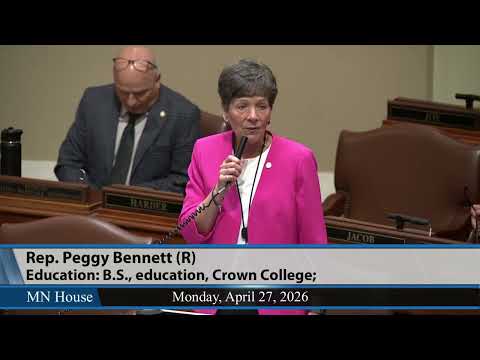
Representative Bennett, the bill’s author, told the House the proposal grew out of conversations with survivors and law-enforcement officials and from her own past experience. She said the bill bars most situations in which a staff person is isolated alone with a student on a field trip, adds grooming as a trigger for educator-license revocation or suspension, expands mandatory-reporting requirements and requires enhanced mandatory-reporter training.
Why it matters: supporters said the changes aim to prevent prolonged manipulation of students that can precede or accompany sexual abuse and to close gaps that let some educators move between districts without scrutiny. The Minnesota Department of Education’s fiscal note estimates the bill would cost about $1.4 million per year, largely to add investigative staff and to handle an anticipated increase in mandatory-reporter calls; the bill would also allow MDE to extend the look-back period for investigations beyond the current three years.
Representative Bennett read statements attributed to survivor Hannah Lepresto and Detective Chad Clawson of the Eagan Police Department. Quoting Lepresto, Bennett said: “Grooming is not just a precursor to abuse. It is an abuse all on its own.” Quoting Clawson, she said the detective described grooming as “the deliberate process of building a false sense of trust with a child to make a future [abuse] easier.” Bennett also delivered a direct floor admonition aimed at predators: “We’re coming after you. We’re watching. Keep away from our kids.”
Several members who spoke urged bipartisan support. Representative Bakeberg, Representative Jordan, Representative Altendorf, Representative Ryer, Representative Cree Shaw and Representative Knudson each thanked the survivor and investigator for their work and underscored the bill’s field-trip safeguards, mandatory-reporting enhancements and interagency communication provisions. Representative Ryer said the statute’s expanded investigative window was a key improvement for survivors who disclose abuse after several years.
Vote and next steps: the clerk recorded 133 ayes and 0 nays; the bill was declared passed and its title agreed to. Following the vote the House recessed. The transcript does not record action by the Senate; further legislative steps (such as concurrence, amendment, or enrollment) are not specified in the floor record.
Fiscal and implementation details: the bill’s fiscal note projects roughly $1.4 million in ongoing state costs, and MDE estimates the need for roughly 5 additional positions (the author referenced 7.5 staff in committee materials and MDE staffing analyses), plus possible additional correctional costs tied to the new felony. The transcript does not specify funding sources or an effective date.
The House record shows broad floor support and no recorded floor opposition during the third reading and roll call.