Get Full Government Meeting Transcripts, Videos, & Alerts Forever!
Get email alerts on the Animal Services topic
No spam. Unsubscribe anytime.
San Antonio animal services reports higher response rates as advocates press no-kill goal
Summary
Animal Care Services told the Public Safety Committee it has boosted response rates, added staff and opened two spay/neuter clinics; an advocate urged the city to adopt a formal no-kill definition and expand foster and rescue partnerships.
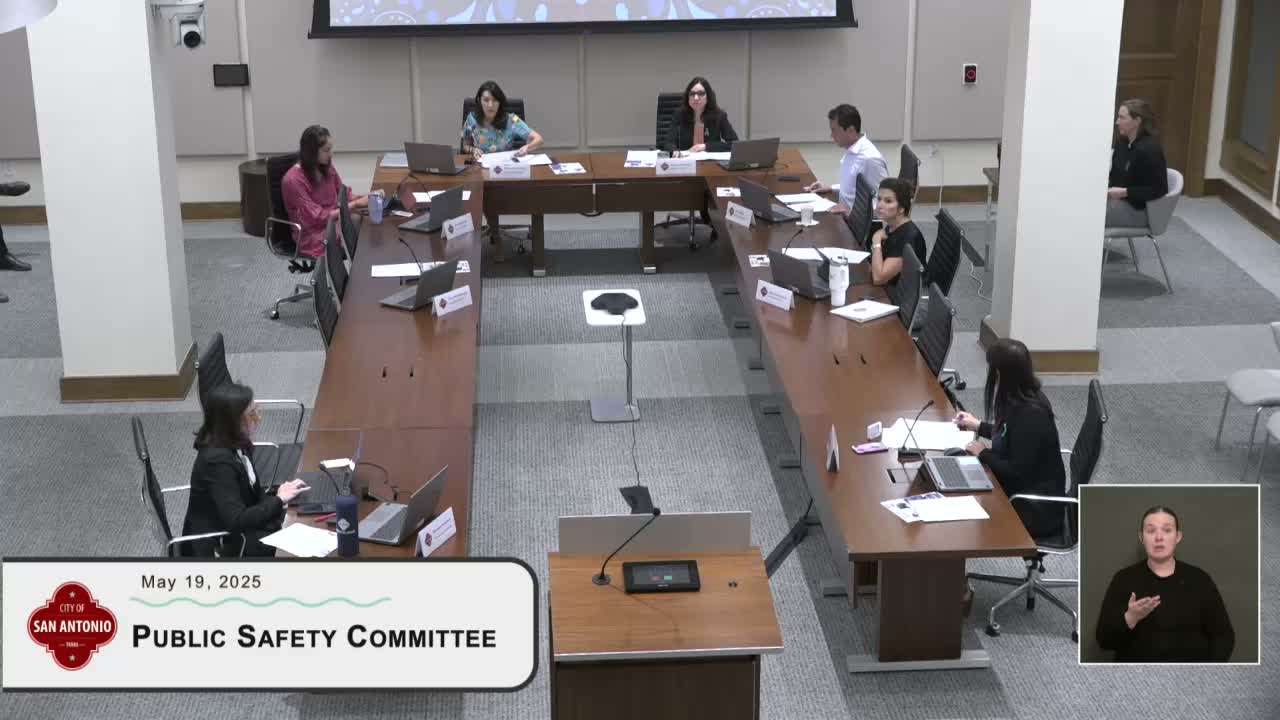
San Antonio's Animal Care Services (ACS) told the Public Safety Committee on May 19 that the department's strategic plan and recent staffing increases have driven measurable improvements in response and placement outcomes, while local advocates urged the city to adopt a formal "no-kill" goal.
ACS director John Gary said the department receives roughly 90,000 calls a year, about 55,000 of which are classified as critical. "Our response rate is about 82% and in April we had an 84.5% critical call response rate," he said, noting ACS added eight positions in FY24 and 14 positions in FY25 to improve first-response coverage. Gary described two spay/neuter clinics opening this month and a department goal to increase spay/neuter surgeries to 41,000 this year.
The presentation included a range of operational metrics: ACS reported maintaining an 87% live-release rate despite an increase in intakes, growth in foster placements and higher transfer volumes to partner rescues. Gary said the department has strengthened enforcement and administrative tools, including Chapter 5 updates intended to hold repeat offenders more accountable.
During public comment earlier in the meeting, John Bachman of No Kill San Antonio urged the city to adopt a clear no-kill definition and increase personnel and capacity. "If we reach that goal, then our total live release will probably be around 95%," Bachman said, arguing that expanded staffing, adoption events and rescue partnerships are necessary to meet that target.
Council members thanked ACS for the progress and pressed for more detail on outcomes and partnerships. One council member asked what metrics ACS will use to judge whether increased enforcement is reducing irresponsible pet ownership; Gary said the department and municipal courts review citation data monthly and that evaluating impact is an ongoing process. Council members also urged expanded partnerships with foster organizations, targeted education in high-call-volume schools and incentives for employees to foster animals.
The committee did not take a formal vote on policy changes; council members asked ACS staff to return with additional data on response times, citation outcomes and foster program growth as the department implements its strategic plan.