Get AI Briefings, Transcripts & Alerts on Local & National Government Meetings — Forever.
Committee debates $100 million business relief for Operation Metro Surge; two roll-call amendments tally 14–12 but do not advance
Loading...
Summary
House File 3732 — the workforce, labor and economic development budget bill — drew extended debate over an A6 amendment proposing $100 million in grants to businesses harmed during Operation Metro Surge. Two roll‑call amendments (A6 and A8) recorded 14–12 tallies; committee leadership reported both did not advance under a prior shared agreement. The bill was referred to the general register as amended.
House File 3732, the workforce, labor and economic development budget bill, was the focus of extended committee debate April 27 as lawmakers argued over targeted relief for businesses the sponsors said were harmed during "Operation Metro Surge." Chair Pinto described the bill and its limited new costs before members discussed several amendments.
Representative Pinto moved an A6 amendment that would create a business‑relief program asking for $100 million to be divided between the Minneapolis Foundation and the Saint Paul Foundation with required subgranting to the Minnesota Initiative Foundations, to help businesses that lost revenue during enforcement activity. "These resources are critically and vitally important," the amendment sponsor said, urging members to accept it.
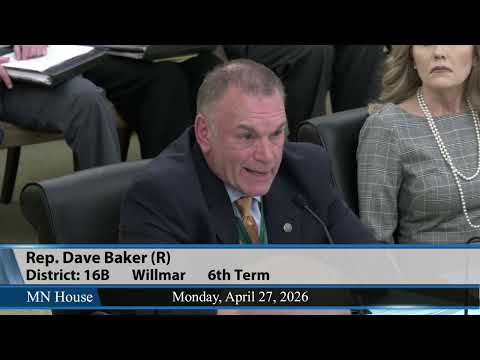
Opponents, including Chair Baker, pointed to the 2023 Promise Act, which Baker said authorized $100 million and has about $70 million that remains unspent. "We are not good at giving out money," Baker said, urging caution and further work on a plan before new grant spending.
Supporters pressed for a rapid response. Representative Gomez said some businesses reported severe declines — "some businesses said that they saw a 90% decrease in their revenue" — and called the situation an urgent economic harm that merited legislative action.
Representative Warren requested a roll call on A6. The clerk recorded 14 ayes and 12 nays. The chair announced the count but stated that, "based on our shared agreement, the motion does not pass," and the amendment did not advance under committee procedure despite the numerical tally.
Later in the HF3732 debate Representative Kaye moved A8, a federal employee personal‑loan guarantee program designed to provide zero‑interest paycheck advances to federal employees affected by a lapse in federal pay (sponsors cited TSA employees). Members questioned whether the committee could authorize an open appropriation without a specific fiscal number and whether administration details had been vetted. A roll call again produced a 14–12 tally but, per the chair, the motion failed under the committee's shared agreement.
Committee members also discussed statutory cleanups in the bill: Representative Noor asked about repeal of several programs listed in the bill (including past microenterprise and green‑enterprise assistance programs). Devin Baldry, government relations director for DEED, said many items are statutory cleanups for programs not funded in many years and that some functions had been absorbed into other DEED initiatives.
Chair Pinto renewed his motion to refer House File 3732 as amended to be recommended for placement on the general register. The committee voice‑voted to refer the bill.
What happens next: House File 3732 was referred to the general register for further consideration by the full House.