Get Full Government Meeting Transcripts, Videos, & Alerts Forever!
Get email alerts on the Broadband Notice topic
No spam. Unsubscribe anytime.
Louisiana committee advances broadband notice bill after debate with providers
Summary
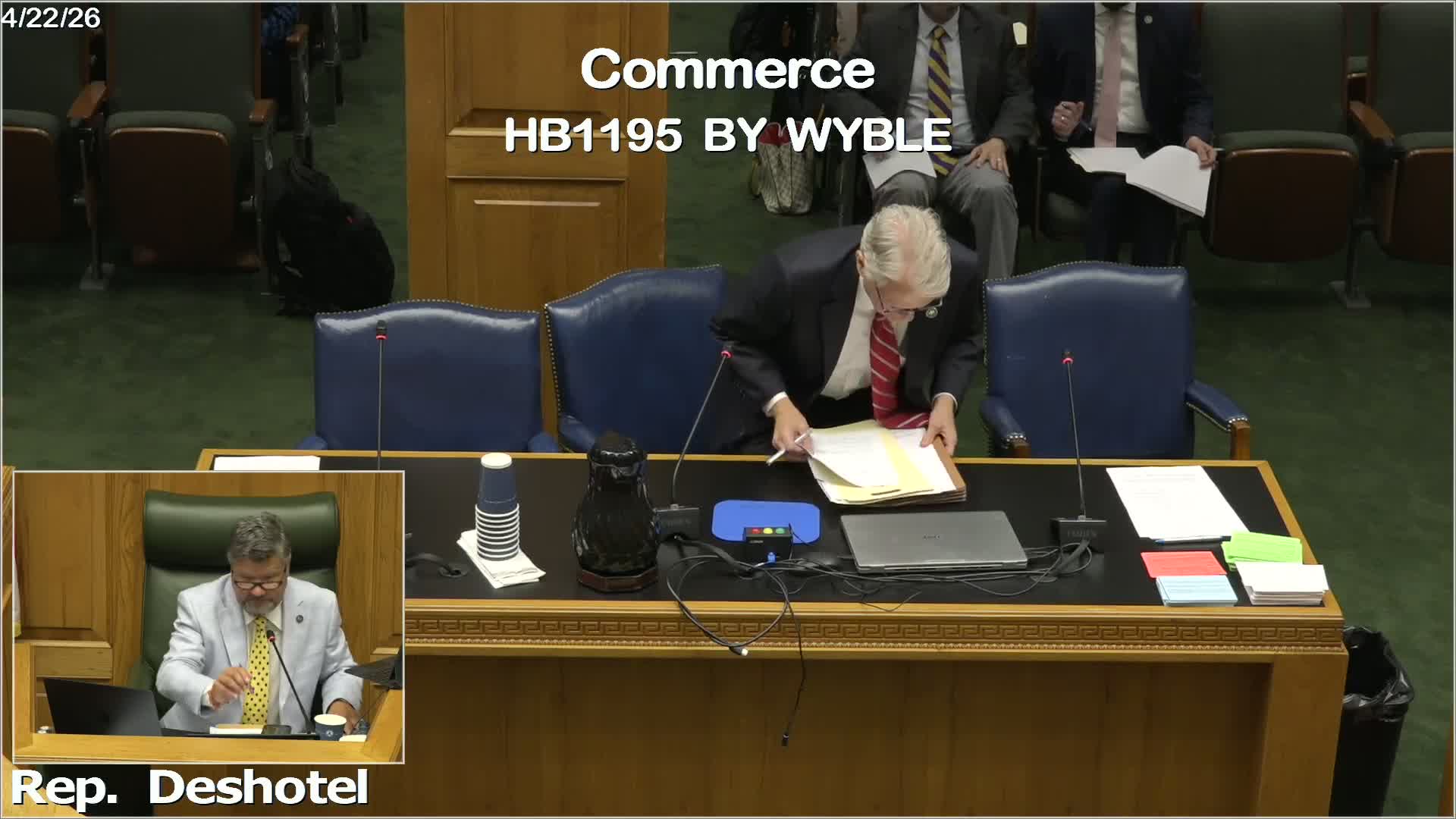
The House Commerce Committee on April 22 advanced HB 7-98, which would require clearer pricing and earlier notice for broadband and cable customers. Supporters said it promotes transparency; Charter and other providers warned the measure duplicates federal rules and could raise costs. The bill passed the committee as amended.
Representative Mike Johnson introduced House Bill 7-98, the Broadband and Cable Price Notice Act, saying the measure requires simple, clear written disclosures about monthly price, fees and surcharges, contract terms, early-termination charges and any data limits, and — crucially — separate, conspicuous notice before price increases take effect. "It's about telling the truth in billing," Johnson said, arguing the bill simply ensures customers "are given an opportunity to remove that service if your budget doesn't allow it."
The committee adopted amendment set 3,533, which lawmakers said narrows and clarifies definitions, makes several technical fixes and provides that a provider complying with applicable federal disclosure rules is deemed in compliance with the state notice requirements. Johnson said the changes were intended to avoid conflict with federal law while preserving the bill's consumer-protection aim.
Brett Gallagher (committee intro) and Brent Dollaher, speaking for Charter Communications, testified in opposition. Dollaher said Charter already provides at least 30 days' written notice of rate changes by the customer's preferred method and that the bill, as drafted, would impose a duplicative separate-notice requirement that "would increase costs and ultimately result in the opposite of the intention of the bill because it would increase the prices for consumers through burdensome administrative costs." He urged the committee to oppose HB 7-98.
Members pressed both sides on implementation details: whether tax and government-imposed fees must be included in the notice, how the separate notice would reach customers who receive bills electronically or on autopay, and whether a separate mailing or email would be treated as junk mail by customers. Representative Jordan noted federal preemption concerns and asked who the bill would actually reach; Johnson said he was open to tightening language. Representative Hilferty and others suggested placing a clear, conspicuous notice on the billing statement as a less burdensome alternative to a separate mailing.
Johnson told the committee he was willing to accept amendments that would put the notice on the bill or otherwise ensure customers receive a clear alert; he said the aim was to prevent surprise increases and to give customers a workable cancellation option. After discussion and taking additional stakeholder input, Chairman Desautels moved that HB 7-98 be reported favorable as amended; there were no objections and the bill was reported by voice vote.
Next steps: HB 7-98 moves to the House floor with the committee amendments; sponsors and providers indicated they will continue negotiations on implementation details before floor action.