Get Full Government Meeting Transcripts, Videos, & Alerts Forever!
Get email alerts on the Harm Reduction topic
No spam. Unsubscribe anytime.
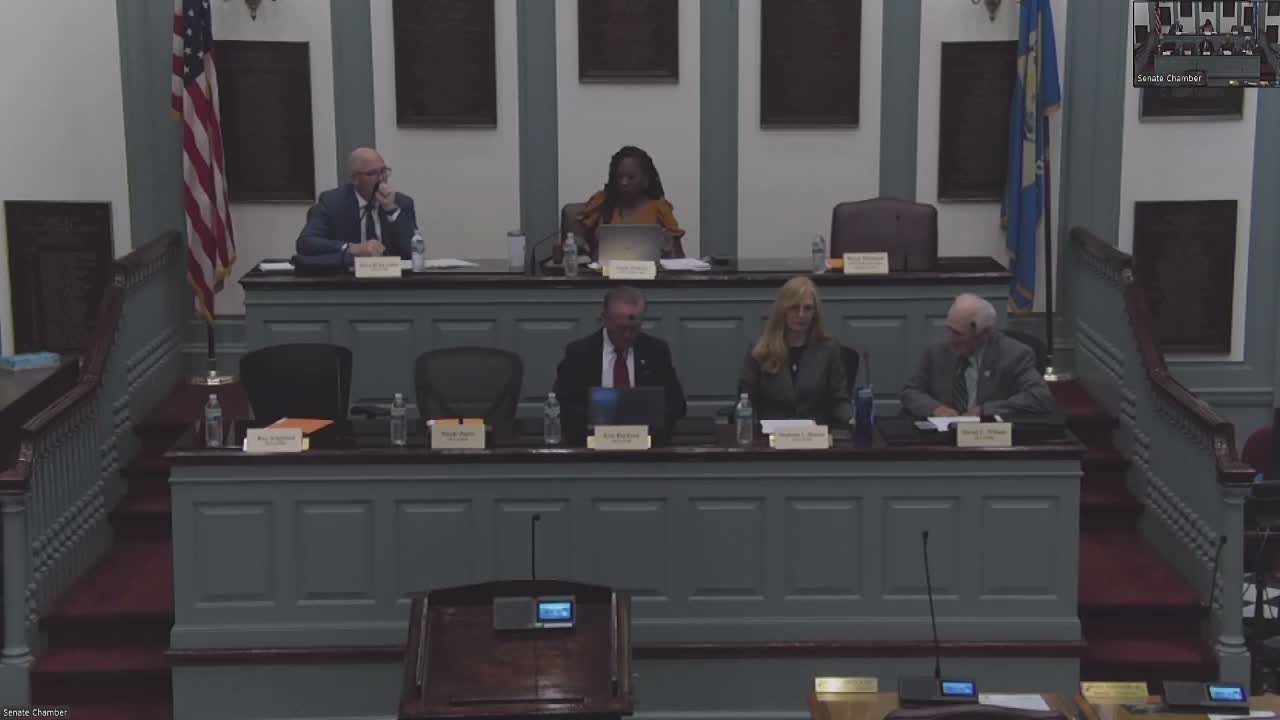
Senate committee hears testimony on SB 249 to create statewide harm‑reduction licensing and decriminalize paraphernalia
Summary
The Senate Health and Social Services Committee heard hours of testimony on SB 249, which would designate DSAM to license harm‑reduction programs, require services from sterile supplies to overdose reversal medication, and remove criminal penalties for personal paraphernalia possession; advocates cited program outcomes while at least one senator urged a treatment‑first approach.
Chair Pinkney opened the hearing on Senate Bill 2 49, saying the bill would "modernize Delaware's approach to substance use harm reduction" by designating the Division of Services for Addiction and Mental (DSAM) as the licensing and regulatory authority for harm‑reduction programs and creating statewide standards for fixed sites, mobile units and peer‑delivered services.
Nut graf: The legislation would require approved programs to provide sterile supplies, drug‑checking equipment, opioid‑overdose reversal medication, infectious‑disease screening and connections to treatment, housing and benefits; it would also strike criminal penalties for personal possession of drug paraphernalia while preserving felony penalties for trafficking and manufacturing.
Sponsor remarks and committee exchange focused on evidence and outcomes. Chair Pinkney said SB 2 49 "builds on more than two decades of work by this body" and aims to "ensure accountability, consistency and evidence‑based standards." Senator Buxton responded that she opposed the bill as written, arguing in emotional remarks that the policy "is ineffective, ineffective actions on the street" and urging greater investment in treatment and, at times, involuntary commitment.
Several providers and advocates told the committee the bill would save lives and increase access. Holly Rubinsky, a program manager at Brandywine Counseling and Community Services, said the statewide framework "supports comprehensive harm reduction and protects the providers and staff doing this critical work," and told members that "in 2025, Delaware reduced overdose deaths by 36 percent." Leslie Paladino, director of overdose prevention and outreach and a person in long‑term recovery, said criminalizing paraphernalia makes people "hide and use alone," reducing chances they will carry Narcan or seek sterile supplies: "When people use alone, they die alone."
Representatives of hospitals and legal advocates also spoke in support. Carling Ryan of the Delaware Healthcare Association said the bill advances health equity, and John Reynolds of the ACLU of Delaware urged the committee to "release this bill from committee and vote yes when it comes to the Senate floor," framing the bill as a public‑health approach that avoids punitive responses.
Committee members asked questions about program oversight and criminal enforcement. The sponsor emphasized that the bill does not weaken enforcement against trafficking or manufacturing and that law enforcement authority to seize paraphernalia used in trafficking prosecutions would remain.
The hearing included extensive public in‑person and virtual testimony and concluded without a recorded committee vote on the measure. The committee moved on to other bills after receiving testimony and public comment.
Ending: The bill remains in committee for further consideration; no formal committee action to advance or reject SB 2 49 was recorded during this meeting.