Get Full Government Meeting Transcripts, Videos, & Alerts Forever!
Get email alerts on the Omni Hotel Tif topic
No spam. Unsubscribe anytime.
JLCB defers vote on 45‑year tax dedication for proposed Omni headquarters hotel in New Orleans
Summary
The Joint Legislative Committee on the Budget deferred action on a request to dedicate state sales‑tax increments and approve a tax‑increment financing package for a proposed 1,000‑room Omni headquarters hotel after members raised questions about a 45‑year term and the use of a 1% convention‑center tax that would be rebated to the developer.
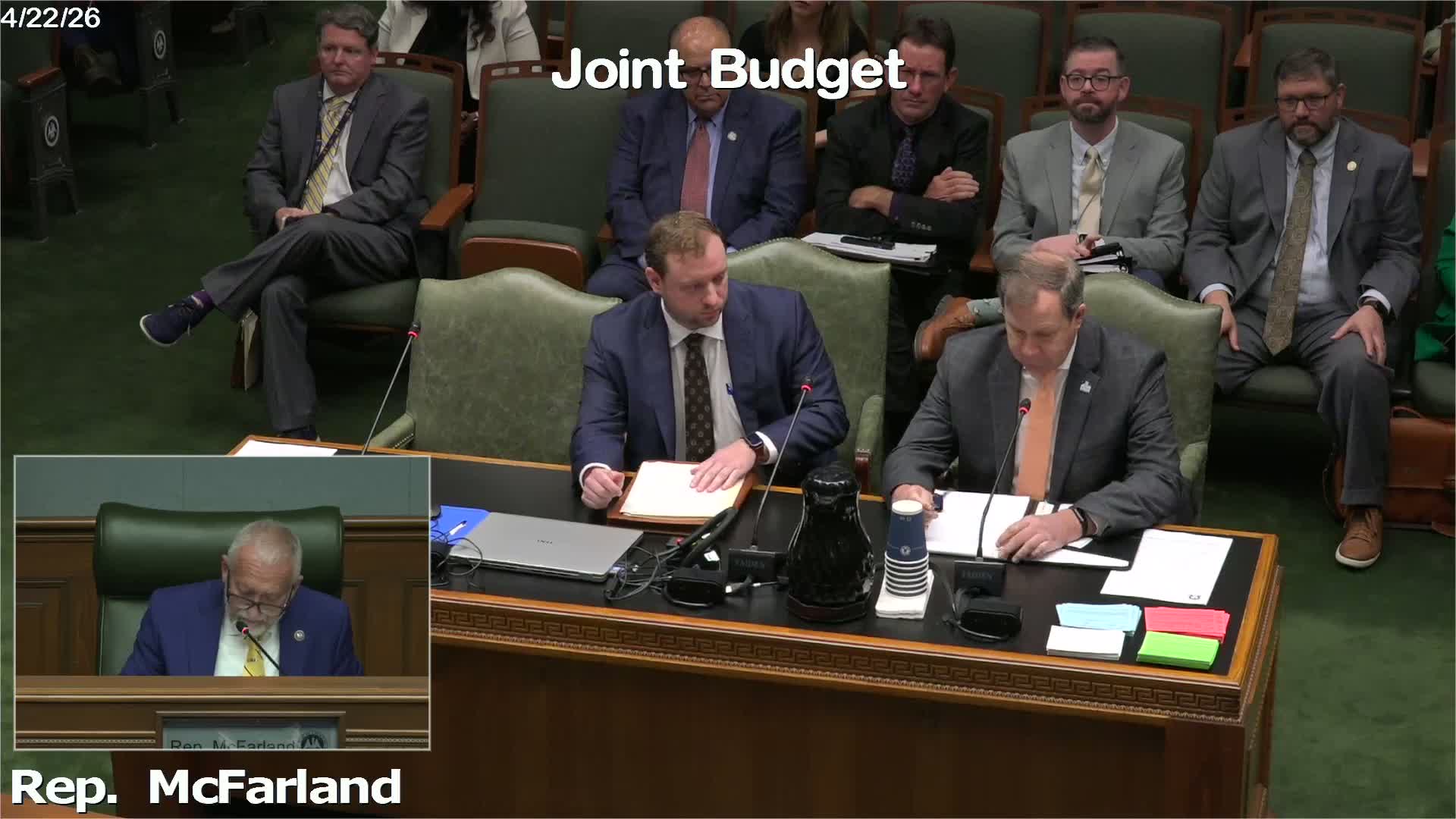
The Joint Legislative Committee on the Budget on Thursday heard a detailed presentation on a proposed 1,000‑room Omni headquarters hotel adjacent to the Ernest N. Morial Convention Center and then deferred a vote after sustained questions about the length and structure of the tax incentives.
Jim Cook, CEO and president of the Ernest N. Morial Convention Center Exhibition Hall Authority, said Omni Hotels and Resorts will commit a minimum of $550,000,000 in development costs and that the authority will contribute land and about $80,000,000 in direct investment. Cook said the project requires state support and presented a package that would dedicate portions of state and local sales and occupancy taxes to the project.
Bridal Black, counsel to the exhibition hall authority, said local incentives would include at least the convention center's 3% hotel occupancy tax and the subdistrict's 2% sales tax and 2% hotel occupancy tax. The state request presented to the committee would dedicate the state's available sales‑tax increments to the project, including a 4% non‑room sales tax category and what the presenters described as the state's 1% general fund hotel tax, starting when the hotel opens (presenters projected a 2030 opening, possibly 2029 under optimistic conditions).
Members focused their questioning on how the dedicated taxes would be collected and remitted, whether construction taxes would be excluded, how much of the city's existing hotel business the new rooms might displace, and most pointedly the proposed 45‑year duration of the TIF. Senator Cloud asked whether the state portion and local portions would be retained or remitted; counsel said the Louisiana Department of Revenue will collect taxes and Treasury would direct rebated amounts to the authority and the economic development district, but the incentives would apply only to the Omni once it opens.
Cook said consultants estimate the hotel could drive an additional 20 to 27 events a year, which would boost demand for area hotels, restaurants and retail. He also said the long projection horizon makes precise tax‑revenue modeling difficult but referenced a report placing the dedicated tax value "in the neighborhood of a little over $500,000,000 over the 45 years." Representatives and senators questioned whether the projected benefit would outweigh a very long‑term diversion of public revenue.
President Henry repeatedly pressed presenters on the 1% convention‑center tax that the authority would receive and then would use to make payments to Omni, calling the arrangement a concern and asking members to have more private conversations before a vote. "The 1% going to the convention center that comes to us and asks us for money every single year that they're going to get for 45 years — then continue to ask us for money — is a question we're going to have to sort out," Henry said, urging deferral.
After extended discussion, the chair deferred the item to the committee's next month meeting, asking the presenters to provide additional modeling and clearer explanation of the 1% use and the long term revenue implications. No formal dedication or vote on the TIF was taken at this meeting.
What happens next: Committee members will receive additional fiscal modeling and have another opportunity to question the authority and the developer when the item returns to the calendar next month.