Get Full Government Meeting Transcripts, Videos, & Alerts Forever!
Get email alerts on the Parental Rights topic
No spam. Unsubscribe anytime.
Parental medical‑decision bill spurs emotional testimony and warnings from medical groups; committee defers action
Summary
Representative Amadee's HB 948, meant to codify parental authority over non‑emergency medical decisions for minors, drew strong support from families and conservative groups and concerted opposition from pediatricians, hospitals, and forensic nurses who warned of conflicts with mandatory reporting and risks to child safety; the committee voluntarily deferred the bill.
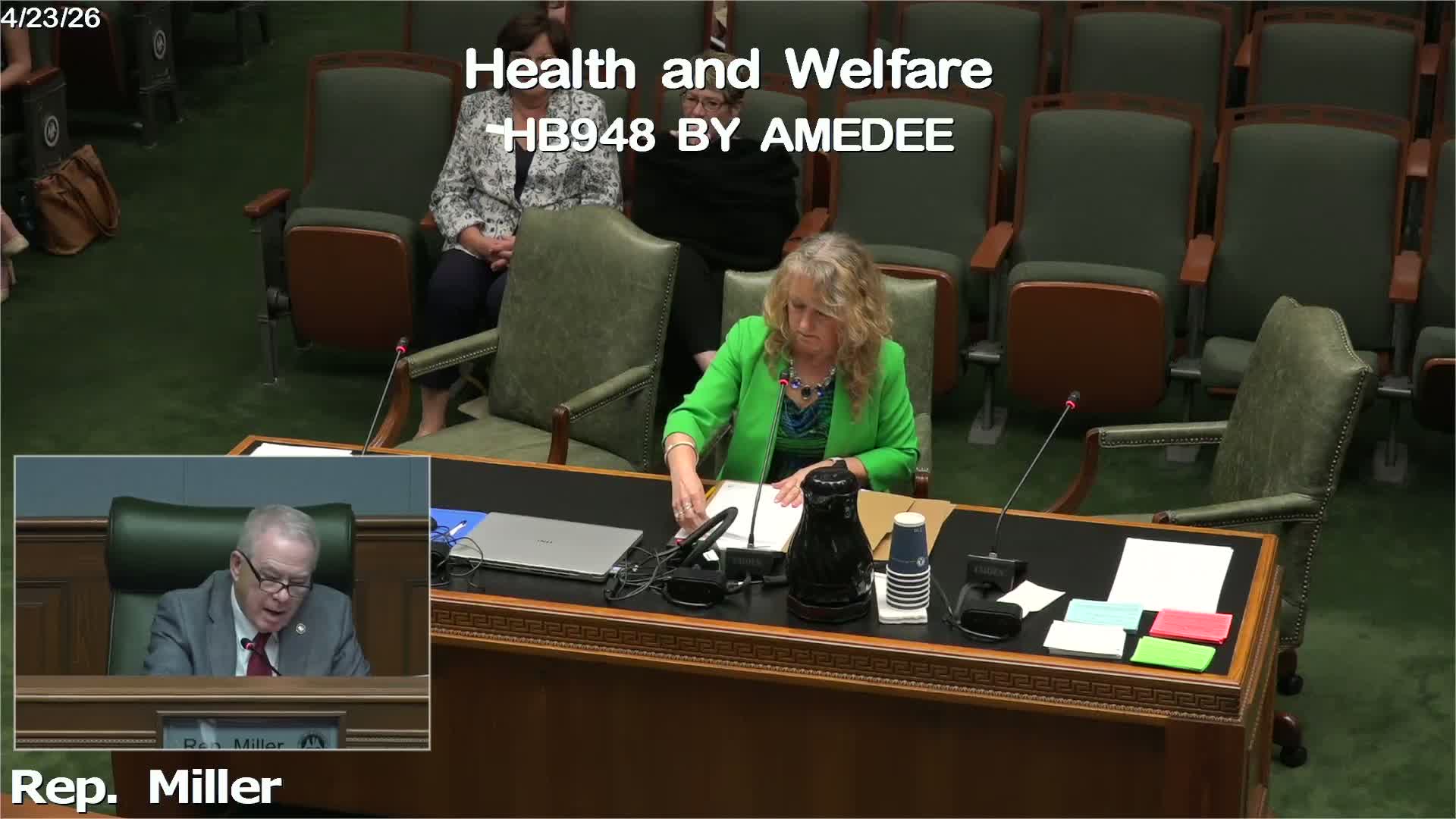
Representative Amadee presented House Bill 948, the Parental Medical Decision Protection Act, saying it would "affirm and protect the fundamental right of parents and legal guardians to direct the health care and medical treatment of their minor children" in non‑emergency situations. The sponsor said the bill preserves emergency exceptions and intends to prevent retaliatory investigations based solely on a parent's lawful medical decisions.
Supporters gave emotional testimony. Dawn Favro described her family's experience with pediatric cancer and said her daughter endured aggressive treatments while in state custody; Favro told the committee: "No parent should fear that asking questions could cost them their child." Concerned Women for America and other supporters argued the bill simply clarifies rights and allows families to seek second opinions without fear of automatic state action.
Medical organizations and forensic nurses strongly opposed the bill. Steven Wright of the Louisiana chapter of the American Academy of Pediatrics said "this bill is a child safety and survival issue," stressing that timely treatment for some pediatric cancers can determine survival rates and warning that the bill could weaken the ability to intervene in rare but critical cases. Forensic nurses and the Louisiana Hospital Association warned HB 948 could limit forensic exams, create conflicts with mandatory reporting statutes, and expose providers to civil or criminal liability.
Witnesses cited specific legal tensions. A hospital representative said mandatory reporter statutes and Children's Code articles require healthcare providers to notify authorities when they reasonably suspect medical neglect; opponents argued HB 948's language could carve out immunity or limit reporting "solely" on the basis of a parent's decision, producing a legal conflict that leaves providers vulnerable either to civil suits by families or to penalties for failing to report suspected neglect.
Committee members asked detailed questions about emergency exceptions, forensic exams for sexual assault survivors, suicide risks, and how the bill would interact with existing duties to report neglect. Several members said they liked provisions allowing second opinions but were concerned the bill's broad language could create ambiguity in urgent or legally sensitive situations.
Representative Cruz moved to report the bill favorably, but the motion did not carry at roll call. Because of time and outstanding concerns, Representative Amadee then moved to voluntarily defer HB 948; the committee granted the deferral and adjourned.