Get AI Briefings, Transcripts & Alerts on Local & National Government Meetings — Forever.
DNREC frames nuclear as one option to address rising demand and grid stress
Loading...
Summary
At an April 20 task‑force meeting, DNREC officials said Delaware should monitor small modular reactors (SMRs) as a means to diversify generation and meet growing peak loads; members pressed officials for cost benchmarks and data on who would pay for long‑term contracts.
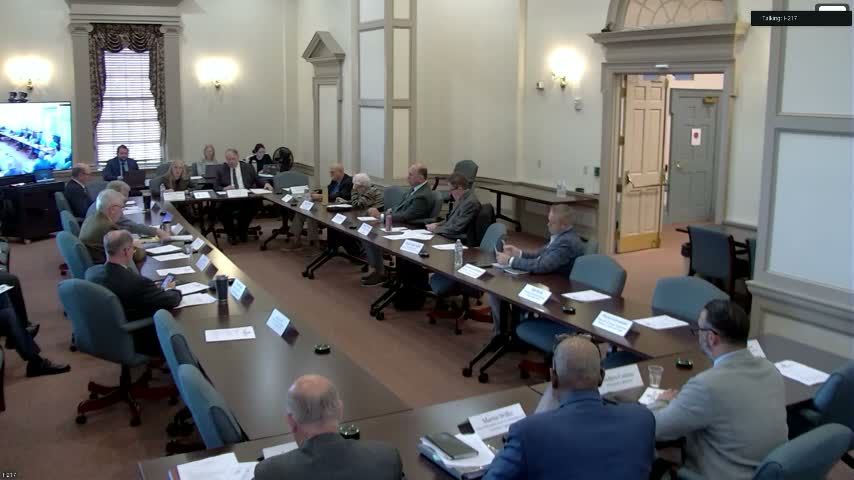
State energy officials told Delaware’s Energy Task Force on April 20 that small modular reactors are worth evaluating as one tool to address rising electricity demand, but members pressed for clearer cost comparisons and for a regional planning lens.
Tom Noyes, administrator at the DNREC State Energy Office, told senators, representatives and task‑force members that the state’s 2024 State Energy Plan directs agencies to “closely monitor” SMR development and that Governor’s Executive Order No. 18 directs agencies to establish a coordinated permitting process for priority energy projects, including nuclear.
Noyes said Delaware’s summer peak is roughly 2,700 megawatts and annual in‑state generation is on the order of 12–13 million megawatt‑hours. He noted more than 10,000 behind‑the‑meter rooftop solar installations are not fully visible to PJM and flagged data‑center proposals as a major wildcard for future load projections.
Why it matters: task‑force members said the state must weigh the tradeoffs between higher short‑term procurement costs and the value of firm, dispatchable power to support electrification and avoid curtailments in the DPL/PJM zone.
Members asked for concrete price benchmarks. One outside presenter’s current market ask was cited as roughly $130 per megawatt‑hour for an early SMR PPA; Jamieson pointed to recent standard‑offer auction clearing prices around $100/MWh (including capacity) as a current benchmark. "We need to understand the delta between what we currently pay and what we might be tying ratepayers to," a legislator said during Q&A.
Task‑force members also raised procurement structure and risk allocation: whether a single utility’s customers should bear exclusive cost, or whether costs should be spread across all ratepayers if the resource benefits the broader state. Matt Hartigan of the Public Service Commission urged that procurement design consider who pays and that ratepayer allocation not unduly favor one customer class.
What’s next: DNREC committed to provide more granular PJM/DPL zone data and megawatt‑level figures to the task force after the meeting. The task force will begin module 5 on May 4, with further analysis on costs and procurement structure to be developed for the group’s recommendations.