Get AI Briefings, Transcripts & Alerts on Local & National Government Meetings — Forever.
Panel advances bill to create state-backed pathway for psychedelic-assisted clinical research
Loading...
Summary
Senate Bill 43 to establish a psychedelic-assisted therapy initiative within LDH for clinical studies of psilocybin and ibogaine was reported favorably after testimony from LSU researchers and veterans citing promising early results and infrastructure readiness.
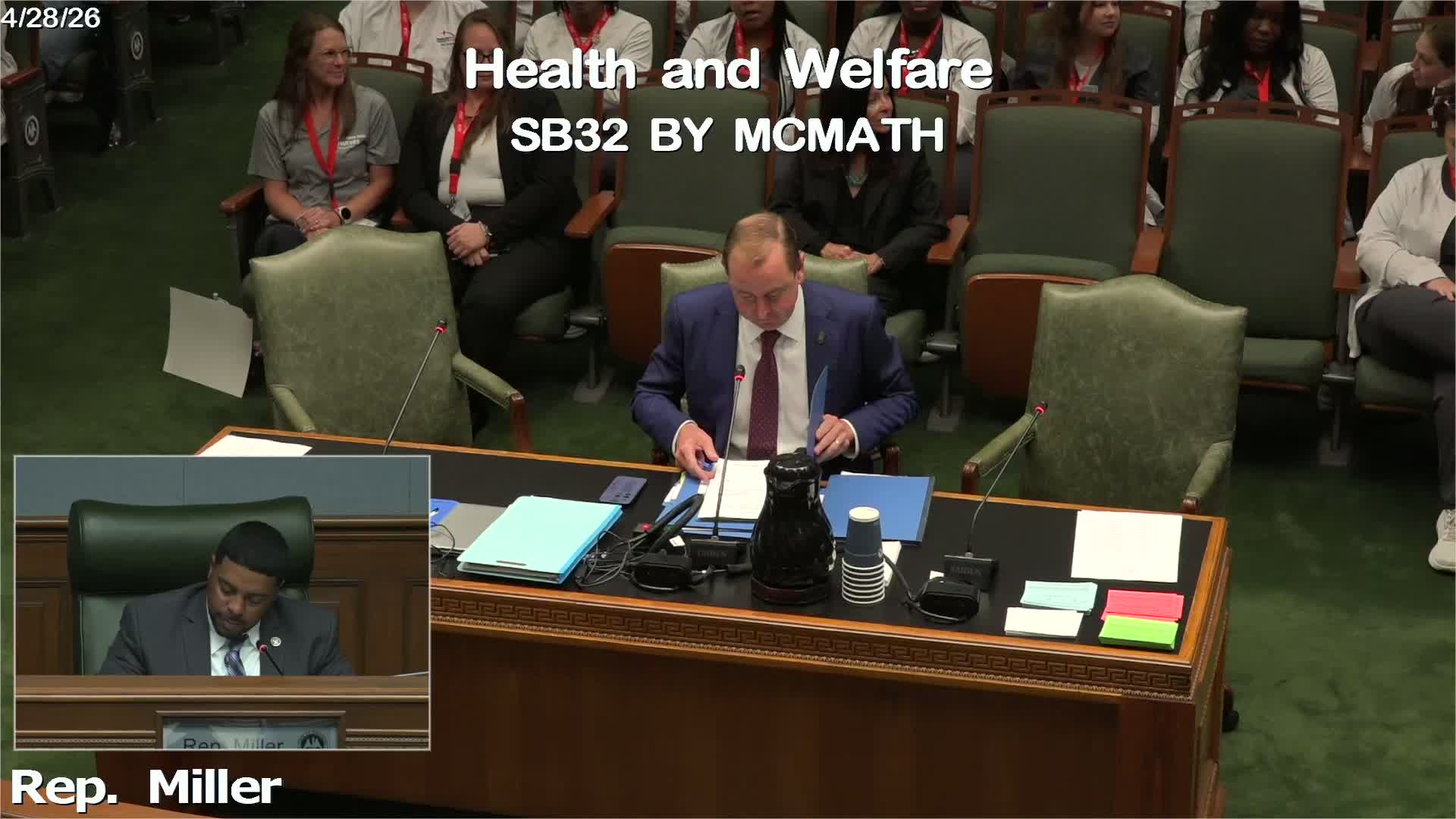
The House Health and Welfare Committee on April 28 reported Senate Bill 43 favorably after extensive testimony from researchers, veterans and advocates supporting state-supported clinical research into psychedelic-assisted therapies.
Chairman McMath said the bill would create a regulatory framework and a state-supported pathway for clinical trials and treatment innovations using agents such as psilocybin and ibogaine, and that opioid settlement funds could be used to support access for eligible patients.
Kevin Bernain, a professor at LSU Health Shreveport, told the committee the university already has dosing suites, institutional review board approvals and clinical staff prepared to run controlled trials. "We have the infrastructure already in the state to do this," he said, emphasizing the need for rigorous, safe procedures and careful screening.
Veteran speakers described personal experiences they said were life changing. Glenn Curtis, a retired adjutant general, and other veterans recounted treatment experiences and urged the committee to enable clinical research and regulated access for veterans and trauma-affected populations.
Committee members asked about eligibility, safety protocols and funding. Supporters said the program would prioritize treatment-resistant conditions and that federal approvals and FDA/DEA processes may be required for some steps; the committee reported the bill favorably with technical amendments and indicated support for carrying the bill forward.
What happens next: SB 43 was reported favorable and is expected to move to the full House; sponsors and researchers said they would continue work on rulemaking and safety protocols.