Get Full Government Meeting Transcripts, Videos, & Alerts Forever!
Get email alerts on the Vision Benefits topic
No spam. Unsubscribe anytime.
Committee backs sweeping vision-benefit bill after heated testimony from optometrists and plans
Summary
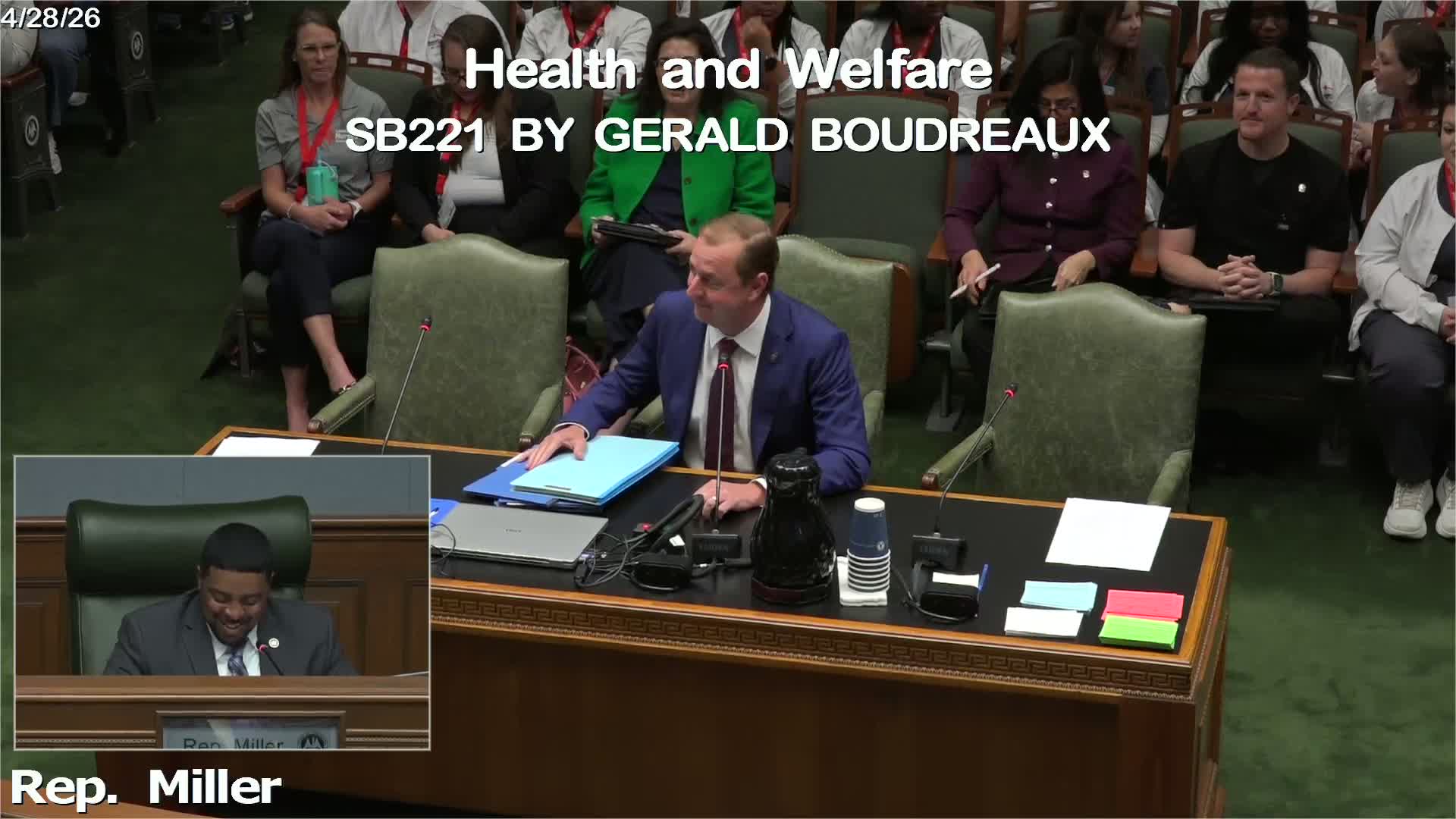
The House Health and Welfare Committee on April 28 reported Senate Bill 404 favorably with amendments after optometrists described clinic closures and limits imposed by vision plans and industry representatives warned the bill could raise costs and curb market innovation.
Sen. McMath’s 35-page vision-benefit overhaul, Senate Bill 404, was reported favorably by the House Committee on Health and Welfare on April 28 after extended testimony from providers, advocates and industry representatives.
The measure, which author Senator McMath said promotes "simplicity, transparency, clarity and patient access," would change how vision benefit managers and plans contract with providers, require clearer contract terms and require disclosures designed to preserve the doctor–patient relationship, he told the committee.
"Patients often believe they are fully covered, only to discover that there are limits, steering, or narrow material allowances when they try to use their benefits," said Rob Gianno, a practicing doctor of optometry and executive director of the State Association of Optometrists. He testified that several clinics have closed and that some clinicians decline certain plans because they are not sustainable for local practices.
Opposition testimony came from Julian Roberts, executive director of the National Association of Vision Care Plans, who called SB 404 "unprecedented" and argued it would "step[] up a statutory floor" by tying reimbursements to Medicaid and Medicare schedules. Roberts warned the change could raise premiums, co-pays or reduce benefits, and said a national collaborative model under discussion at the National Conference of Insurance Legislators would be a preferable path.
Committee members pressed both sides for concrete examples. Gianno and other optometrists said plans sometimes exclude diagnostic or treatment services that optometrists provide in the same visit, forcing patients into additional appointments. Roberts said the large majority of vision plans provide standard exams and frame/lens allocations and that the market contains a mix of vertically integrated and independent plans.
The committee adopted a clarifying amendment to ensure federally qualified health centers’ participation is addressed and to clarify who is eligible to participate in vision networks. After no further objections, the committee reported SB 404 favorably with amendments by voice vote.
What happens next: SB 404 was reported favorable to the full House; sponsors and supporters said they will continue to negotiate technical language as the bill moves to subsequent floor consideration.