Get Full Government Meeting Transcripts, Videos, & Alerts Forever!
Get email alerts on the Decd Reorg topic
No spam. Unsubscribe anytime.
Committee advances technical rewrite of DECD commercial statutes, debate on film and tourism roles
Summary
The Commerce Committee advanced SB 307 (LCO 3337), a technical overhaul of Department of Economic and Community Development statutes that consolidates operating offices, delays a reporting deadline, expands advisory-board eligibility and changes tourism reporting. Members raised concerns about late changes and potential effects on the film office.
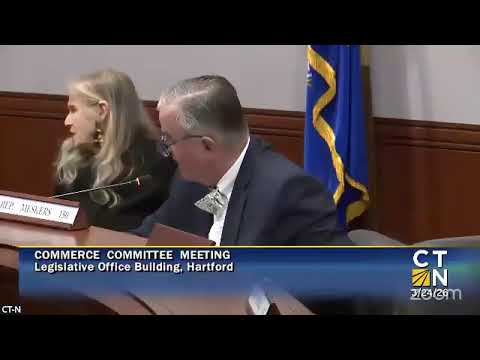
The Commerce Committee advanced SB 307 (LCO 3337) to the floor with a motion that carries joint favorable status, while holding votes open until 3 p.m.
The bill, described by the chair as primarily technical, would eliminate several DECD operating offices and consolidate functions to create two broader operating groups within the department, shift some responsibilities to departmental leadership, and move the DECD annual reporting deadline for certain programs from Jan. 1 to Feb. 1. It also expands eligibility for the manufacturing and innovation advisory board to include workers with skills in biotechnology, semiconductors and clean energy, and extends appointment eligibility to community college faculty and technical high school teachers in addition to university faculty.
The chair said the consolidation is intended to give DECD “more coherence” and allow staff with the necessary skill sets to be assigned flexibly across functions. The bill also tightens attendance rules for Connecticut tourism councils—deeming members who miss three consecutive meetings or half of the year’s meetings to have resigned—and shifts responsibility for an annual tourism-promotion report from the council to DECD.
Several members questioned process and late changes to the bill’s content. One representative said the measure had been pared down dramatically—from about 60 pages to 25—and expressed concern about receiving the redraft late and not being able to see the changes in time for review. That member also warned the reorganization could make it harder for users of the Office of Film, Television, and Digital Media to get timely responses.
The co-chair said sections were removed because they remain under negotiation—particularly proposals tied to federal compliance and minority business programs—and that deletions account for the reduced page count. The co-chair added that some changes could return as floor amendments if stakeholders reach agreement before floor action.
The clerk called the roll on SB 307; votes were taken and left open until 3 p.m. The transcript does not record a final, completed tally in the committee meeting.
The committee’s next steps include holding the votes open until the stated deadline; the bill could reach the chamber floor with amendments or clarifying language depending on negotiations between the department, stakeholders and chairs.