Get AI Briefings, Transcripts & Alerts on Local & National Government Meetings — Forever.
NSWC Crane technical director Angela Lewis: Technology transfer must be part of our organizational DNA
Loading...
Summary
Dr. Angela Lewis of the Naval Surface Warfare Center Crane Division told the Federal Laboratory Consortium's Transfer Files podcast that Crane has embedded technology transfer across its workforce through education, incentives and partnerships, citing 170 partnership agreements and programs like Crane Division University and Silent Swarm.
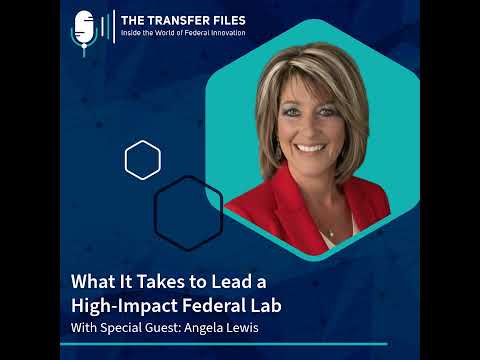
Dr. Angela Lewis, technical director at the Naval Surface Warfare Center Crane Division, said technology transfer must be an enterprise priority and "needed to become a fundamental part of our organizational DNA." She made the remarks on the Federal Laboratory Consortium for Technology Transfer's Transfer Files podcast.
Lewis described how Crane has woven technology transfer into everyday work across a workforce of about 3,500 government civilian employees, using training, incentives and dedicated staff to move ideas from research toward fielded capability. "We have a patent incentive program" and an annual inventor recognition ceremony, she said, to reward invention disclosures and issued patents.
Lewis explained that Crane operates under the Navy's working capital fund model: program offices send mission‑funded tasking to warfare centers and pay for services, which requires the center to operate like a cost‑covering business. That model creates steady demand but can limit the time subject‑matter experts have to develop intellectual property for broader commercial use, she said. To bridge that gap, Crane invests discretionary overhead in a technology transfer (T2) team that handles market research, outreach and commercialization tasks and leverages programs offered by the Federal Laboratory Consortium (FLC), the Defense Innovation Unit (DIU) and others.
Education and internal literacy are central to Crane's strategy. Lewis highlighted Crane Division University and the "Innovation Ecosystem on Demand" course, designed to make knowledge accessible remotely and to equip staff at all levels with practical partnering skills. "By demystifying the process and providing on demand training, we empower the entire workforce to think and act like entrepreneurs," she said.
Lewis also described how Crane measures whether transfer efforts advance mission impact. She cited 170 partnership agreements in fiscal year 2025, saying 85% of new agreements map directly to Crane's top strategic priorities and that 100 agreements align with the Navy's highest priorities. Those alignment metrics, she said, are more meaningful than raw counts because they indicate strategic focus.
Lewis pointed to multi‑party collaborations and experimentation venues as examples of mechanisms that move technologies forward. She described the Indiana Research Consortium—an MOU signed in 2024 among Purdue, Indiana University and Notre Dame—to coordinate defense research across R1 institutions, and events such as Silent Swarm that convene industry, academia and government to test systems and collect data.
"Invest in the people and invest in your partners," Lewis said, summarizing Crane's approach. She advised other labs to ‘‘leverage peers and partners’’ through networks such as the FLC and to secure engaged leadership that treats technology transfer as a mission enabler rather than a side task.
The episode closed with a reminder about the FLC National Meeting and the Lab Director's Forum; host Andrea Nelson noted the in‑person meeting and provided registration information at federallabs.org/nm26.