Get AI Briefings, Transcripts & Alerts on Local & National Government Meetings — Forever.
Committee backs resolution asking Congress to reclassify crawfish work under H‑2A after industry labor shortfalls
Loading...
Summary
House Agriculture Committee unanimously reported HCR65 favorably following extended testimony about H‑2B cap limits and labor shortages that cost the crawfish industry millions. Commissioner Strain and members urged federal action to move certain crawfish duties into the H‑2A program.
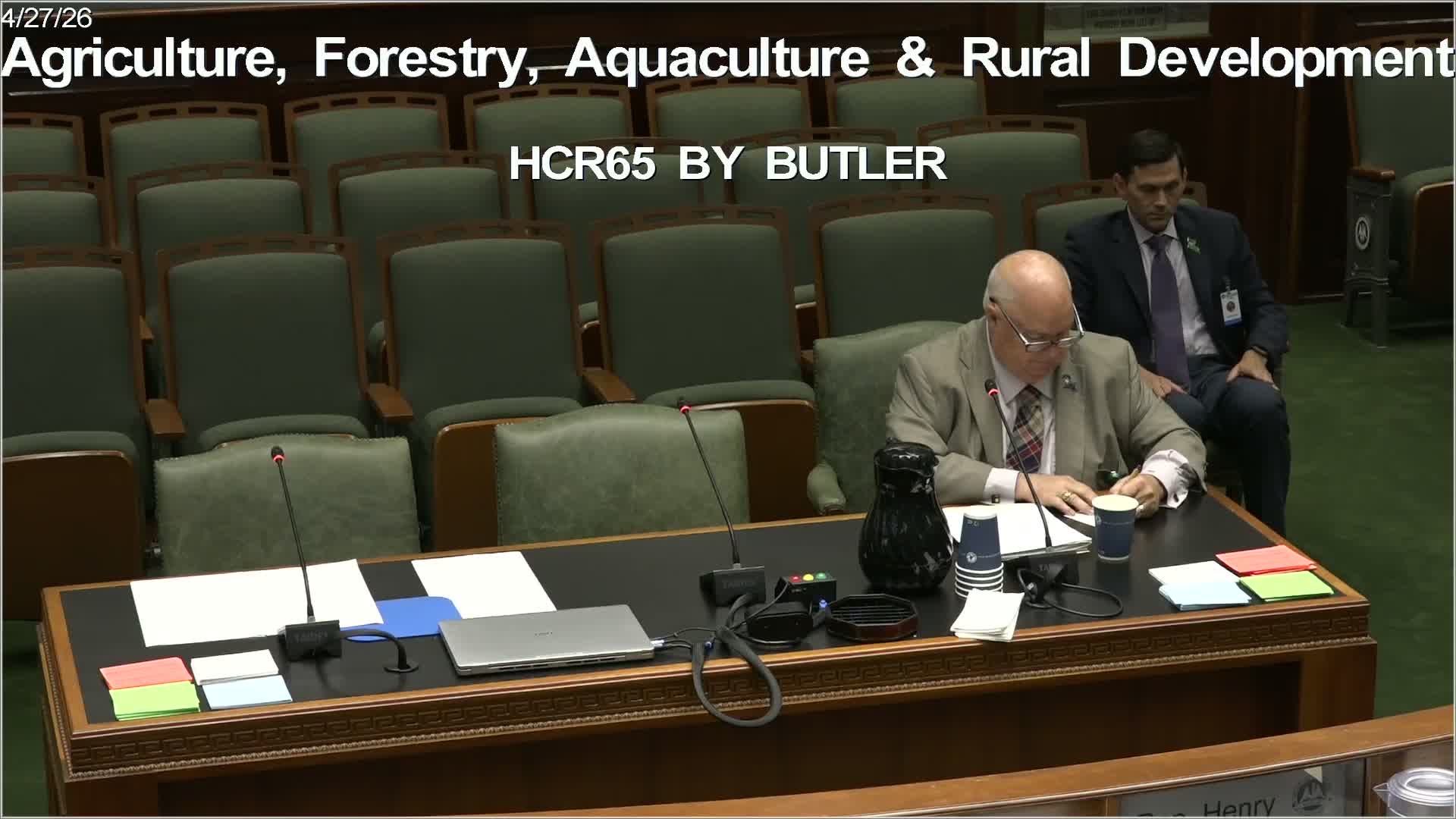
The House Agriculture Committee reported House Concurrent Resolution 65 favorably after hearing testimony about labor shortages in the crawfish industry and how federal visa caps have constrained returning seasonal workers.
HCR65, authored by Representative Landry and read by the chair, memorializes Congress, the U.S. Departments of Labor and Homeland Security, and the Louisiana congressional delegation to consider reclassifying crawfish industry duties as agricultural labor under the H‑2A temporary agricultural worker program.
Commissioner Mike Strain testified the distinction between H‑2A and H‑2B visas has had severe practical consequences for Louisiana’s crawfish processors this season: applications for H‑2B peelers were delayed or set aside, causing many plants to receive few or no returning workers. Strain described national-level caps and cited employer cost estimates: a regional prevailing wage floor the Department uses (about $16.50–$18.50 per hour) and an estimated total employer cost of roughly $22–$24 per hour when housing and transportation are included. The commissioner and other members said the labor shortfall cost the crawfish industry and related sectors hundreds of millions this season and threatened production continuity.
Members from crawfish-producing parishes described cascading impacts: processing plants idle for lack of peelers, restaurant supply disruptions and downward pressure on farm gate prices. Committee members and the commissioner urged federal engagement to ease the cap and to consider whether specific crawfish duties should fall under H‑2A rules given their connection to agricultural production.
The resolution was moved and reported favorably with no objections; committee members noted continuing concern and the need to keep federal pressure on the issue.
What happens next: HCR65 is a nonbinding memorial requesting federal action and sends a clear signal from the Legislature and the Department about industry impacts; federal agencies and the congressional delegation are the intended recipients.
Provenance: resolution read and sponsor remarks (SEG 2224–SEG 2245), Commissioner Strain testimony and industry impacts (SEG 2272–SEG 2360), committee motion and favorable report (SEG 2558–SEG 2562).