Get Full Government Meeting Transcripts, Videos, & Alerts Forever!
Get email alerts on the Hmong Project topic
No spam. Unsubscribe anytime.
Hmong Project needs assessment finds gaps in representation, recommends curriculum and staffing changes
Summary
A district-commissioned Hmong Project needs assessment presented to the board identified gaps in curriculum representation, outreach and staffing; it recommends expanded Hmong language/history courses, culturally responsive professional development, stronger cultural-liaison roles, and a resolution to codify mission and goals in early 2026.
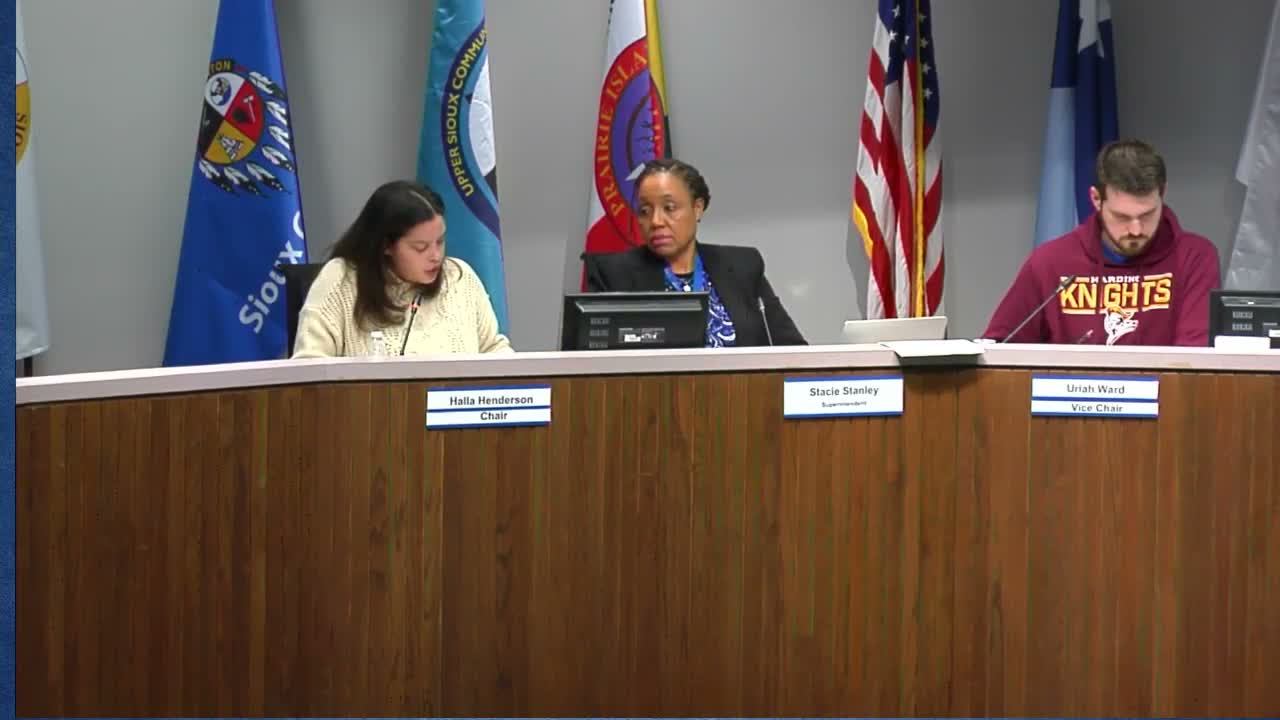
At the Dec. 18 Saint Paul Public Schools board meeting, the Hmong Project work group presented findings from surveys and focus groups assessing Hmong students’, staff and parents’ experiences in the district. Presenters said surveys were offered in Hmong and English and focus groups were held both in person and virtually, but they acknowledged a recruitment shortfall that likely excluded non‑Hmong guardians raising Hmong children.
Joy Yang, a parent and director of counseling services at Metro State (speaking as a community representative), said the project engaged students, staff and families to develop a mission and vision aligned to district goals. "This work has become very personal for me... The Hmong project represents an opportunity to change that, to honor Hmong identity, preserve language, and create spaces where students can thrive academically while remaining connected to their roots," she said.
Key findings included:
- Representation: Students reported seeing Hmong language and culture mainly in social programs and events; parents and staff identified gaps in everyday curriculum and desired Hmong history presented from a Hmong perspective. - Curriculum and credits: Parents and staff asked that Hmong courses be recognized as world-language credits to support sustainability. - Staff and mental health: Focus groups emphasized the importance of culturally responsive mental-health services and retaining Hmong staff and cultural liaisons. The presenters cited the Wilder Foundation’s Fluzhong program as an existing partnership delivering Hmong-specific outpatient services in schools.
Presenters also explained a survey design error that excluded parents who did not self-identify as Hmong, which likely undercounted families raising Hmong children. They said the work group will correct outreach methods and return with a draft Hmong Project resolution in February 2026, followed by a final resolution for a regular meeting on Feb. 17, 2026.
Board members asked detailed follow-up questions about recruitment barriers, the missing cultural specialist on the district team, and how the work group will measure next steps. The presenters acknowledged those gaps and committed to stronger, more relational outreach.
What’s next: The work group will draft SMART goals in January, present a draft resolution in February and seek board adoption in mid‑February. The presentation was received as informational and will inform subsequent board deliberations about facilities and program implementation.