Get AI Briefings, Transcripts & Alerts on Local & National Government Meetings — Forever.
Residents warn of health, zoning harms as committee advances bill limiting local rules on sugarcane bagasse
Loading...
Summary
After testimony from industry and residents, the House Agriculture Committee reported SB502 favorably. Supporters said the bill codifies Department of Agriculture best practices for bagasse storage; neighbors urged delay and local control, citing dust, odors, fires and animal illness from a large stockpile.
A House Agriculture Committee voted to report Senate Bill 502 favorably after hearing industry testimony and multiple residents who said a nearby, privately held sugarcane bagasse stockpile had caused persistent odors, dust, and health and property impacts.
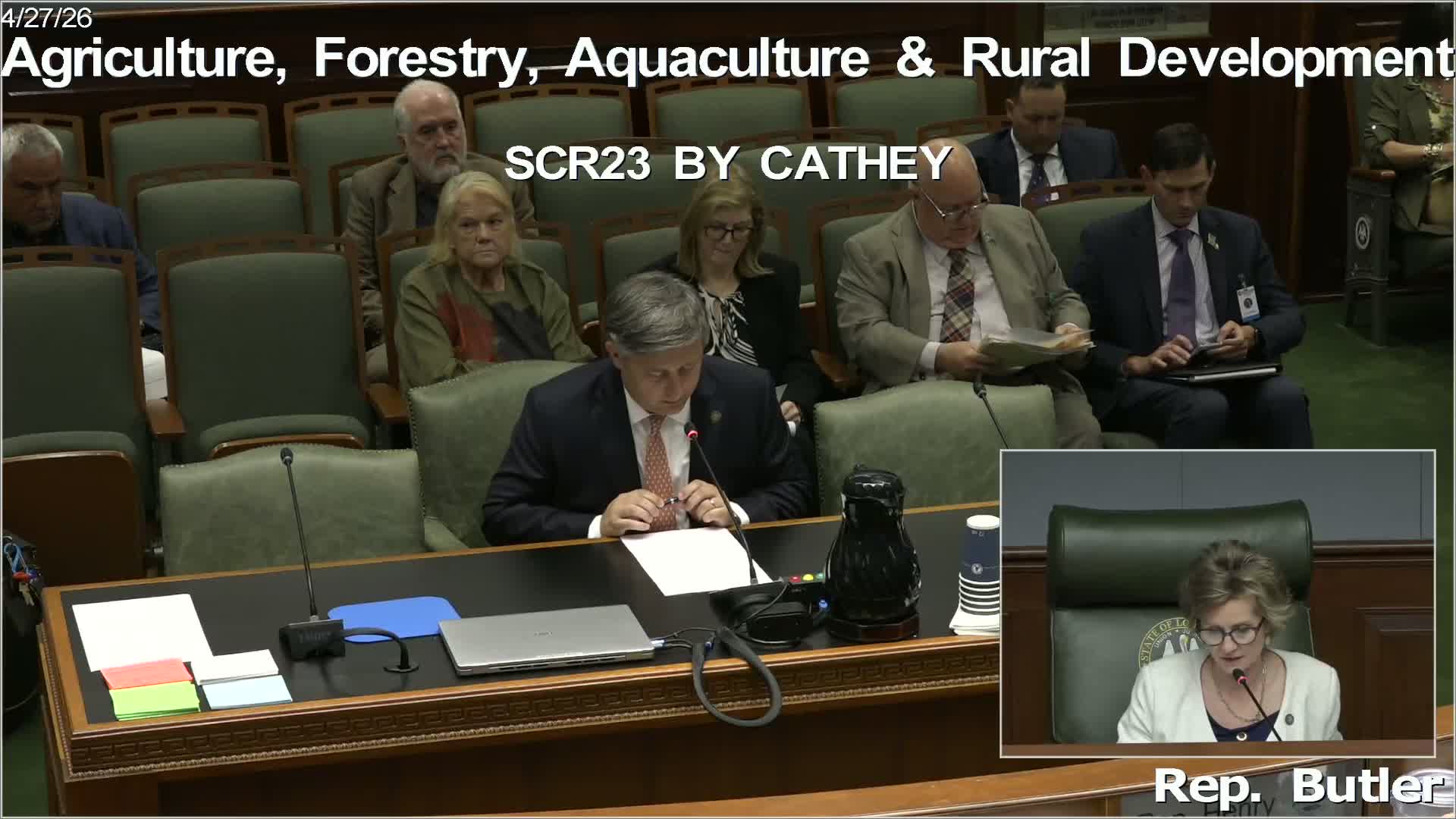
Sen. Kathy, the bill sponsor, told the committee SB502 would clarify that bagasse—the fibrous byproduct left after extracting sugarcane juice—is an agricultural byproduct primarily used as biofuel and should be governed by statewide best management practices established by the Department of Agriculture and Forestry. "We pass a lot of legislation here that we think is good legislation, only find out that we ended up hampering something more than we helped," she said, arguing the measure would bring stakeholders together to avoid unintended consequences.
The bill as presented would codify Department best-management practices and prohibit local governments from enacting ordinances regulating bagasse storage where an operation maintains compliance with those practices. Commissioner Mike Strain explained the Department’s role in defining and overseeing those practices and answered members’ technical questions about storage and discharge practices.
Industry witnesses, including Jim Symone of the American Sugar Cane League, said bagasse is distinct from refinery waste and noted that some producers repurpose bagasse as biochar or fuel. "It's a product that sometimes we can do nothing with, but it has tremendous value," a supporter said.
Residents from St. Martin Parish opposed the bill during public comment and told the committee they had been coping with a large bagasse pile placed close to homes under an existing cease-and-desist order. Virginia Laughlin Schluter said neighbors had found ash, dust and residue across yards and described persistent smells and respiratory concerns; Craig Prosper, who identified himself as a resident, said the pile had been in place for about five years and did not follow the cited best practices. Margaret Poirier said a family horse died and detailed personal health and property impacts. One resident described nasal surgery during which doctors found aspergillus, a fungus the comment said is associated with bagasse exposure.
Speakers asked for more time to prepare formal opposition and for the committee and the Department to coordinate with local regulators to review the specific stockpile. Chairwoman Butler said she would ask Dr. Strain’s office to follow up with the residents.
Representative Coates moved to report SB502 favorably; the committee recorded no objections at the time the bill was reported. The record notes both supporters and opponents were present and asked the committee to consider local concerns in follow-up work.
What happens next: SB502 was reported favorably by the committee and will proceed through the Legislature’s normal floor process. Committee staff and the Department of Agriculture and Forestry said they would follow up with residents about enforcement and best-practice compliance.
Provenance: Committee reading and presentation (SEG 097–SEG 116); Q&A with Commissioner Strain (SEG 173–SEG 195); resident public comment from Virginia Laughlin Schluter, Craig Prosper, and Margaret Poirier (SEG 291–SEG 335; SEG 378–SEG 452; SEG 594–SEG 714); committee motion reporting the bill favorably (SEG 272–SEG 275).