Get AI Briefings, Transcripts & Alerts on Local & National Government Meetings — Forever.
Planning board recommends approval of Newberry Ridge rezoning with conditions after questions on wastewater and open space
Loading...
Summary
The City of Newberry Planning & Zoning Board voted unanimously April 21 to recommend approval of rezoning petition LDR25-11 (Newberry Ridge), asking the City Commission to require clearer open-space calculations, wastewater capacity commitments and park-access/maintenance details before final approval.
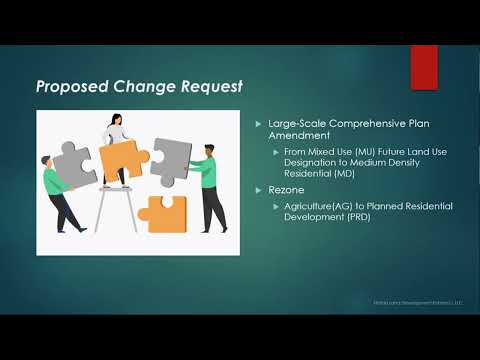
The City of Newberry Planning & Zoning Board voted unanimously April 21 to recommend approval of petition LDR25-11, which would rezone about 226 acres north of Southwest 30th Avenue from agricultural to Planned Residential Development (PRD) for the Newberry Ridge project.
Lauren (planning staff) told the board that the application, submitted in June 2025, seeks a PRD allowing up to 1,250 dwelling units and that the staff finds the petition consistent with the land development regulations and the comprehensive plan. She said additional technical reviews — including the transportation-impact analysis — remain under review and that developers must secure wastewater-treatment capacity agreements before final plat approval.
The applicant team described the project as a mixed product intended to expand housing choices in Newberry. Maribel Nicholson Choice, an environmental and land-use attorney for the applicant, said the proposal eliminates a previously approved commercial town center, increases buffer widths and proposes a mix of 850 single-family lots and 400 multifamily units, for a total of 1,250 units. "This project presents an opportunity for Newberry to control how they wanted the land to be developed," Nicholson Choice said.
Board members focused questions on two technical points before voting: the wastewater-per-capita figures used in the applicant packet and how open-space percentages were being calculated under the city's code. Jessica (board member) pointed to materials citing "250 gallons per capita" for wastewater and contrasted that with a comprehensive-plan objective she read as a 100-gallon-per-capita maximum. Staff explained that some infrastructure elements from the recent comprehensive-plan update were returned to the state for further review after Senate Bill 180 and that the city requires individual capacity agreements before final plat, which are checked before approvals proceed.
Jessica also pressed the packet's open-space presentation: the application referenced a variety of percentages, including a 25% reference for mixed-use projects, a 15% figure that staff said matches the PRD code, and language allowing up to 50% of the required open space to be counted as stormwater-management area in some calculations. The applicant said the PRD format gives the city more opportunity to shape design standards and buffer zones and offered options such as homeowners-association maintenance or city dedication for proposed park space. "If the maintenance is an issue, we can include that as part of an HOA or dedicate the park to the city," Trey Vergall of Florida Land Development Partners said.
Board members asked for clearer documentation on the long-term costs to the city if the park is dedicated, a reconciled accounting of how open-space requirements are applied in the PRD versus straight zoning, and assurances about wastewater capacity. The chair recommended that the board approve the rezoning with conditions to clarify the minimum open-space calculation, park placement and maintenance responsibilities, and to supply the City Commission with the financial and capacity details it will need to decide.
Jessica moved to recommend approval with conditions; Miss Parker seconded. The board voted unanimously to recommend the rezoning to the City Commission (motion passed 3–0). The Planning & Zoning Board's recommendation is advisory; the City Commission will take the next formal action, and state review may follow for the large-scale map amendment.
The planning staff noted the petition will be placed on the commission schedule if the commission moves forward and that the state expedited review process for large-scale amendments typically takes about 45 days once transmitted.