Get Full Government Meeting Transcripts, Videos, & Alerts Forever!
Get email alerts on the Recovery Residences topic
No spam. Unsubscribe anytime.
Council approves ordinance creating local review process for certified recovery residences
Summary
Maple City Council approved Ordinance No. 1455 on second reading to implement a state‑required local review process for certified recovery residences, including criteria for reasonable‑accommodation requests and an annual recertification deadline moved to Sept. 30.
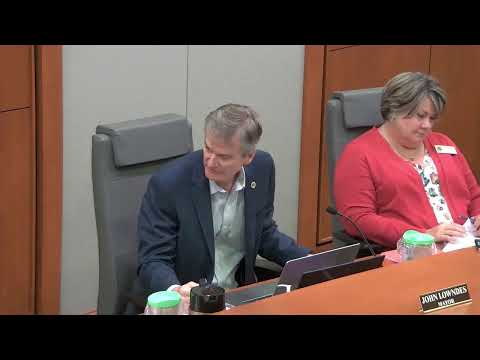
Maple City Council approved Ordinance No. 1455 on second reading Tuesday, establishing a local review process for state‑certified recovery residences and a procedure for reasonable‑accommodation requests under the city’s land‑use code.
Mike Daniels, community development staff, told the council that Senate Bill 954 requires local governments to have a process for reviewing certified recovery residences and for allowing reasonable accommodations from local land‑use regulations. “The ordinance is focused on providing a process for the applicant to be able to apply for a reasonable accommodation,” Daniels said, outlining staff review criteria that include verifying the residency meets the statutory definition of disability, assessing reasonableness, avoiding undue financial hardship to the city, and ensuring the request would not fundamentally alter the nature of local regulations.
Daniels said staff would issue determinations to approve, deny, or approve with conditions and that denials could be appealed to the city manager. He also noted one change from the ordinance’s first reading: annual proof of certification will be due Sept. 30 instead of Oct. 31 to align with the city’s fiscal year.
Council members asked how Americans with Disabilities Act (ADA) accessibility requirements would apply. Daniels replied that ADA compliance depends on the particular needs of residents and the specifics of any physical modifications: “They don't necessarily have to make it handicap accessible, as long as they meet that definition,” he said, adding that accommodation requests will be considered case‑by‑case.
After closing public comment, the council moved, seconded, and voted to approve the ordinance on second reading.
What happens next: the ordinance establishes the local administrative pathway for recovery residences to request accommodations; applicants approved under the process must re‑verify certification annually and may be subject to revocation if not in compliance.