Get AI Briefings, Transcripts & Alerts on Local & National Government Meetings — Forever.
Senate approves bills requiring pension proxy advice to be pecuniary and disclosed
Summary
The Senate passed House Bills 4428 and 4429 to limit public-pension proxy voting to pecuniary (financial) factors and to require disclosure when proxy advisors rely on nonfinancial criteria. Supporters cited fiduciary duty; critics warned the measures could chill consideration of business practices and ethical factors.
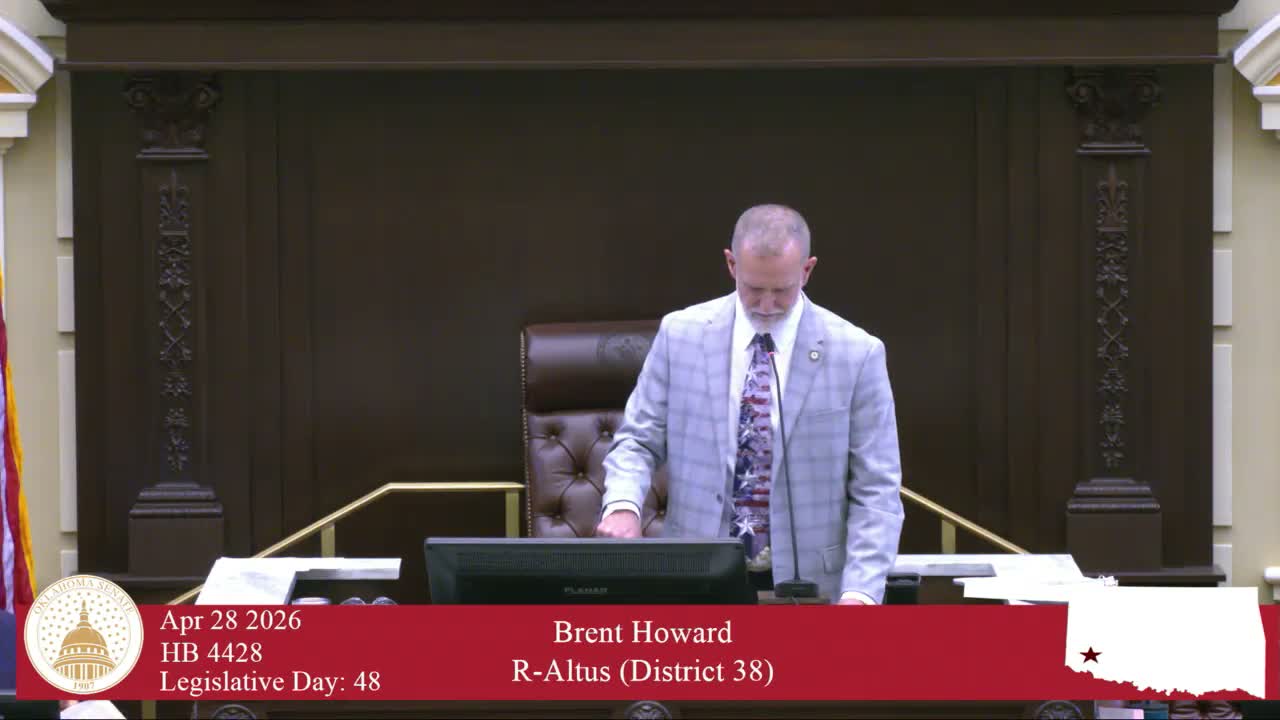
The Oklahoma Senate passed two related measures, HB 4428 and HB 4429, addressing how public pension plans use proxy advisors. HB 4428 directs public pension plans to base proxy-voting decisions on pecuniary factors, while HB 4429 requires proxy-advice firms to disclose when their recommendations are not grounded in financial analysis.
Madam Floor Leader Daniels, presenting the bills, described them as safeguards to ensure pension trustees base decisions on financial analysis and to notify trustees when advisors use non-pecuniary factors such as environmental, social or governance (ESG) scores. Opponents, including Senator Petersen and others, argued such bills could chill discussions about corporate practices that may affect long-term returns and questioned whether the measures might conflict with prior industry-specific legislation.
On HB 4428, senators debated whether the bill might prevent trustees from receiving ESG or DEI information; Daniels said the language is primarily disclosure-oriented and not a blanket prohibition, but trustees should rely on pecuniary factors. HB 4428 passed with a corrected tally of 35 ayes and 8 nays. HB 4429, the disclosure bill, passed 37–7.
Floor debate focused on fiduciary duty, disclosure and whether the bills would narrow trustee discretion. Proponents said the bills emphasize return-maximization for pension holders and better inform trustees about advisors’ methodologies. Opponents framed the bills as ideologically motivated and warned of unintended consequences for long-term investment strategy.
Both bills passed final reading and were declared passed on the Senate floor.