Get AI Briefings, Transcripts & Alerts on Local & National Government Meetings — Forever.
Senate approves bill allowing prior domestic-violence incidents as evidence with judicial safeguards
Loading...
Summary
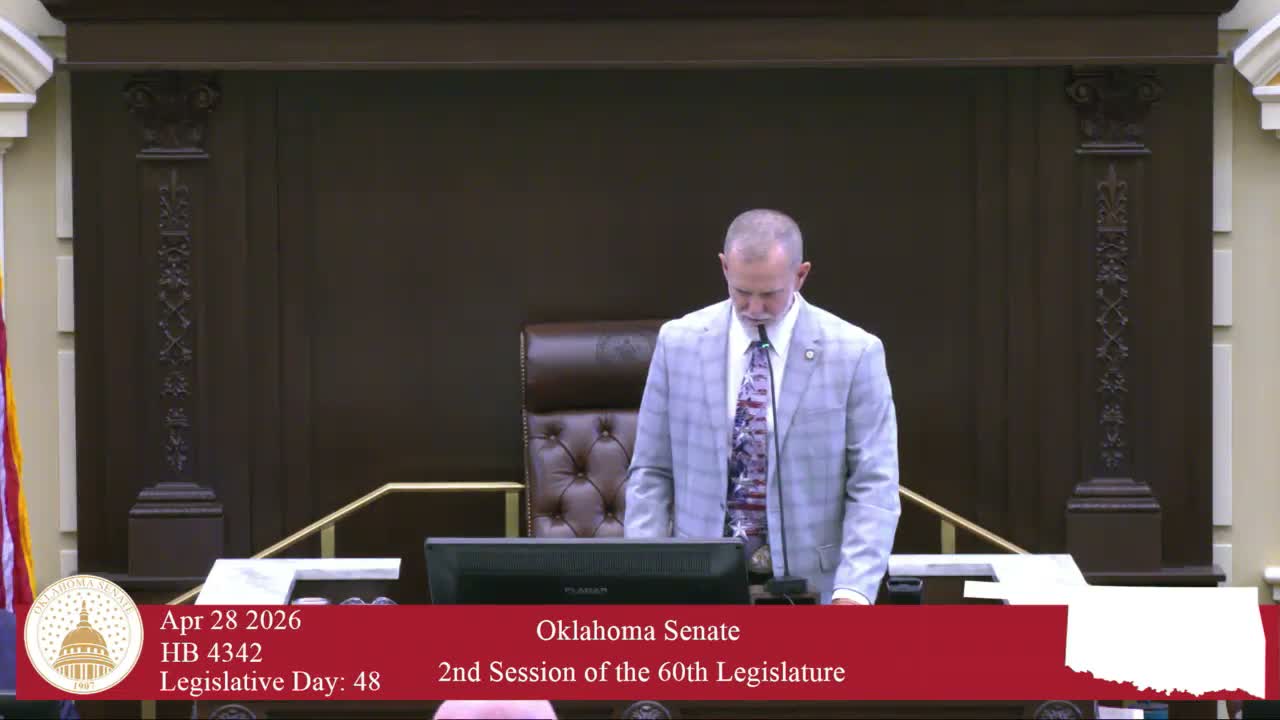
House Bill 4342, which permits prior instances of domestic violence or abuse to be admitted as evidence in related criminal cases, passed the Senate after floor debate about due process, standards of proof, and safeguards requiring disclosure and judicial balancing.
The Oklahoma Senate voted to pass House Bill 4342, which would make prior instances of domestic violence or abuse admissible as evidence in criminal cases involving domestic violence. The bill’s sponsor, Senator Galahari, said the measure mirrors statutory frameworks already used in sexual-assault cases and is intended to interrupt cycles of domestic violence.
During extended floor questioning, senators pressed the bill’s author about the scope and safeguards. Senator Brooks and others asked whether prior instances must be documented by police reports or convictions; the author responded there is no requirement for prior police reports or convictions but that any witness who provides a sworn affidavit would have to appear and be subject to cross-examination if the judge admits the evidence. The author also described a two-step judicial review: relevance to the case and a balancing test assessing probative value against unfair prejudice.
There was debate about standards of proof. Senator Brooks asked whether the standard for admitting propensity evidence is the same as the criminal charge; the author said judges perform a balancing test and suggested the standard could be clear and convincing in practice, while emphasizing the judge’s gatekeeping role. Senators raised constitutional concerns that admitting unsubstantiated prior allegations could prejudice juries and risk a defendant’s right to a fair trial.
Supporters said courts already apply similar rules in sexual-assault cases and that the bill simply clarifies admissibility and procedural safeguards. The Senate record shows the bill passed on final passage with 40 ayes and 4 nays.
The Senate debate focused largely on courtroom procedures and protections for defendants rather than statutory definitions of domestic violence; the bill requires prosecutorial disclosure of proffered evidence at least 15 days before trial to allow defense preparation. The measure will next proceed to the enrollment and transmittal stage.