Get AI Briefings, Transcripts & Alerts on Local & National Government Meetings — Forever.
Senate advances Local Food Freedom Act, raising home-prepared food threshold to $250,000
Summary
The Oklahoma Senate advanced and passed House Bill 3720, which renames the Homemade Freedom Food Act to the Local Food Freedom Act and raises the gross annual sales threshold for prepared home-food sellers from $75,000 to $250,000. Supporters said the change helps small businesses; critics worried about food-safety and training standards.
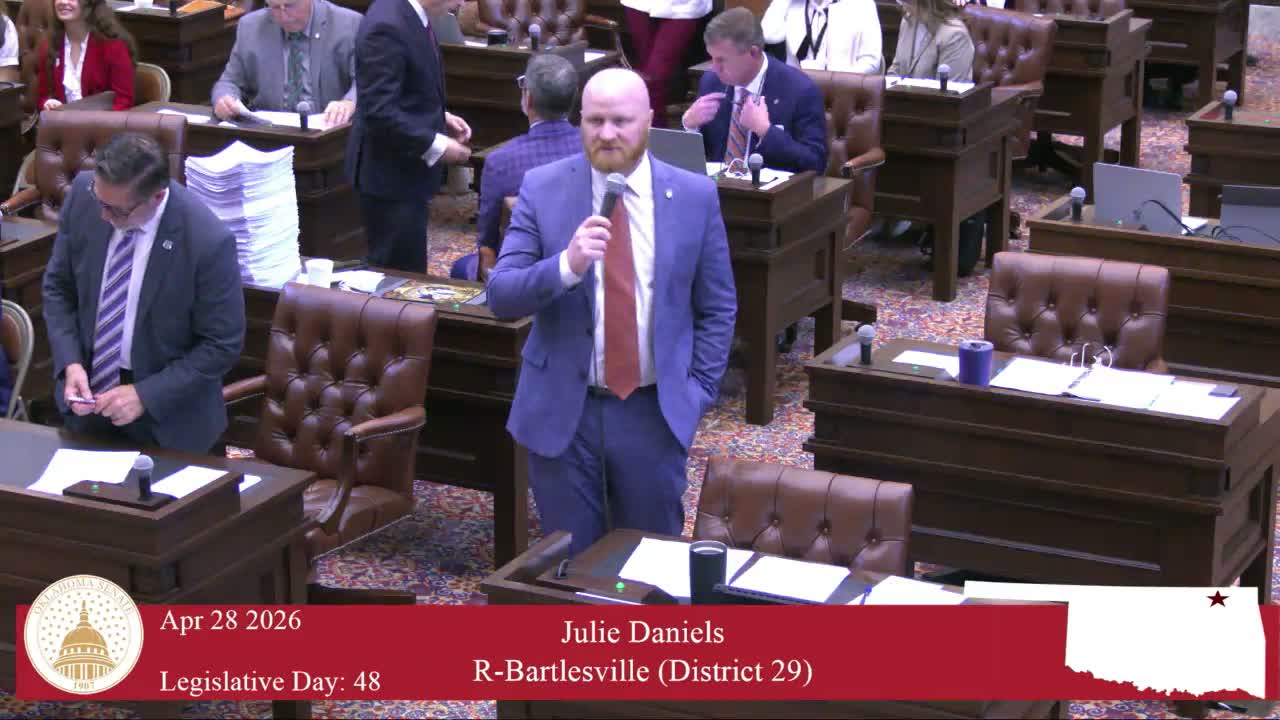
The Oklahoma Senate passed House Bill 3720 on third reading, moving the state’s cap for prepared food sales for local food establishments from $75,000 to $250,000 and retitling the statute the Local Food Freedom Act. Senator Hines, the floor sponsor, said the change gives small entrepreneurs "a longer runway to get off the ground" after negotiating down an original House request of $1.5 million to $250,000.
Opponents pressed the author on food-safety protections and training requirements during floor questions. Senator Goodwin asked how recently the $75,000 threshold was set; Hines answered he did not know but described the increase as necessary to prevent small sellers from being blocked from expansion. Senator Hicks asked what education or food-safety training participants must complete; Hines pointed to existing labeling rules and training language in the bill and said the measure targets "low-risk food categories" that deserve lighter regulation.
Senators also raised interstate-transport questions. Hines said interstate sales would be subject to existing federal transport rules and that the change does not impose full restaurant standards on local food establishments. He acknowledged there was no precise count on how many home businesses currently exceed $75,000.
Senator Hines requested unanimous consent to advance the bill, which faced no objection; the measure later passed on final passage with a roll call of 39 ayes and 4 nays.
The bill’s backers described it as promoting entrepreneurship by reducing a regulatory ceiling that some vendors were narrowly exceeding; critics warned about potential food-safety gaps and asked for clearer data on the number of affected businesses and training standards. The Senate record shows the measure advanced without amendment and was declared passed on final reading. The bill will proceed according to legislative process for enrollment and transmittal.