Get Full Government Meeting Transcripts, Videos, & Alerts Forever!
Get email alerts on the Exit 21 topic
No spam. Unsubscribe anytime.
Consultants report Exit 21 design advanced; biological review could delay construction for years
Summary
Kittleson & Associates told Woodland City Council that Exit 21’s design footprint is set after WSDOT review, the team is moving into 60% engineering, but a federally‑required biological assessment — expected to be submitted this year — may require a 2–3 year agency review that could pause construction until late 2029–2030.
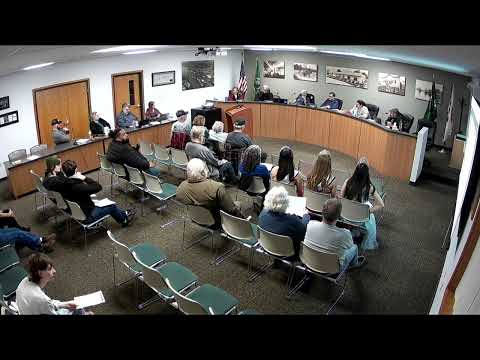
Anthony Yee of Kittleson & Associates told the Woodland City Council on March 16 that the Exit 21 interchange project has cleared several major design milestones and remains on the schedule for advancing through engineering.
Yee said the Washington State Department of Transportation completed an intersection control evaluation that established the interchange form and that a roundabout peer review helped set geometry for roundabouts, pedestrian pathways and bike lanes. “WSDOT is very much on board with the roundabouts,” Yee said, adding the agency’s recent comments did not change the project footprint.
Caleb Cox, the project’s lead designer, said the team is in the design approval phase and preparing preliminary plans for approval. He described work now under way—typical roadway sections, lane and sidewalk widths, and structural analyses for retaining walls where sidewalks will be placed behind bridge piers to avoid altering the I‑5 overpass.
Consultants said geotechnical sampling and stormwater design are proceeding, and the team is preparing to advance to roughly 60% engineering to refine quantities and cost estimates. Yee said the project team intends to advance designs up to approximately 90% but then hold the project pending the outcome of a biological assessment required by state and federal environmental reviews. “We will submit the biological assessment as scheduled,” Yee said, and cautioned that their contacts expect the agency review to take “up to 2 to 3 years.”
Because that review could delay later permitting and construction, Yee said the consultant team proposes to use some available funds to study Exit 22 — a northern interchange the city has identified as likely to be stressed during construction — and to pursue near‑term operational improvements that could mitigate traffic while Exit 21 is built.
Mayor Deinhardt and council members pressed the consultants on truck and school‑bus circulation through the proposed roundabouts; Yee said design vehicles and computer simulations have been run and that the plan sets include swept‑path and sight‑distance checks required by WSDOT. He also described measures to treat stormwater runoff and the team’s coordination with WSDOT structural and environmental staff.
The consultants noted local funding realities: the city will continue to carry design costs and contingency funding until construction grants (state or federal) are secured. Yee said, if reviews and approvals proceed on an optimistic schedule, construction could begin in the late 2029–2030 window, but that timetable depends on the outcome and timing of the biological assessment.