Get Full Government Meeting Transcripts, Videos, & Alerts Forever!
Get email alerts on the Public Defense Funding topic
No spam. Unsubscribe anytime.
Senate debates formula to tie public‑defender funding to DA warrants; members defer for more fiscal detail
Summary
Lawmakers considered a bill to create a stable funding formula for the Office of Public Defender tied to district attorney warrants, eliciting detailed debate about distribution, oversight and out‑year fiscal exposure; committee adopted amendments but deferred further action for additional data.
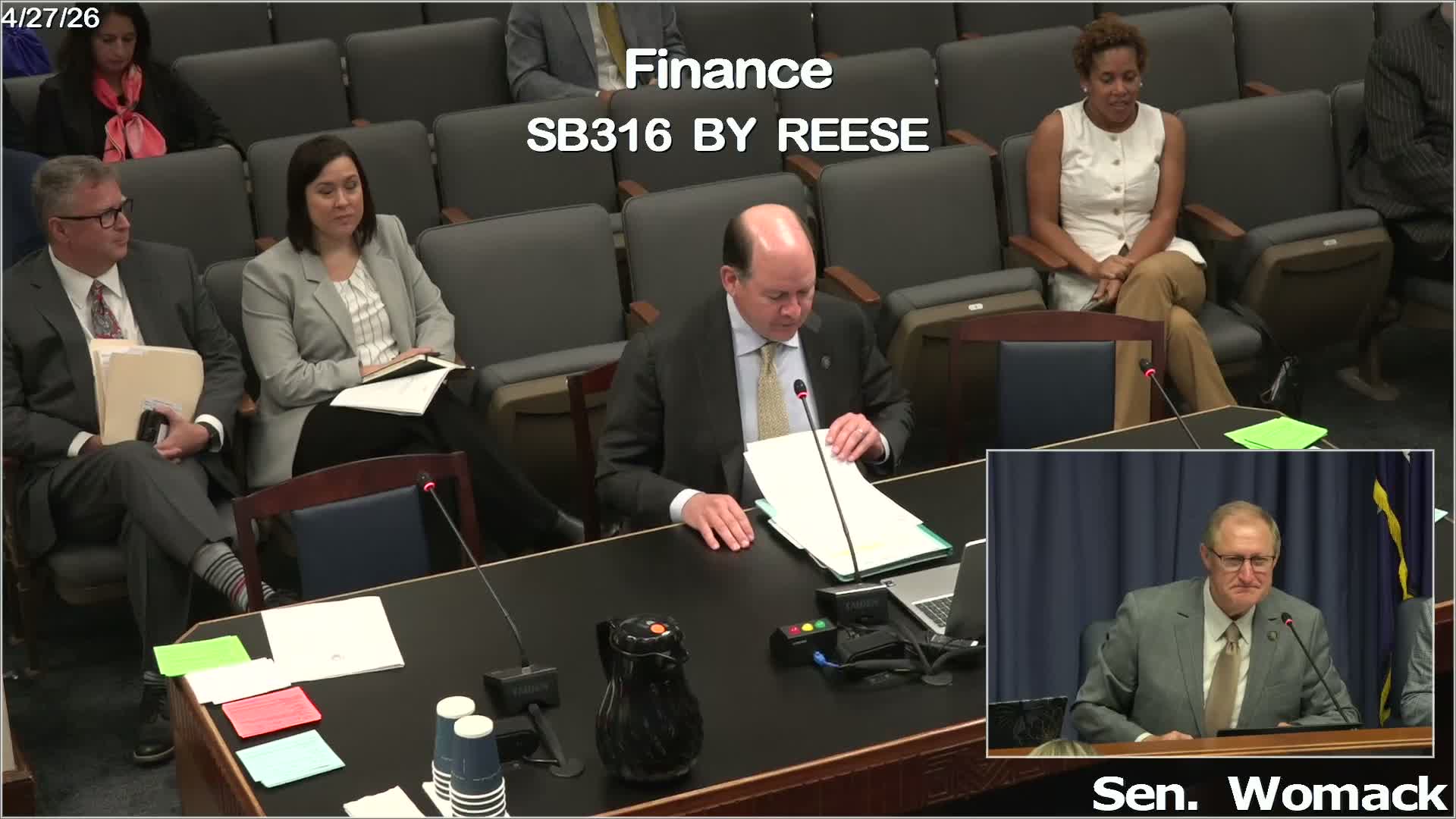
Senator Reese introduced legislation to create a predictable funding formula for the Office of Public Defender that would tie the agency’s annual appropriation to the number and value of district attorney (DA) warrants, plus a statutory supplement. The sponsor said the change would stabilize funding and enable long‑term planning, while the amendment delays implementation until fiscal year 2027‑28 and ties the first calculation to existing DA warrants to avoid a year‑one fiscal spike.
State Public Defender Raymond Starnes testified the administration has historically lacked predictable revenue, hampering multi‑year planning and group benefits contracting for contract attorneys. "We could not survive without" state supplemental appropriations, Starnes said, and described reforms that have reduced insolvencies and lowered administrative costs. He told senators the office currently pushes more than 75% of funds to local districts and has seen improvements in hiring and budgeting under recent reorganization.
Members broadly supported the goal of stability but voiced concern about out‑year fiscal implications if separate legislation increases DA warrants or DA pay. Legislative fiscal office analyst Daniel Drea explained fiscal‑note mechanics and cautioned that other pending bills (including DA warrant increases or salary changes) could increase the public‑defender allocation in future years because the formula is tethered to DA warrant counts and compensation levels.
Several senators urged additional guardrails to ensure equitable distribution to districts and to avoid a top‑heavy allocation. Starnes said statute already requires a minimum percentage be pushed to districts and that the office tries to exceed that floor; he also noted the agency’s low administrative cost compared with national averages.
After extensive questioning and adoption of amendment set 2602 (which sets the baseline approach and timing), the committee deferred SB 316 to allow members to review out‑year fiscal interactions and related House bills. The sponsor and fiscal staff agreed to produce additional detail on the distributional consequences and scenarios showing how DA warrant changes would affect the public‑defender appropriation.