Get AI Briefings, Transcripts & Alerts on Local & National Government Meetings — Forever.
County gets financing plan options for sales‑tax affordable‑housing fund; staff to refine loan terms
Loading...
Summary
SB Friedman presented program guidelines, a developer application and three loan‑term options (30‑year amortization, interest‑only with year‑15 balloon, and a hybrid) for the county's IST sales‑tax funded affordable housing program and said projects typically take two-plus years from conditional approval to completion.
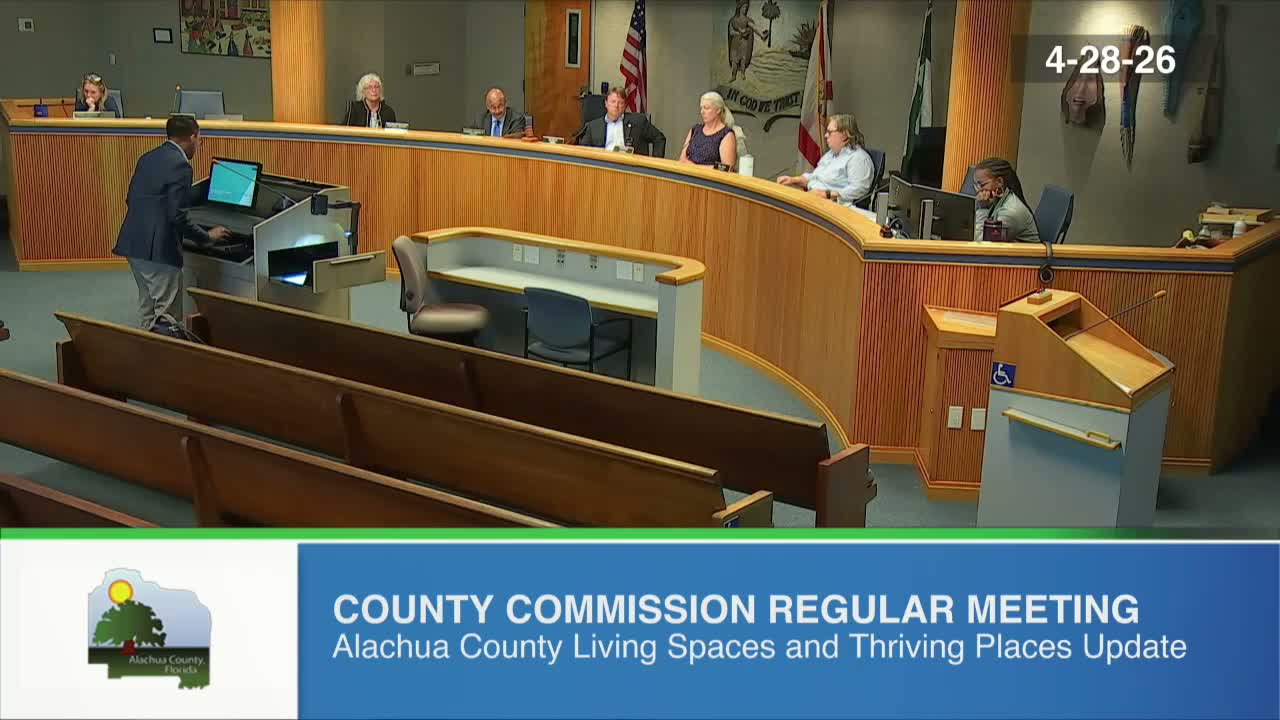
Consultants from SB Friedman updated the commission on implementation of the county’s sales‑tax (IST) affordable‑housing program, walking the board through an Excel‑based application and scorecard, potential loan terms for gap financing, and options for land‑purchase/ground‑lease treatment.
Elena Kaminer (speaker 27) told commissioners the county has drafted program guidelines, prepared a more user‑friendly assistance application and scoring tool, and is negotiating term sheets for two previously approved projects (cited as Royal Park/Seniors by Banyan and Oak View Apartments). "The fastest we really see it happen is at least 2 years," she said, explaining the time needed for conditional approvals, capital‑stacking and construction.
Kaminer presented three loan‑structure options for county gap financing: (1) traditional full principal‑and‑interest repayment over a 30‑year term, (2) interest‑only payments with a principal balloon at year 15, and (3) a hybrid that starts with interest‑only during initial stabilization then converts to principal and interest. She noted tradeoffs: shorter repayment accelerates capital recycling but may be infeasible for projects with thin operating margins; longer terms support deeper affordability.
On land treatment, SB Friedman described three models: a nominal ground lease (near‑zero rent that acts as a permanent subsidy), a fixed ground‑rent designed to repay county acquisition costs over time, and a share‑of‑NOI arrangement that adjusts payments to project cash flow. Commissioners discussed maximizing capital recycling versus preserving flexibility to enable projects with deep affordability.
Kaminer cited Pinellas County as an example, where nearly 3,600 units across more than 40 IST‑funded projects have been approved, and suggested the county adopt scoring priorities that reward permit‑ready developments, mixed‑income approaches and readiness to proceed. Near‑term steps include launching the live application and renegotiating terms with the two approved developers.
Next steps: staff will finalize program guidelines and publish the application/scorecard; the board asked staff to explore a loan‑loss‑reserve/guarantee model and requested project‑by‑project flexibility in loan structures so deeper‑affordability projects remain viable.