Get Full Government Meeting Transcripts, Videos, & Alerts Forever!
Get email alerts on the Vouchers And Veterans topic
No spam. Unsubscribe anytime.
Committee advances ordinance to bar rejecting tenants for using vouchers, forwards measure to full council
Summary
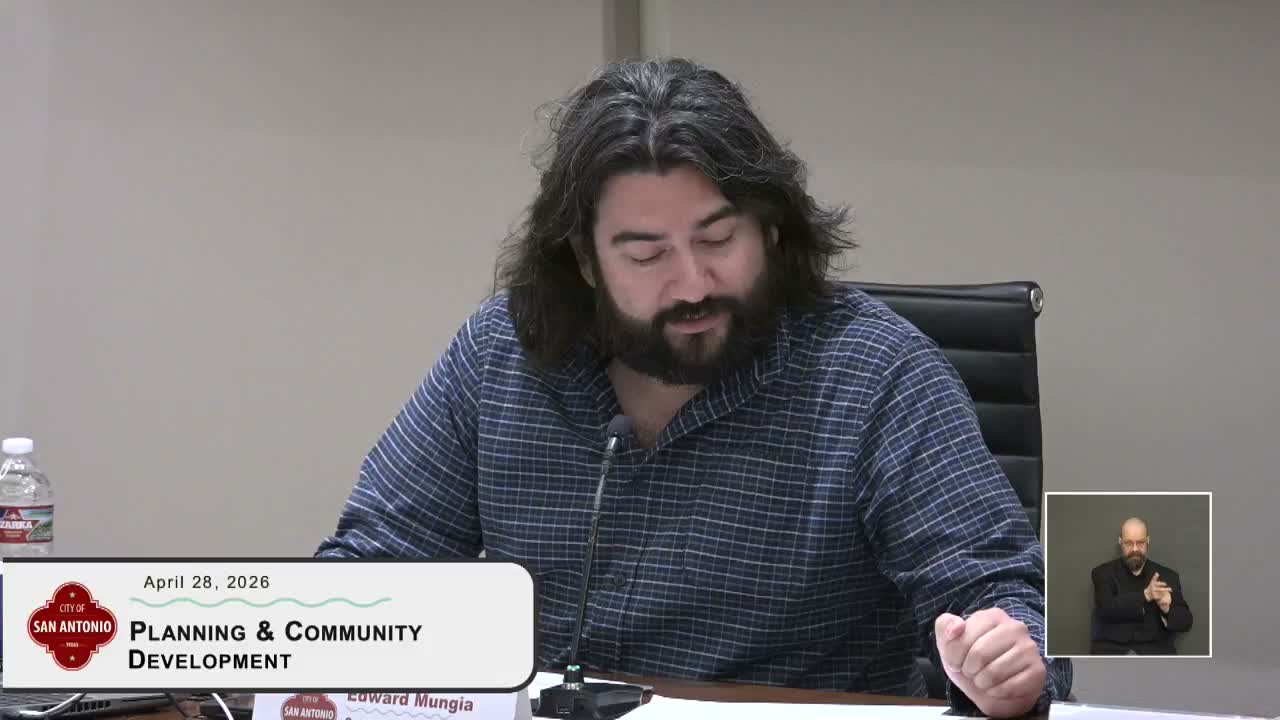
After hours of public testimony, a San Antonio committee voted unanimously to send to the full council a proposed ordinance that would bar denying tenancy because of voucher income for veterans, pairing the measure with a pilot incentive (including $500 landlord payments) and implementation conditions for smaller landlords.
A San Antonio City Council committee voted unanimously April 28 to forward to the full council a proposed ordinance intended to prevent landlords from denying tenants because their rent is paid with housing vouchers, particularly for veterans who use vouchers to secure housing.
The ordinance, sponsored by Councilmember Castillo and described to the committee by Verónica González, a housing-services director, would prohibit operators of rental housing from denying a prospective tenant solely on the basis of voucher income. Staff recommended combining the ordinance with operational fixes the city and partners are already pursuing: bridge financing to cover payment delays, gap funding so rents can match market rates in some ZIP codes, and a landlord-incentive pilot. González told the committee the pilot could provide $500 incentives and staff estimated $500,000 could support roughly 900 moves into housing under the proposed approach.
The measure follows extensive public comment from veterans, advocates and property managers. Tony Fuentes, who said he is the executive director of the Coalition for Veteran Families Antonio, urged the council to “prohibir la discriminación en contra de los veteranos y utilizar estos vales,” arguing veterans face repeated denials despite qualifying for vouchers. Several veterans and service providers described mental-health needs, long inspection delays and payment timing that can deter landlords from participating in voucher programs.
Opportunity Home, the local voucher administrator, told the committee it is accelerating processing and offering relocation and deposit-assistance services to reduce delays. Steffie Rodríguez, identified in the hearing as Opportunity Home’s voucher-program director, said staff are working with landlords and the county to speed payments and “facilitar este proceso lo más que se pueda.”
Committee members discussed enforcement approaches and owner burden. Members and staff debated whether the ordinance should apply citywide or initially to larger landlords, how complaints and inspections would be handled (staff suggested using 311 and housing-services compliance), and whether penalties should include training, administrative fees or criminal fines. The committee’s motion forwarded the ordinance to full council with a stipulation limiting initial applicability to property owners with five or more rental units and asked staff to return with implementation details and options for scaled enforcement.
The committee vote was unanimous. The committee also directed staff to continue coordinating with housing partners, to refine metrics (including how many new households the pilot serves and the demographic impacts) and to return with a proposed implementation plan and budget language. The full City Council will consider the ordinance and any fiscal appropriations in a subsequent meeting.