Get Full Government Meeting Transcripts, Videos, & Alerts Forever!
Get email alerts on the Land Use topic
No spam. Unsubscribe anytime.
Bozeman board receives training on Montana Land Use Planning Act, zone map amendments and new appeals role
Summary
City staff and the city attorney trained the Community Development Board on how the Montana Land Use Planning Act changes the board's advisory review of zone map amendments and adds a new, quasi-judicial appeals path from administrative land-use decisions. Key points included who may initiate amendments, the 'substantial compliance' standard, notice rules and ex parte limits for appeals.
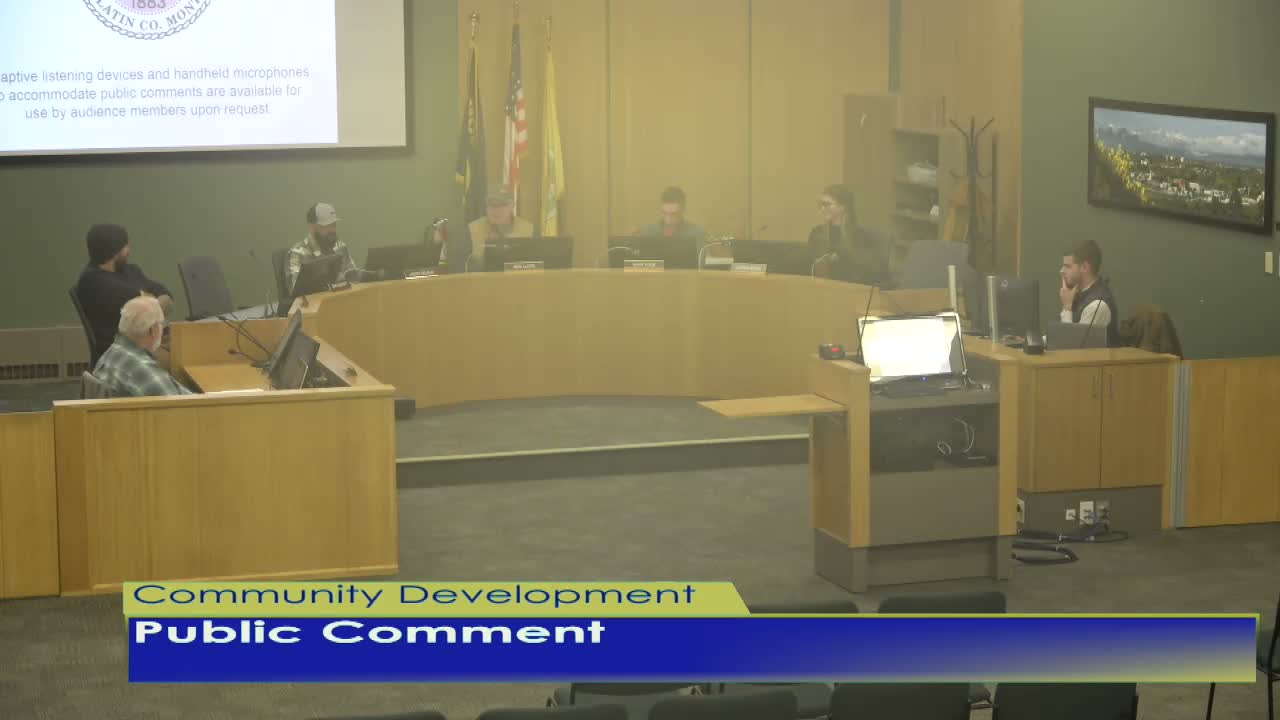
Chris Saunders, a city staff member who led the training, told the Bozeman Community Development Board that the Montana Land Use Planning Act (MLUPA) reshapes how the city handles zone map amendments and appeals.
"The Montana Land Use Planning Act is mostly a pretty high level thing, and then you have local implementation language for that," Saunders said, explaining that the land use plan sets high-level policy and the Unified Development Code implements local regulatory detail. He told members the board's role remains advisory: the City Commission is the final decision-maker.
Why it matters: the board now must base recommendations on the MLUPA's 'substantial compliance' standard with the community plan, document findings of fact on the public record and pay close attention to procedural requirements that support defensible decisions if challenged in court.
Who can ask for a map change: Saunders said MLUPA clarifies initiators for zone map amendments. "It used to be that this board could suggest an amendment ... that's now specified that it can be owners, an individual property owner, group of property owners, or the electors," he said, summarizing statutory initiators and adding the City Commission may also initiate changes.
Application and review process: staff described a three-to-four month timeline for a clean, complete application to reach a Commission decision; missing or late data can extend that. Applications are screened for completeness, routed to a Development Review Committee (DRC) for technical checks (planning, engineering, fire, parks) and then proceed to staff report, public notice and a public hearing.
Limits on conditions and notice changes: Saunders stressed a statutory constraint: "we cannot attach conditions to a zone map amendment," meaning the board and Commission must consider the full set of uses allowed in a district rather than promise a specific outcome tied to a condition. He also noted Bozeman's UDC has expanded mailed notice from 200 feet to 300 feet and continues to rely on posting, newspaper (the Chronicle) and online notice to reach affected property owners.
Appeals and the board's new role: Greg Sullivan, the city attorney, told members that MLUPA creates a formal appeals path from final administrative land-use decisions (subdivisions, site plans, variances, special use permits and similar administrative approvals) to this board, with a 15-business-day filing window for aggrieved parties. Sullivan instructed members to treat appeals more like judicial proceedings: avoid ex parte contacts, disclose conflicts on the record and limit deliberations to the issues raised in the administrative record.
"You have to think of yourself as judges," Sullivan said. "...these are public hearings, but when you're hearing an appeal you need to think about due process and avoid ex parte communications."
Record and findings: both staff and counsel repeatedly urged clear, robust findings that explain why the board reached its recommendation. Members were advised to explicitly state how public comment influenced findings, to document the factual basis for each finding and to follow statutory criteria so decisions are defensible should they be litigated.
Other takeaways: staff said communities across the state are still implementing MLUPA, that some provisions can pull in competing policy objectives (for example, maximizing use of natural resources vs. avoiding environmental impacts), and that the board should be pragmatic about when it asks staff to return with additional analysis.
Next steps: the board received training materials and slides; staff said the presentation will be recorded and available in the board's public materials. No formal policy decision was taken at the meeting; the board will apply these procedures at upcoming cases and hearings.