Get Full Government Meeting Transcripts, Videos, & Alerts Forever!
Get email alerts on the City Management topic
No spam. Unsubscribe anytime.
Study commission keeps commission–city manager structure, adds annual city manager review
Summary
The Bozeman City Study Commission voted 5–0 on March 5 to retain the commission–city manager form of government and to add a sentence to the charter requiring an annual comprehensive performance review of the city manager; commissioners left contract details and removal mechanics to contract language and a recommendation process.
The Bozeman City Study Commission voted 5–0 on March 5 to retain the commission–city manager form of government and said it will add language to section 3.01 of the draft charter requiring an annual comprehensive performance review of the city manager.
The decision followed a period of public comment and internal discussion about the balance between charter provisions and the city manager contract. Commissioners emphasized that the charter should set broad structure and that details about term length, severance, and removal should be addressed in the manager’s employment contract and in recommended practices. City Attorney Greg Sullivan advised the commission to consider the term and removal provisions together, saying the contract must be aligned with the charter’s removal provisions and noting that ‘‘if you’re going to remove, you remove pursuant to the terms of the contract.’’
Why it matters: The vote affirms the commission’s current governance preference at a time when residents and some commissioners have suggested alternatives. Commissioners said keeping the structure preserves professional administration while giving the City Commission tools for oversight and for refining hiring and severance practices.
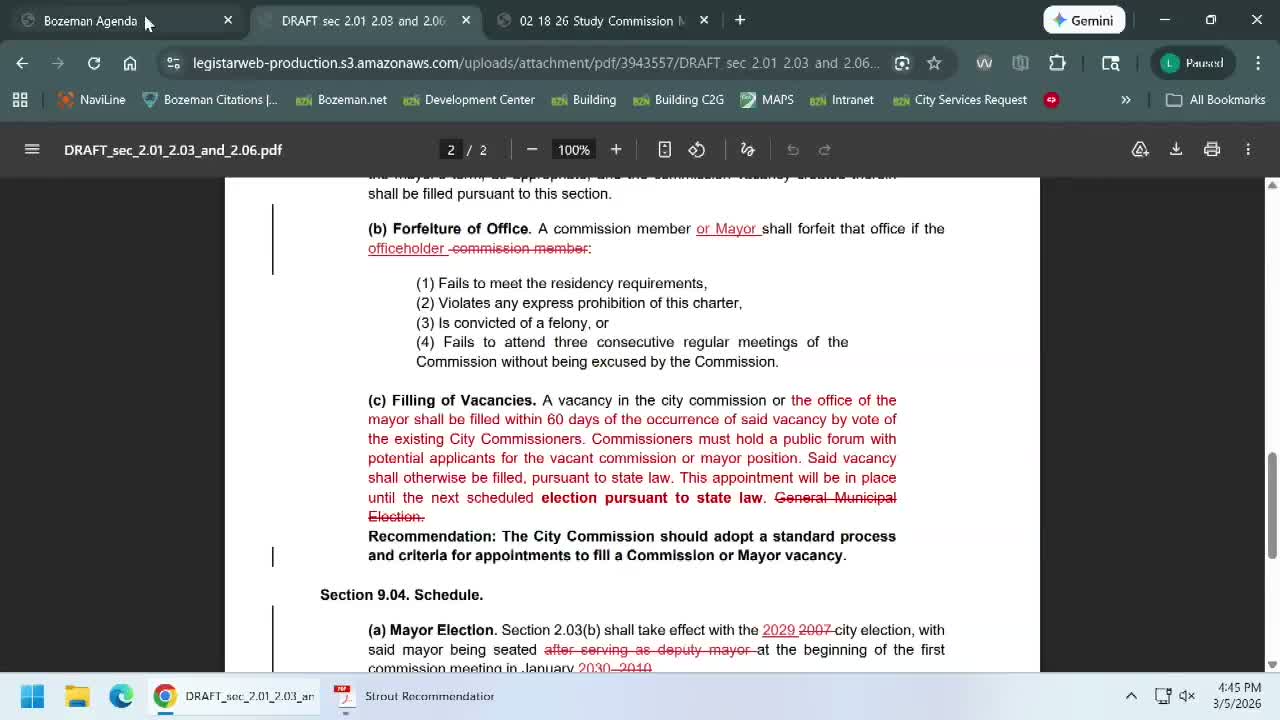
What happened: Commissioners reviewed draft charter edits for sections 2.01, 2.03 and 2.06 and discussed recommended changes such as requiring a commissioner job description to be reviewed every five years, removing the deputy-mayor sequencing in favor of an at‑large mayoral election, and adding a vice-mayor appointment process and public applicant forums for vacancies. After public comment and staff discussion the commission formally moved to retain the commissioner–city manager structure; the motion carried 5–0.
Public concerns and legal context: Multiple public speakers urged greater accountability around city manager contracts and questioned past severance payouts. One commenter said large severance payments had cost taxpayers hundreds of thousands of dollars; commission members asked staff and counsel whether the charter can place guardrails on contracts. Sullivan replied that the contract is a public document once approved and that practice has been to add performance standards into individual contracts after problems arise. He told the commission it is appropriate to set a charter-level expectation of annual review and permit contract language to define the mechanics and removal provisions.
Next steps: Commissioners agreed to draft amendment number 2 to reflect the agreed language for section 3.01 (adding an annual comprehensive performance review) and to leave more prescriptive items, such as specific review methodology or contract term length, to contract language and staff recommendations. The commission asked staff and the MSU Government Center for comparative materials to support further drafting and outreach.