Get Full Government Meeting Transcripts, Videos, & Alerts Forever!
Get email alerts on the Water Plan topic
No spam. Unsubscribe anytime.
Lafayette staff present state‑first integrated water‑efficiency and drought‑response plan, seek council input
Summary
Lafayette city staff presented a 124‑page draft that combines water‑efficiency and drought‑response planning into one state‑submitted roadmap. The draft sets a 7‑year cycle with targets of 2% systemwide savings and a ~2.5 GPCD residential reduction and includes measures from gray‑water study to billing upgrades and outdoor irrigation rules.
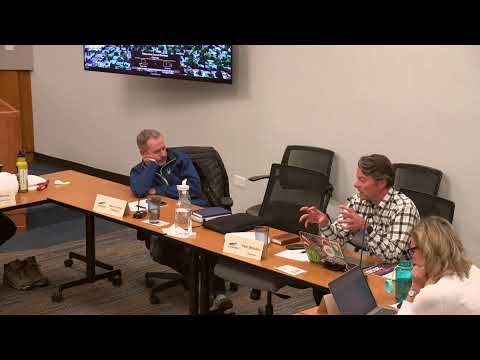
City staff on Monday presented Lafayette’s draft integrated water‑efficiency and drought‑response plan to the Lafayette City Council, describing a 7‑year roadmap that pairs long‑term conservation measures with staged drought responses.
The plan, staff said, merges earlier conservation and drought documents and is designed to be one of the first integrated plans of its kind to be submitted under state guidance. “This plan really supports a resilient water supply for Lafayette’s future,” said Carrie Bischoff, the city’s water resources manager. Consultants working on the plan include Courtney Black of Jacobs Engineering, who detailed the plan’s two operating modes: water‑efficiency times, focused on long‑term demand reductions and co‑benefits such as landscape conversions, and Drought Response Years, which call for temporary additional savings to preserve essential uses.
Why it matters: staff said the single document is meant to improve coordination, provide consistent community messaging and set measurable targets for the next update cycle. The draft sets two headline targets to be revisited after seven years: a 2% systemwide water savings and roughly a 2.5 gallons‑per‑capita‑per‑day (GPCD) reduction in residential indoor/outdoor use. Staff explained the 7‑year timeline aligns with state plan update requirements.
Key details in the draft include nearly 48 efficiency activities across planning, measurement and customer programs, and a monitoring plan to evaluate progress. The draft also lists gray‑water program analysis as activity #48; staff noted council adopted Resolution 2025‑73 to opt out of an immediate state program requirement and that staff estimated an initial cost of about $35,000 to study a local gray‑water program.
Staff emphasized data and customer access as central tools. Councilors asked about the evapotranspiration (ET) data and the weather stations used to estimate landscape needs; staff said ET was calculated from nearby stations (Longmont/Boulder County) and described standard methods for computing ET percentages relative to a 30‑year normal. Presenters also described plans to replace Lafayette’s utility‑billing system and, where possible, integrate a customer portal so residents could view near‑real‑time usage and receive leak alerts.
Outdoor use and rates: the draft reiterates Lafayette’s conservation ordinance limits (for example, irrigation prohibited between 10 a.m. and 6 p.m., three days per week under normal conditions, escalating to fewer days under higher drought stages) and proposes continued use of tiered rates to encourage conservation. Staff highlighted existing incentives and partnerships — smart controller rebates, turf‑replacement programs and demonstration gardens — and noted the city is exploring water budgets and more targeted customer outreach.
Council reaction and missing items: members broadly praised the plan’s thoroughness but pressed staff on several communication and operational issues: how model projections vs. measured data will be labeled in the report, clearer signage of the 7‑year target timeline, and how the public will be told what the city’s current drought status actually means. Several councilors said the current stage nomenclature (stage 0 mandatory restrictions vs. stage 1 voluntary measures) caused public confusion and urged staff to clarify immediate public messaging. Staff said they are refining enforcement materials (education → warnings → fines), drafting supporting ordinances should escalation be required, and planning a 60‑day public review period on Lafayette Listens starting after the council review.
Next steps: the plan will be posted on Lafayette Listens for council and public feedback (council access window to mid‑May was described by staff), followed by a required 60‑day public review and a final draft that will return to council for adoption by resolution later this summer, then submitted to the state for approval.
Authorities and cost items mentioned: Resolution 2025‑73 (council opt‑out of the state gray‑water program) and a staff‑estimated $35,000 study cost for a local gray‑water program. Staff also referenced state requirements for submitting a water‑efficiency plan every seven years.
The council did not take formal action on the plan at the meeting; staff will incorporate council feedback and the Lafayette Listens input before returning with a final draft for adoption.