Get Full Government Meeting Transcripts, Videos, & Alerts Forever!
Get email alerts on the Lakota Presentation topic
No spam. Unsubscribe anytime.
Consultants outline preservation‑first approach; residents press for enforceable NCOD guidelines and walking tours
Summary
The Lakota Group presented its approach to updating Bozeman’s NCOD design guidelines, emphasizing community engagement and clearer, color‑coded guidance; dozens of residents told the board the guidelines must have “teeth,” requested walking tours, and raised concerns about recent 90‑foot downtown development.
Consultants from the Lakota Group presented their framework for updating Bozeman’s Neighborhood Conservation Overlay District design guidelines, telling the Historic Preservation Advisory Board the goal is clearer, more usable guidance and robust public engagement.
Suraj Advani, Senior Vice President of the Lakota Group, said the team will bring national best practices while tailoring recommendations to local conditions and stressed engagement as core to the process. “We’re here to help protect character, provide clarity, offer predictability,” Advani said during the presentation.
Team members described tools the consultants often use in other cities: color‑coding to show which guideline items are advisory versus regulatory for Certificate of Appropriateness reviews, flowcharts to explain review processes, and illustrated diagrams to make decisions easier for property owners, architects and review boards.
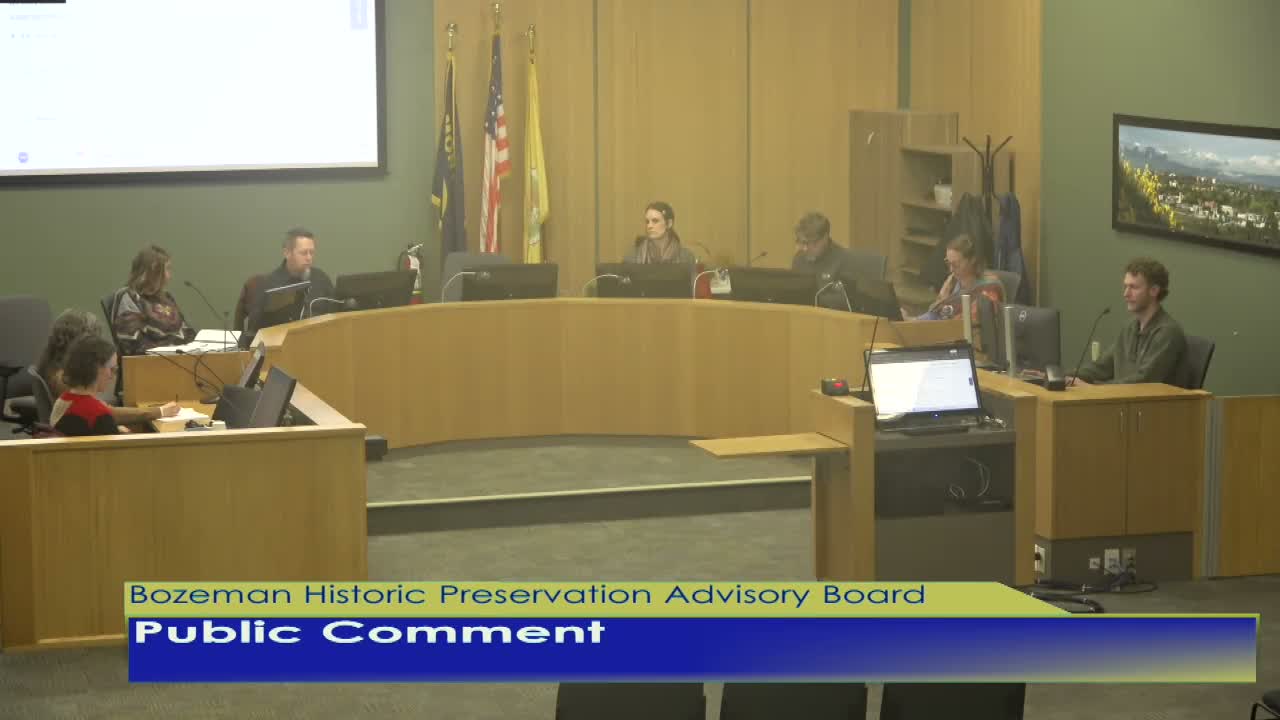
Public commenters — many of whom live in the NCOD — said the underlying problem is not a lack of guidance but a perception that guidelines are treated as optional. “Guidelines matter and are not loosey‑goosey language that we can take or leave,” said Zara Osman, who cited sections of the Bozeman municipal code and the Secretary of the Interior’s Standards in urging enforceable protections. Several commenters pointed to recent downtown projects they called too tall or poorly transitioned into adjacent historic neighborhoods and asked the board to ensure the update preserves solar access, viewsheds and historic fabric.
Board members and consultants discussed methods to reach both residents and builders. Consultants said stakeholder interviews, walking conversation tours and targeted meetings with design professionals are central to their approach; staff emphasized the city’s proposed neighborhood focus group and an online engagement hub (Engage Bozeman) to gather broader feedback.
Residents requested that the city publish raw engagement data and more than a one‑page summary, so outside analysts and neighborhood volunteers can verify how public input was interpreted. Board members supported stronger outreach and edged toward making walking tours and a survey core tools in the engagement schedule.
No formal policy decisions were made on building height at the meeting, but one board member asked that discussion of reverting downtown B3 zoning from 90 feet back to 70 feet be placed on a future agenda; staff said they would consult the city attorney about whether and how to schedule that item.
The presentation and the meeting’s public comment period set the stage for the next step: staff will take the amended engagement plan to the City Commission on March 10 and the Lakota Group will return in April to begin spring engagement, including in‑person meetings and neighborhood walks.