Get AI Briefings, Transcripts & Alerts on Local & National Government Meetings — Forever.
Judiciary B reports a slate of House bills favorably, including charitable bingo, protective-order change and jury mileage hike
Loading...
Summary
On April 21 the Judiciary B committee moved numerous House bills out of committee by voice vote without recorded roll calls. Items included charitable bingo expansion, allowing DOB in protective-order filings for NCIC, clarifying court reporter records ownership, sheriff per diem alignment, jury mileage reimbursement and several local bills.
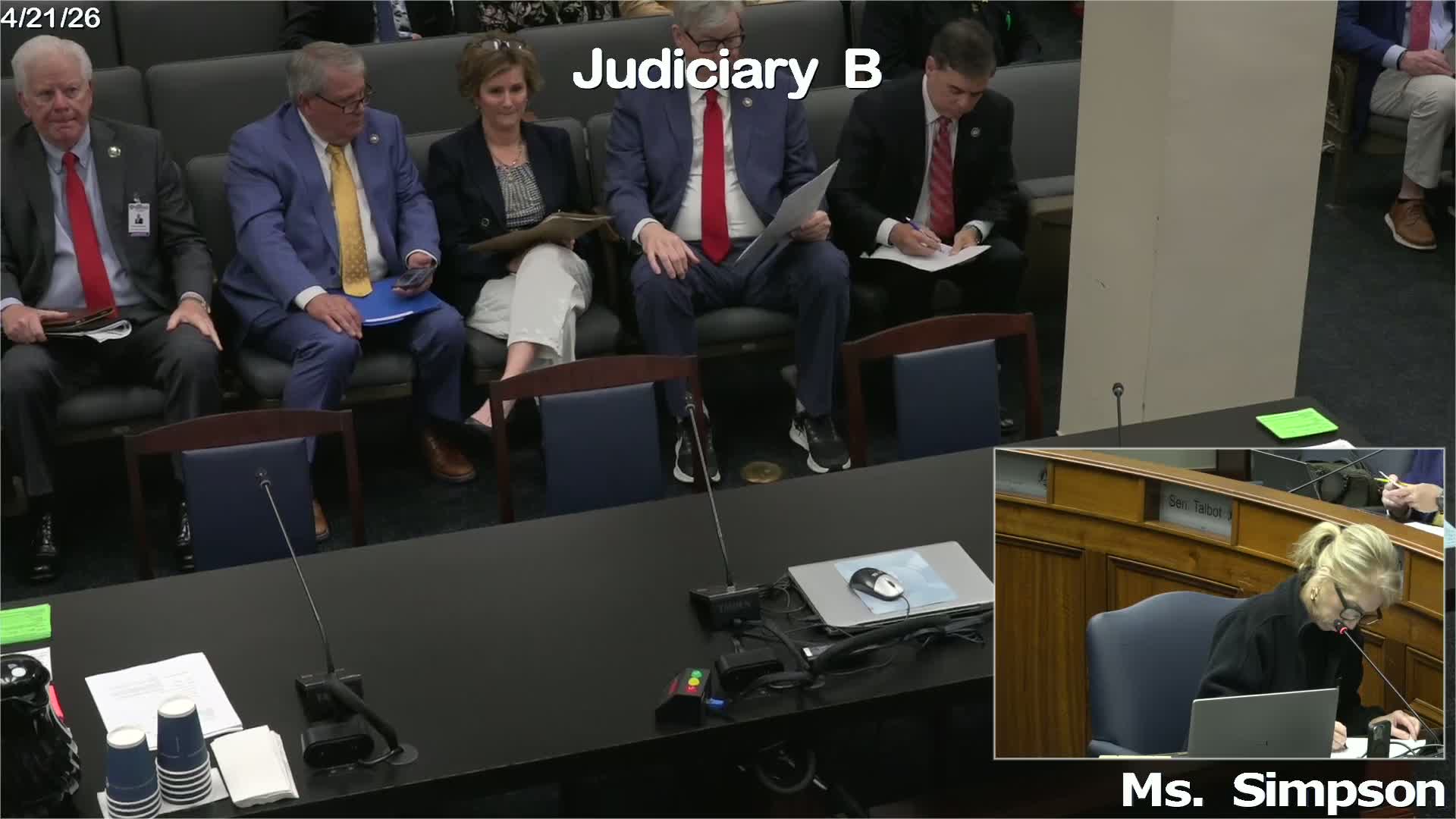
The Judiciary B committee met April 21 and, without recorded roll-call votes, reported a range of House bills favorably and deferred one bill for further language work.
Key outcomes at a glance:
- House Bill 337: Representative Butler said the bill lets charitable organizations hold four "super bingos" per year instead of two. Jacqueline Green, executive director of the Calcasieu Council on Aging, said "This bill is not an expansion of gaming" and asked for support. Committee reported HB 337 favorably.
- House Bill 141: Sponsor said current protective-order filings prohibit listing a date of birth; the bill allows DOB to go into NCIC and firearms-prohibition records. Committee reported HB 141 favorably.
- House Bill 179: Sponsor and proponents clarified that notes and recordings of court reporters are the property of the court, not the reporter; committee reported HB 179 favorably.
- House Bill 143: The bill aligns statutory per-diem rates paid to sheriffs for holding state inmates with the amounts actually paid ($29.39 cited by the sponsor). Multiple law-enforcement groups were listed in support and the committee reported the bill favorably.
- House Bill 233: Author proposed raising jury mileage reimbursement from 16¢ (1961 statute) to about 72¢, estimating roughly $3,600 average increase per judicial district; committee reported HB 233 favorably.
- Several local and technical bills (including House Bills 36, 46, 351, 124 and 436) were presented, discussed briefly, and reported favorably without recorded objections. One bill (House Bill 187) was deferred at the author's request to allow additional stakeholder work.
Each reported bill was advanced by voice vote or unanimous consent; the committee chair solicited objections and, when none were voiced, the bills were reported favorably. The committee adjourned after Senator Harris moved to adjourn and no objection was recorded.
What to watch next: The bills reported favorably will proceed to the next legislative steps per regular order; sponsors and witnesses noted specific implementation steps (judicial vetting for facility dogs, local permitting for fireworks, budgeting implications for jury mileage) that will shape floor debate and any subsequent amendments.