Get AI Briefings, Transcripts & Alerts on Local & National Government Meetings — Forever.
Lived‑experience presenters urge system changes after testimony about policing, weaponization and safety risks in 988 responses
Loading...
Summary
A lived‑experience advocate described how 988 calls can lead to policing, coercive interventions and legal consequences for people on the autism/IDD spectrum, and urged system changes; committee staff offered follow-up and referrals.
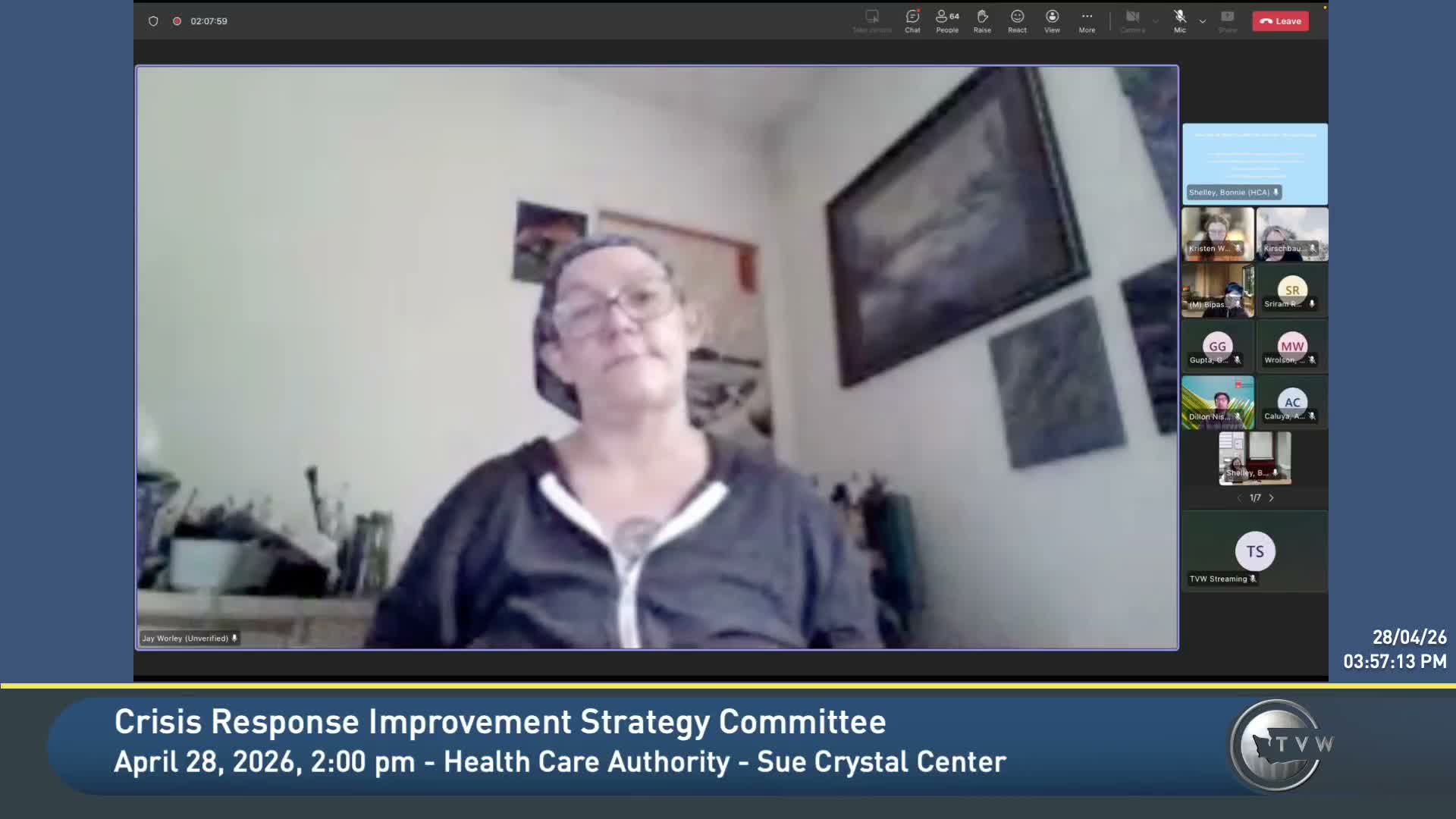
Jay Worley, a lived‑experience advocate, told the CRIS Committee that people on the autism and developmental spectrum face particular risks when calling crisis lines. Drawing on personal experience, Worley described how calls can trigger police co‑response in some jurisdictions, how records of crisis calls can be used in court and how the system can be weaponized against vulnerable people. "In Pierce County, it is a co responding area... every call to 988 is an opportunity to be nonconsensually incarcerated," Worley said.
Worley urged the committee to investigate ways to prevent 988 from being used as a tool that increases harm for some help‑seekers and asked for safe options that allow people to disclose distress without fear of coercive responses. Committee staff and agency leads thanked Worley for the testimony, noted they heard concerns about co‑response policies and offered to follow up by connecting callers with specific program staff for additional support.
Public commenters following Worley described gaps in insurance coverage for advanced treatments, concerns about privacy policies in provider portals, and a proposal for a user bio hub to reduce retraumatizing repeats of history; staff offered to share contact information and follow up outside the meeting.