Get Full Government Meeting Transcripts, Videos, & Alerts Forever!
Get email alerts on the Homelessness Policy topic
No spam. Unsubscribe anytime.
Fort Wayne council approves ordinance banning relocation of homeless people without an arranged shelter plan
Summary
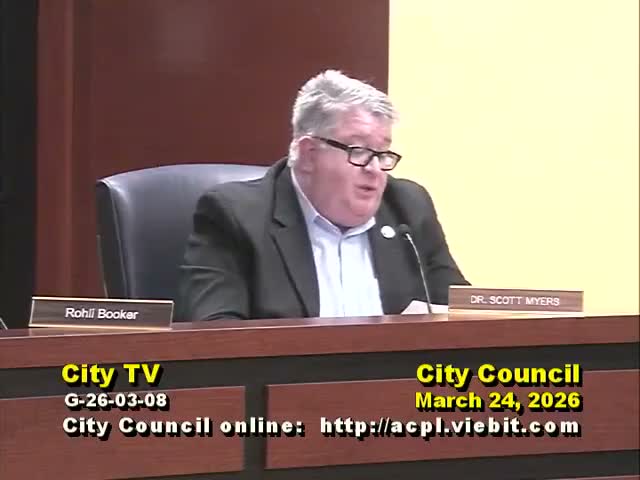
On March 24, 2026 the Fort Wayne Common Council passed ordinances that prohibit bringing homeless individuals from other communities and dropping them off without arrangements for fixed nighttime residence, adding a penalty to the municipal code and creating several exceptions; the measures passed unanimously.
The Fort Wayne Common Council voted to adopt two related ordinances on March 24 that bar transporting homeless people from other communities into Fort Wayne and leaving them without a clear plan for shelter, and that add a new penalty to the city’s ordinance violations schedule.
Andrew Downs, chief of staff to Mayor Tom Tucker, told the council the main bill is modeled on an ordinance from Joplin, Missouri and “basically says that you are prohibited from bringing a homeless person from another community to Fort Wayne and dropping them off without some clear plan for, quote, fixed regular and adequate nighttime residences.” He said the measure includes exceptions for people traveling for a hospital visit, jail transfers, or where an arrangement with a local shelter exists.
Downs also described the financial penalty the ordinance would add, saying, “There is a fairly heavy fine here of $2,500 and that is per individual.” That means multiple people transported in a single vehicle could trigger multiple fines, he said. The council separately approved a change to Chapter 39 (the municipal code’s schedule of penalties) to add that fine.
Council members pressed staff on enforcement and who would be liable. One member asked whether churches or other organizations that buy a ticket or arrange transport could be fined; Downs replied the liable party could be the individual responsible for the transportation and that legal questions about exactly who is fined will be worked out. On concerns about detection, Downs said outside communities with similar ordinances reported the law functions as a deterrent and noted local enforcement possibilities such as business or gas-station cameras and statements from someone who says they were brought to the city.
Council discussion also probed whether the measure would apply to people released from institutions. Downs said the ordinance does not directly address transfers of people who have been institutionalized for more than a year and that some provisions would not apply in those circumstances.
After debate, the council moved and seconded the motions and the votes were recorded in favor. The clerk announced the vote as eight members in favor, none opposed, on both bills. The ordinances take effect per the dates specified in the adopted language and the council set a proposed effective date in staff materials for April 8, 2026.
The adoption places an enforcement obligation on city staff and local service providers to verify shelter arrangements and, according to council discussion, may prompt follow-up work with legal staff and regional partners on cross-jurisdictional transport and enforcement mechanics.