Get Full Government Meeting Transcripts, Videos, & Alerts Forever!
Get email alerts on the Food Access topic
No spam. Unsubscribe anytime.
Indy Hunger Network tells committee 54% of central Indiana respondents experienced food insecurity
Summary
Indy Hunger Network presenters told the Public Safety committee a 2025 survey found 54% of central Indiana respondents experienced some food insecurity in the past year, and outlined programs including the FRESH hub, Community Compass app and a proposed $4 million food hub expansion.
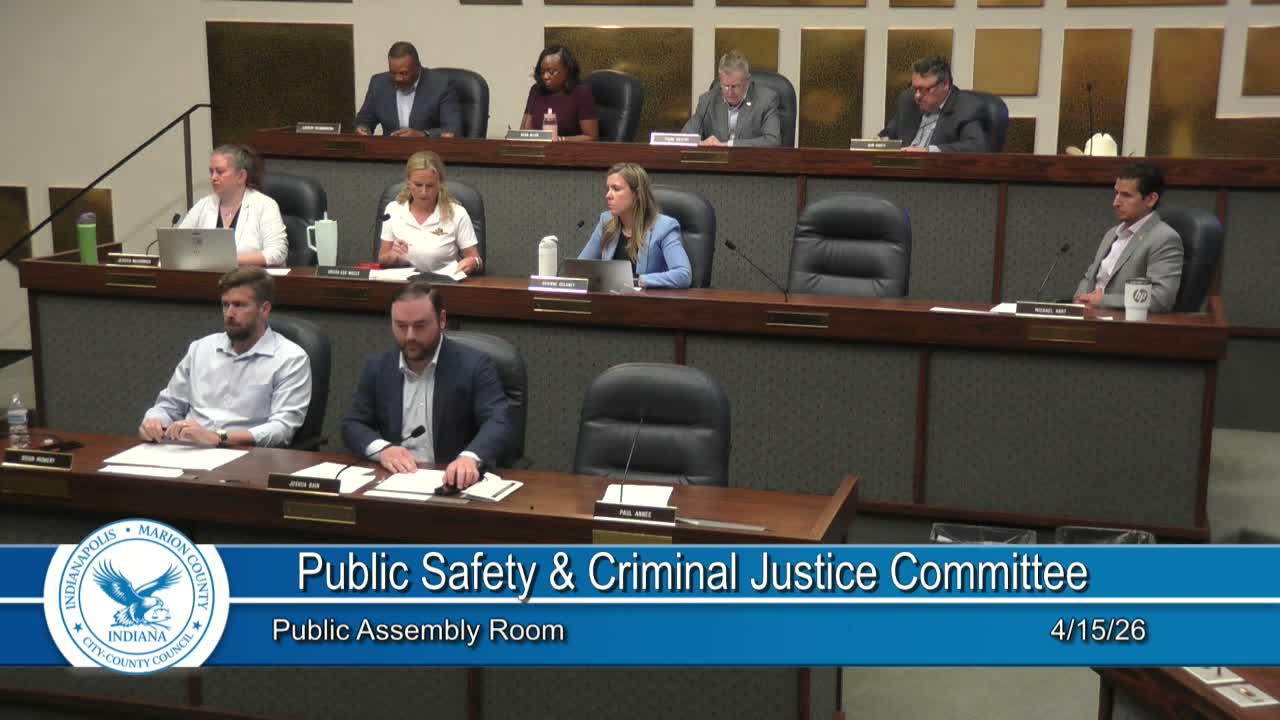
Kate Howe, executive director of the Indy Hunger Network, and Laura Dodds of Purdue Extension told the Public Safety and Criminal Justice Committee on April 15 that food insecurity is widespread in Central Indiana and that city-level policies can help reduce barriers to nutritious food.
Howe said a 2025 survey conducted with researchers at Indiana University found roughly 54% of central Indiana respondents experienced some level of food insecurity in the previous year and that households with children and gig workers showed higher rates. "Fifty-four percent of central Indiana respondents experience some level of food insecurity in the past year," she said, noting the research used an anonymous online survey to capture struggles respondents might not report in person.
Howe described the FRESH food resource services hub (started with ARPA funding) that provides one-on-one help applying for SNAP, WIC, school meals and other programs; she said the program helped thousands when ARPA funding was available and has since scaled back. She also highlighted Community Compass, an information app jointly developed with the Office of Public Health and Safety; the presenters reported Community Compass was used 187,000 times by about 54,000 unique users in the last year.
Laura Dodds discussed the commission’s priorities including a proposed 20,000-square-foot food hub to aggregate local growers’ products for institutional purchase; she said build-out is estimated at about $4 million and fundraising has not yet begun in earnest. Dodds also described work on urban farming, a forthcoming food equity plan and early conversations around food-waste reduction.
Councilors asked about governance and appointments to the Indianapolis Food Access Advisory Commission and the timeframe of the data; Howe said the survey data were collected February–April 2025. Committee members and public commenters suggested the city could help aggregate volunteer opportunities so residents can meet work or volunteer requirements tied to benefit eligibility and also provide pathways to summer jobs and service programs.
Harrison Jacobo of the Indianapolis Food Coalition told the committee that connecting volunteers to food organizations could provide meaningful opportunities for young people and help link food access work with violence-prevention strategies.
Howe asked the committee to consider the commission's recommendations and noted the commission’s work spans city and regional needs; members said they will follow up with staff for appointment lists, term dates and any vacancies.