Get AI Briefings, Transcripts & Alerts on Local & National Government Meetings — Forever.
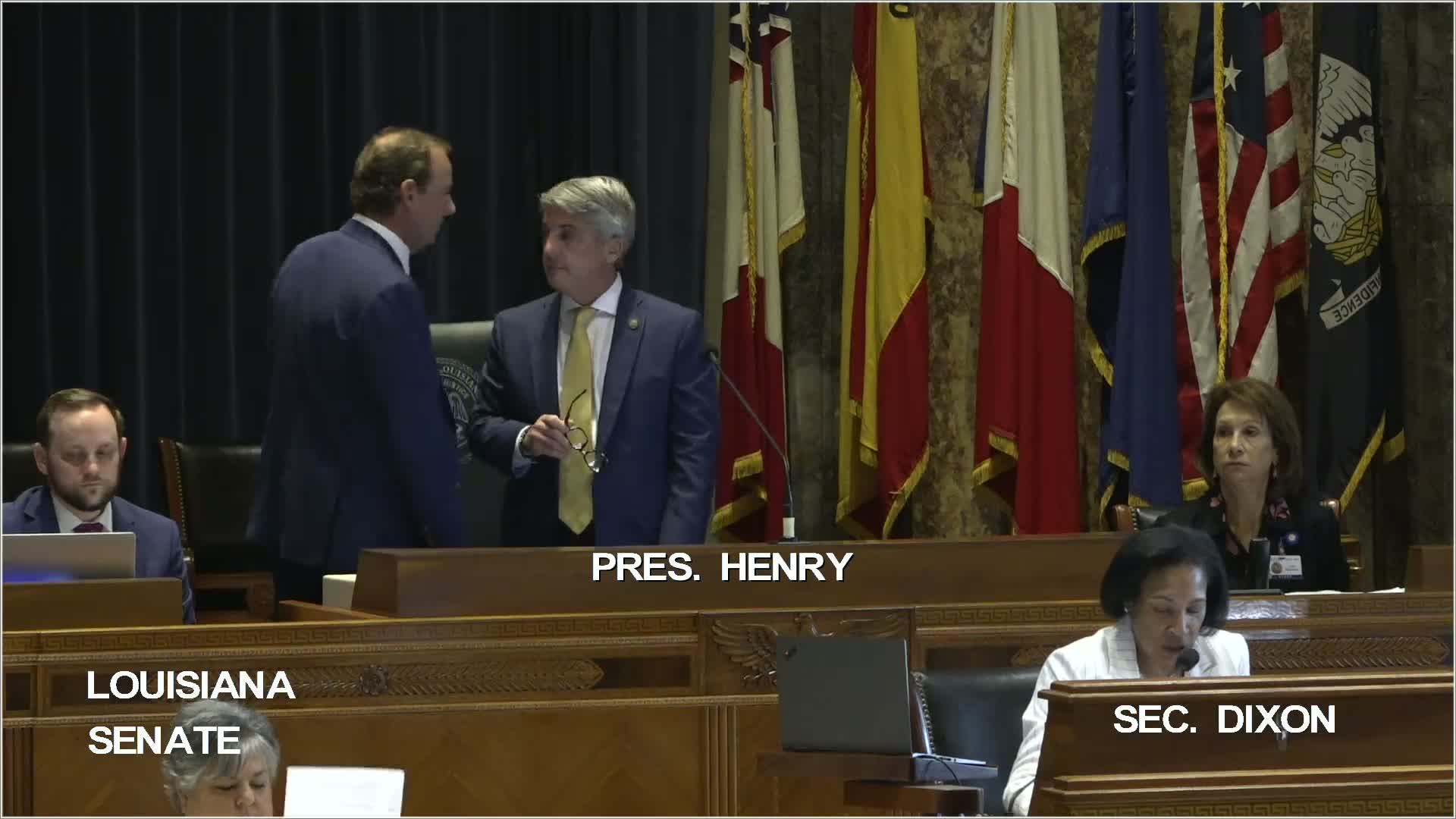
Senate returns Abraham's LUMCON governance proposal to the calendar after extended floor debate
Loading...
Summary
Senator Abraham's amendment to move LUMCON under a new seven‑member board and shift programs from the Board of Regents drew sustained questions about governance and access; after senators pressed for further changes, the chamber agreed to return the bill to the calendar for additional drafting.
Senator Jay Abraham introduced amendments to Senate Bill 4‑84 that would transfer several Board of Regents initiatives and place the Louisiana Universities Marine Consortium (LUMCON) under a new seven‑member governing board that explicitly includes two research universities.
Abraham told colleagues the change is intended to "maximize the asset" and expand the consortium's ability to draw federal research dollars, saying LUMCON currently draws down about $89 million in grants and could increase that total under a research‑university governance structure. "We have to maximize the asset we have," he said.
Several senators raised procedural and policy concerns on the floor. Senator Cathy questioned whether the amendment fairly preserves access for all public universities and asked whether Louisiana Tech (a research university north of I‑10) had been considered for inclusion; she said the bill could be perceived as giving an advantage to the two named research campuses. A number of colleagues asked who would determine what counts as "fair, reasonable and equitable" access and whether there would be an appeal process if access were denied.
Senator Bass and others noted the amendment would make the two research universities constant chairs of the new board, raising questions about agenda control and whether nonresearch universities would retain meaningful participation. Abraham said the amendment includes cooperative‑endeavor agreements to guarantee access and that "nothing's gonna change" for local partners in practice, but acknowledged the chamber could return the measure to the calendar to refine the language.
After more floor questions and several members asking for time to study the amendments, Senator Presley moved to return the bill to the calendar so sponsors and colleagues could work on language addressing the concerns raised on the floor; with no objection, the motion carried and the measure was laid over for further work.
What happens next: The bill was not voted on for final passage. Sponsors indicated willingness to accept drafting changes and to bring revised amendments back to the floor at a later date.