Get AI Briefings, Transcripts & Alerts on Local & National Government Meetings — Forever.
Committee hears data showing arrests up, LEAD diversions down; council seeks geographic breakdown and policy tweaks
Loading...
Summary
Seattle's Public Safety Committee reviewed data showing drug-possession arrests rose from 633 in 2024 to 942 in 2025 while LEAD post-arrest diversions fell from 256 to 180. Council members pressed SPD and LEAD for neighborhood-level data and clarity on officer discretion and the threat-of-harm assessment.
Seattle's Public Safety Committee on April 28 reviewed the city's 2023 public drug use and possession ordinance and data showing a sharp year-over-year increase in arrests alongside a drop in LEAD diversion referrals.
Greg Doss of central staff told the committee the ordinance (cited in the briefing as Ordinance 126896) emphasizes diversion but requires officers to complete a threat-of-harm assessment once they have probable cause. Doss said SPD data show arrests for drug use and possession rose from 633 in 2024 to 942 in 2025, while LEAD post-arrest diversions fell from 256 to 180 and pre-arrest social-contact referrals fell from 164 to 96. "Arrests are increasing 47% and diversions are decreasing about 30%," he said.
Seattle Police Chief Sean Barnes said diversion is valuable but cannot be the only tool. "Diversion is part of the solution, but it cannot be the only solution," Barnes told the committee, describing operational constraints and the department's efforts to reassign units to known hot spots. He said officers must still exercise discretion under state law and SPD policy when deciding whether to arrest.
Committee members pressed presenters for more granular data. Vice Chair Osaka asked for the figures broken out by specific locations such as 12th and Jackson, the Pike-Pine corridor and other known hot spots. "What I would specifically love to see here is this data broken out by specific geographic location," Osaka said during questioning.
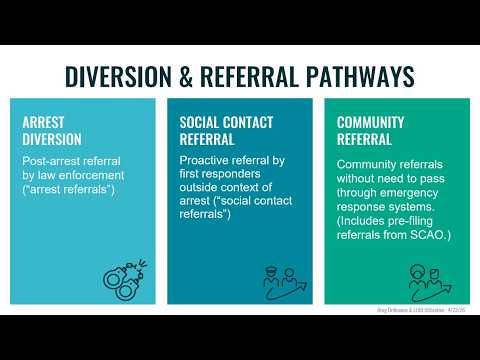
Assistant Chief Rob Brown and LEAD representatives described how referrals occur in practice. Brown outlined three referral pathways: arrest diversion (post-arrest warm handoff), social-contact referral (proactive first-responder referral), and community referrals. He noted operational realities—medical holds triggered by recent consumption, limited LEAD capacity at times, and the practical choices officers must make in the field.
Representatives from the LEAD program and its project management team said capacity constraints in 2024'25—partly caused by a reduction in city funding—contributed to fewer enrollments even as demand rose. LEAD's presentation included outcome data for a cohort of 606 enrolled clients referred since October 2023: the presenters said program success rises with time in services (for substance-use outcomes, roughly 19% at 3'6 months, 44% at one year and nearly 70% at two years).
Council members framed the issue as a policy tradeoff. Council member Rivera and others said the city must balance short-term public-safety impacts in commercial corridors with long-term recovery work. Rivera asked whether changes to the threat-of-harm assessment or additional sobering-capacity could improve consent to services and reduce repeat arrests.
No vote or ordinance amendment was taken at the meeting. Staff and LEAD said they will provide more detailed, precinct- or cross-street-level data and that LEAD capacity should increase following 2026 stabilization funding.
The committee moved next to presentations on related operational and enforcement steps and closed the meeting at noon.