Get AI Briefings, Transcripts & Alerts on Local & National Government Meetings — Forever.
Supporters say HB325 will expand access; Medical Society urges tighter safeguards
Loading...
Summary
House Bill 325 would let experienced physician assistants practice without a collaborative agreement after 6,000 postgraduate hours and change the title to "physician associate." Supporters said the change will ease access in underserved areas; the Medical Society of Delaware urged stricter training, physician oversight and limits focused on primary care.
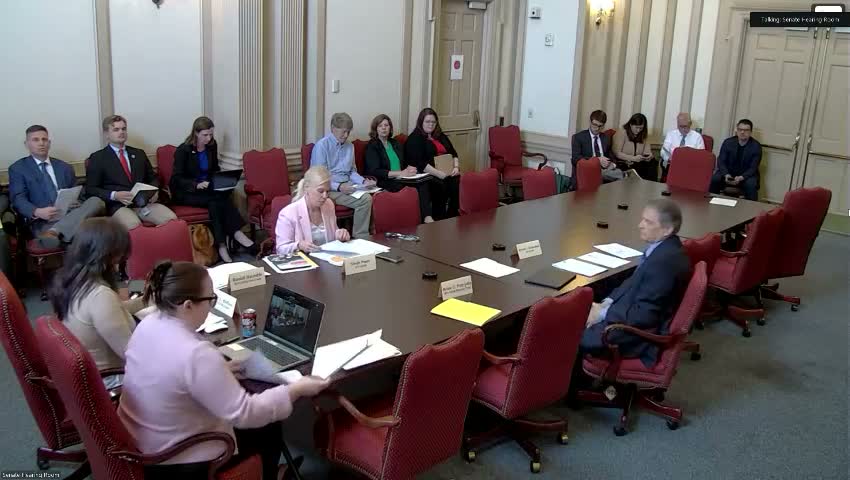
The Senate Legislative Oversight and Sunset Committee heard testimony on House Bill 325, which would allow physician assistants with more than 6,000 hours of postgraduate clinical practice to provide care without a collaborative agreement and would change the profession title to "physician associate." The bill’s sponsor introduced amendments removing a payment-parity provision and clarifying distinctions between practicing with and without a physician and an application process for switching practice areas.
The Medical Society of Delaware opposed the bill as written. "We encourage the inclusion of physicians in the drafting and review of the regulatory language," said Dr. Cindy Sue, a family medicine physician in Milford testifying on behalf of the association. She argued the legislation should tie any expansion in scope to critical needs such as primary care and mental health in federally designated shortage areas and recommended physician presence at council meetings and escalation authority to protect patient safety.
Supporters, including practicing PAs and health systems, said the change would address access gaps. "Allowing PAs to practice at the top of their license improves timely access to care, reduces system strain, and strengthens the healthcare workforce," said Patrick Duffy, a PA and president of the Delaware Academy of Physician Assistants. Travis Fogelman, a physician associate with Christiana Care, described reforms in other states that removed mandatory supervisory agreements and said Delaware’s proposal limits independent authority to experienced clinicians and retains regulatory oversight.
Christina Bryant, vice president of external affairs for the Delaware Healthcare Association, said DHA supports HB325 as a workforce measure tied to the state's participation in the federal Rural Health Transformation Program, while emphasizing that "patient safety and quality of care must remain at the top of mind" as the bill advances. The sponsor noted Delaware received more than $157 million through the RHTP and framed HB325 as part of aligning state law with federal program commitments.
A virtual public commenter, Bethany Mello, a PA who chairs Christiana Care's Advanced Practice Clinician Council, described Delaware's primary care shortage and said the bill would allow clinicians already embedded in communities to expand access. Committee members asked clarifying questions about the amendments and regulatory oversight. No formal committee vote on HB325 was recorded during the hearing.
The committee moved on to other agenda items; the bill will proceed through the committee process where additional amendments and stakeholder discussions may occur.