Get Full Government Meeting Transcripts, Videos, & Alerts Forever!
Get email alerts on the Community Relations topic
No spam. Unsubscribe anytime.
Commission clashes over moving Jewish Solidarity Day to religious holiday; agrees to reopen workshops to public comment with new procedures
Summary
A contentious exchange over changing the city's Jewish Solidarity Day to coincide with Lag B'Omer prompted debate over whether the event would become religious; commissioners ultimately left the previously adopted schedule in place but agreed to administrative follow-ups. Separately, the commission agreed to allow structured public comment during next month's workshop and to pursue stricter memo rules for discussion items.
A heated debate at the Sunny Isles Beach commission on April 20 centered on a proposed amendment to the city's resolution recognizing Jewish Solidarity Day.
Commissioner Joseph asked the commission to amend the previously approved language so that the annual solidarity event would occur on Lag B'Omer each year, rather than on the first Sunday in May, saying the change would allow more observant residents to attend. He told commissioners he had consulted rabbis who provided a 10-year calendar of the holiday's dates and that moving the city event to Lag B'Omer would permit wider participation.
Opponents, including Vice Mayor Viscaro, said tying the city's event to a religious holiday risked making a city-sponsored celebration religious rather than cultural. Commissioners raised specific concerns about traditional observances tied to Lag B'Omer (for example, bonfires) and about whether music and dancing would be allowed during the restricted period between Passover and Shavuot. The city attorney and clerk explained the draft resolution as written would allow the city to pick a date within May each year, which would provide administrative flexibility; commissioners discussed options including amending the resolution, removing the word "annually," or pulling the item entirely from the agenda.
Multiple procedural motions were offered (to remove the item from the agenda, to amend the resolution to remove "annually," and to change the date), several of which failed on roll call. Because no motion passed to change the previously adopted date language, the item remained as previously approved (the first Sunday in May), and staff were asked to provide additional clarification about administrative handling and calendar language.
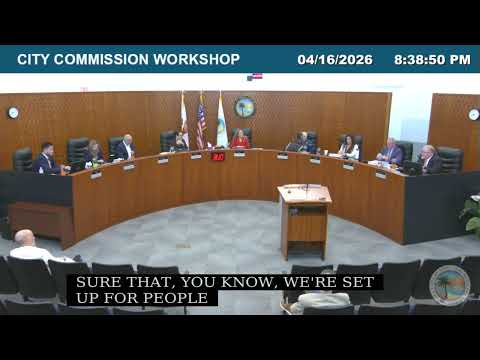
Commissioners also debated restoring public comment during workshop (discussion) items. Several commissioners and members of staff said it had been common practice in earlier years to allow resident input during discussion items; others cautioned that workshops are intended as internal working sessions and that public input would require clearer memos and likely limitations on the number and complexity of discussion items so meetings do not run indefinitely. The city attorney recommended staff and the city clerk draft a consistent procedure to allow public comment without violating the commission's code. The commission reached consensus to pilot structured public input at next month's workshop, with three-minute speaker limits, and to have the clerk, city manager and city attorney meet with commissioners in advance to require more detailed memos for any workshop item.
What happens next: City staff will return with suggested conforming language for the solidarity resolution if needed, and the clerk/attorney will propose a workshop comment procedure and memo standards in time for next month's session.