Get AI Briefings, Transcripts & Alerts on Local & National Government Meetings — Forever.
District official outlines consolidation options as enrollment falls
Loading...
Summary
District staff presented options to consolidate elementary campuses after reporting sustained enrollment declines and a current staffing level about 125% of what enrollment would fund; staff recommended a four‑neighborhood model while cautioning that additional closures risk further enrollment loss.
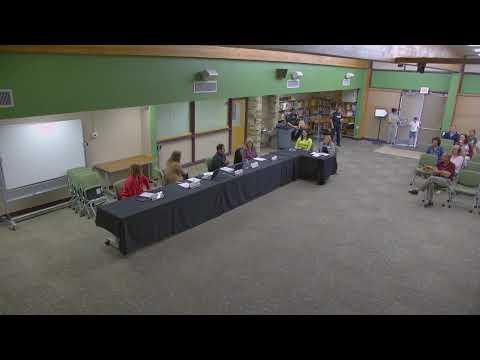
Sierra Vista Unified District staff presented the school board with enrollment, staffing and facility data on Tuesday and recommended a four‑neighborhood consolidation model to address mounting fiscal pressure.
The presentation, led by a district presenter addressed in the meeting as Ms. Ronald, described two enrollment measures the district uses: "actual registration" — parents who have completed enrollment — and "potential registration" — student records left unfinalized by parents. Ms. Ronald said the district bases staffing and funding decisions on actual registration figures and noted that some counts do not include 86 ASU Digital Prep students and 87 preschool students.
"Right now across the district, we have about 61 teachers that are needed. But we currently have about 76 teachers in those same grade levels. We're staffed about 125% of what our enrollment requires," Ms. Ronald said, arguing current staffing, while beneficial for class size, is not financially sustainable if enrollment keeps declining.
The presentation identified patterns affecting enrollment, including an expected ninth‑grade increase from incoming students and larger cohorts born in certain years that progress through the system. Ms. Ronald said the district typically loses between "250 and 300 students" annually from the potential registration pool and that uncertainty about parents finalizing registrations complicates planning.
Ms. Ronald walked the board through two consolidation scenarios the staff analyzed: a four‑neighborhood model that would consolidate Village Meadows into Pueblo Del Sol while keeping four school communities, and a three‑neighborhood model that would close additional campuses. She described classroom capacity and specialized program constraints at sites such as Carmichael, Town and Country and the Joyce Clark campus. On classroom space she said some campus combinations would not fit without using Joyce Clark.
"This model allows us to address those challenges while maintaining four school communities," Ms. Ronald said of the four‑neighborhood option. She added that the three‑neighborhood model could save more money but risked larger enrollment losses and greater instability that could reduce net savings.
Staff emphasized program continuity as a priority: programs developed at Village Meadows — including STEAM and an outdoor garden — would be moved or expanded at receiving campuses rather than eliminated, and staff displayed current openings across the district to show potential placements for affected teachers. Ms. Ronald repeatedly clarified that the placement slides were illustrative and not assignments.
Board members asked questions about campus capacity to absorb students (one asked whether JCMS could take next year’s eighth graders) and technical problems limited remote participation by one board member, Mr. Conroy. Staff offered to provide a full recording and to follow up on specific questions outside the meeting.
Near the end of the transcripted discussion a motion to schedule a follow‑up meeting was made and seconded, though no vote number or final disposition is recorded in the provided transcript.
The board’s next procedural step is to confirm scheduling and gather follow‑up details from staff; staff said they will provide additional data on capacity and placement options for further consideration.