Get AI Briefings, Transcripts & Alerts on Local & National Government Meetings — Forever.
Senate approves 'ask first' restriction on single‑use foodware after heated debate
Summary
Senate Bill 146 requires retail food establishments and delivery services to ask customers whether they want single‑use utensils or condiments; floor debate centered on environmental benefits, enforcement burdens, exemptions for social services, and potential fines; the bill passed following several failed and adopted amendments.
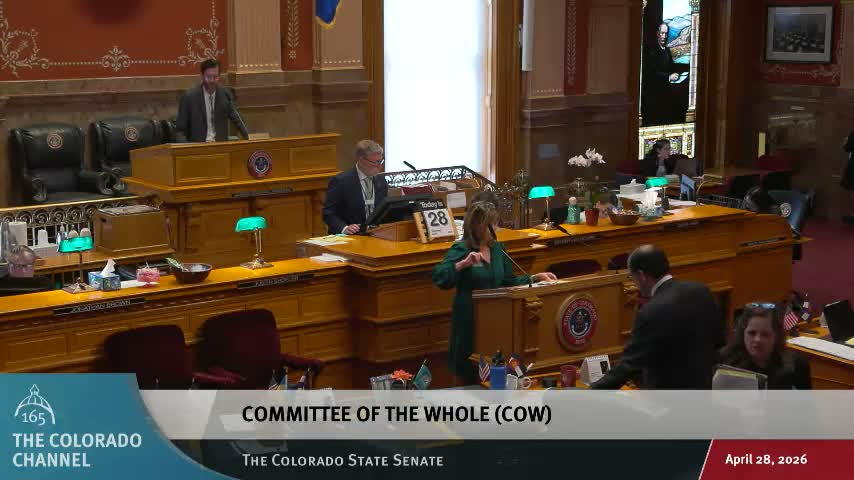
Senate Bill 146, an 'ask first' law limiting automatic distribution of single‑use food‑service ware, passed the Colorado Senate on April 28, 2026 after extended floor debate and multiple amendments.
Sponsor Senator Cutter described the bill as a modest, waste‑reduction measure that simply requires establishments to ask customers if they want single‑use utensils and prevents bundled packages that contain more than one type of item unless requested. "Lots of people already do it," the sponsor said, framing the bill as a small step that will reduce waste and save restaurants money.
Opponents raised practical concerns about operational burdens for small vendors, language accessibility for vendors who do not speak English, and exemptions for social‑service meal programs. Senator Kirkmeyer noted potential contradictions in the bill's text—such as exempting meals provided for vulnerable populations while the legislative declaration calls single‑use impacts an environmental‑justice issue—and questioned enforcement mechanics and penalty amounts described in the draft. Floor amendments sought to remove presumptive language in the legislative declaration (L006), exempt farmers markets (L009), and address event and language concerns (L008, L010); some amendments failed while others were adopted.
Enforcement was described in the bill as primarily a local option with potential civil penalties for repeated violations; senators debated whether that approach would lead to inconsistent enforcement and disproportionate impacts on small vendors. After debate and a small set of adopted amendments, the Senate adopted SB146 on voice vote.
Next steps: the bill will be enrolled and transmitted for final processing; implementation will require guidance to local governments and affected food establishments.