Get Full Government Meeting Transcripts, Videos, & Alerts Forever!
Get email alerts on the Battery Energy Storage Ordinance topic
No spam. Unsubscribe anytime.
Pulaski County planning commission reviews draft battery storage rules, sets special session to seek moratorium extension
Summary
The Pulaski County Advisory Planning Commission reviewed a draft battery energy storage ordinance adapted from the county's solar rules—covering setbacks, fencing, emergency-response plans, monitoring, decommissioning bonds and fees—and scheduled a special session for April 20 to request a six-month moratorium extension from the county commissioners.
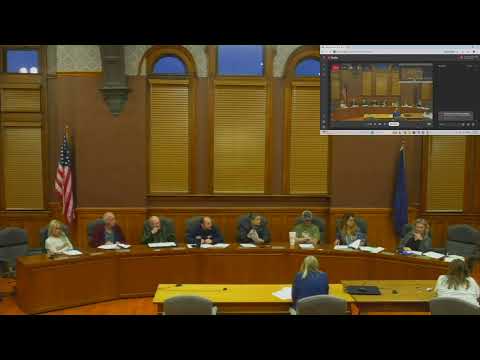
The Pulaski County Advisory Planning Commission on Monday reviewed a draft ordinance that would regulate commercial battery energy storage facilities, including application requirements, setbacks, safety plans, environmental monitoring and decommissioning provisions, and agreed to schedule a special session for April 20 to ask the county commissioners for a moratorium extension.
The presenter (staff member) told the commission the draft is largely adapted from the county's commercial solar ordinance but includes additional battery-specific language and that county and APC attorneys have reviewed the document. "No single battery storage facility footprint shall exceed a total land coverage of 20 acres inclusive of all associated equipment, access roads, and required setbacks as calculated by the USDA, and it shall not cover less than 5 acres," the presenter read from the draft and said the 5-to-20-acre range remains open for discussion.
Why it matters: commissioners and residents argued the draft must balance farmland preservation, public-safety concerns and the county's authority to enforce compliance. Key choices—how large facilities may be, how far fences and components must set back from neighbors and roads, and how to guarantee cleanup and road repairs—will determine whether developers can site such projects in agricultural areas.
The draft requires a detailed permit application or special-exception process with site plans and multiple agreements, including road-use and drainage agreements, an emergency-response and safety plan, a decommissioning agreement, and an annual operations report listing maintenance, repairs and any emergency service calls. The presenter said notification would include mailing to property owners within a quarter mile and additional notice methods "as prescribed by Indiana code 5 3 1."
Setbacks and screening were a major focus. The draft text included a 300-foot fence setback in one provision but also contemplated larger setbacks discussed elsewhere in the draft (members referenced 500 feet for certain components, 1,000 feet for fences, and comparisons to other counties that use a quarter-mile or more). The presenter said staff will add county comparisons to a chart for further review. On screening, an engineer advised using berms in some cases to direct blast effects upward rather than outward; the presenter offered to obtain engineering documentation for the board.
Public-safety measures discussed included compliance with National Electric Code standards, required signage, lockbox access for gates, and emergency-response coordination. The presenter also recommended groundwater and soil monitoring "every couple years, if not annually," and members suggested requiring a subsurface liner at the surface level to reduce contamination risk. Decommissioning language under discussion would impose timeframes for discontinuation or abandonment and require bonds to cover cleanup and road repairs; the presenter proposed a decommissioning bond up to 125% of project value and discussed adding escalation language to account for inflation.
Fees and financial protections were debated. The presenter cited existing commercial solar fees as a model: a $15,000 application fee and $1,000 per megawatt (other counties use a mix of application fees and per-kilowatt or acreage-based charges). Board members recommended pollution-liability insurance and a property-value guarantee; residents urged higher insurance levels for battery projects than for solar.
Public comment: Connie Erlick, a resident who spoke during public comment, urged the commission to treat solar and battery development together when considering farmland impacts and to remove any provision allowing property owners to waive setbacks. "I think that a waiver should not be allowed, especially when it comes to batteries because of the fire hazards and a lot of the unknown, safety hazards," Erlick said. She also pressed the commission to ensure disposal or recycling plans for batteries at end of life and to give building inspectors authority to act immediately if a project poses an imminent danger.
Next steps and schedule: because of public-notice timing and quorum constraints, the presenter said she will file a legal notice and requested a special session and hearing for Monday, April 20, at 08:15 a.m. at the Pulaski County Highway Garage. She also said she would appear before the county commissioners the following Monday to request a six-month extension of the APC's moratorium, if the commission wishes staff to seek that extension. The board generally agreed to the date and asked staff to finalize the comparison chart and cleaned-up draft language for their next review.
Procedural notes: the commission approved the evening's agenda at the start of the meeting and adjourned after public comment. No formal ordinance vote was taken; the discussion was a review of draft language and a set of directions to staff and legal counsel for rewriting and further research.