Get AI Briefings, Transcripts & Alerts on Local & National Government Meetings — Forever.
Legislators press agencies to fix coordination, data and training after animal‑seizure review
Loading...
Summary
A legislative staff review found split authority, fragmented records and staffing gaps in Delaware’s domestic agricultural animal seizure processes; the committee adopted recommendations directing DDA and the Office of Animal Welfare to develop MOUs, align data systems and address training and vendor policies, with updates due January 2027.
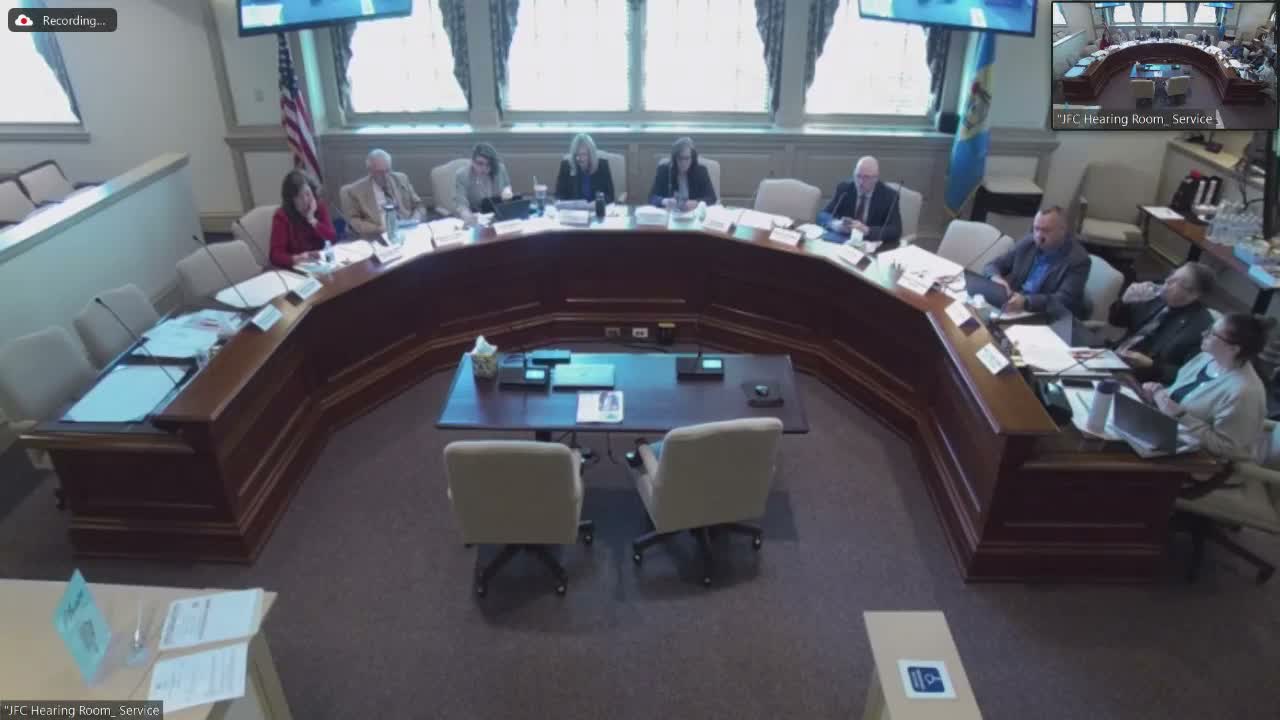
The Joint Legislative Oversight and Sunset Committee adopted a package of staff recommendations after a focused review found persistent coordination, data and training problems in how Delaware handles domestic agricultural animal seizures.
Amanda Wade McAtee, the committee analyst, told lawmakers the review (covering January 2021 through March 2025) identified a split statutory framework — animal welfare rules sit in Title 16, Chapter 30F while livestock‑at‑large rules are in Title 3, Chapter 77 — that leaves ambiguity over responsibilities during seizure cases. "The objective of this review is to evaluate how animal welfare cases involving domestic agricultural animals are handled, specifically cases involving imminent danger and seizure," McAtee said.
Staff summarized core findings: statutory gaps and unclear authority between the Department of Agriculture (DDA) and the Office of Animal Welfare (OAW); inconsistent investigation and enforcement procedures at DDA; multiple, nonaligned recordkeeping systems that impede information sharing; limited public reporting and absence of standard vendor selection and oversight procedures; and high staff turnover that affects continuity.
Agency representatives responded in the hearing. OAW Director Christina Modioschi said the agency supports the recommendations and will work with DDA on implementation. "We support the recommendations for our agency and look forward to working with DDA on providing any support that might be needed," Modioschi said. DDA’s state veterinarian, Karen Lopez, said when DDA absorbed the livestock welfare responsibilities the department did not receive a dedicated appropriation: "When we absorbed the livestock welfare program back in 2015, there was no appropriation made for the program," Lopez said, and added that the agency has limited vendor options and a single primary sheltering facility in Sussex County.
Chief Mark Tobin of Delaware Animal Services described the partnership role: his office provides law‑enforcement expertise — including warrants and court testimony — while DDA supplies livestock expertise. "Their expertise is provided in what's wrong with the livestock. We help with... when we go to court, because we testify in all the courts already to help with that," Tobin said.
On the committee floor, members backed staff recommendations to clarify statutory authority, require a formal memorandum of understanding (MOU) between DDA and OAW, reimplement and align CAD and radio systems so agencies share case information, standardize data fields and case numbering, develop vendor selection and oversight processes including conflict‑of‑interest protocols, and review classifications and compensation for investigator and support roles. The committee added that proposed training coordination should be incorporated into the MOU rather than imposing full OAW training on DDA supervisory staff.
Votes were recorded repeatedly by roll call as recommendations were adopted; several recommendations passed on recorded tallies of 9 yes and 1 absent. Agencies were directed to report progress to the committee in January 2027.
The meeting included a contentious exchange when one committee member sharply criticized OAW’s conduct and alleged improper practices; members used that moment to rescind and then amend an earlier MOU recommendation so the MOU explicitly include training coordination and oversight language. No public commenters spoke at the meeting; written comments remain accepted via the committee email.
Next steps: DDA and OAW will develop the MOU, coordinate on CAD alignment and data standardization, consider classification and pay reviews and return to JLSC with progress reports in January 2027.