Get Full Government Meeting Transcripts, Videos, & Alerts Forever!
Get email alerts on the Infrastructure topic
No spam. Unsubscribe anytime.
Task force flags water, utilities and zoning as top barriers to development in Yankton County
Summary
Members highlighted water availability, utility capacity and site-readiness gaps—citing a rezone example and costly street work—while nonprofit and regional partners said they can help assemble land and funding to make shovel-ready sites.
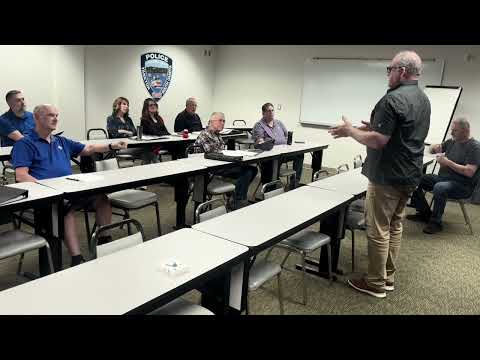
Yankton County’s growth task force spent a significant portion of its meeting on infrastructure and site-readiness, identifying rural water capacity, sewer, roads and easements as recurring bottlenecks that delay or derail development.
A rural-water representative described repeated cases where developers assumed water availability only to learn later that mains lacked capacity or that improvements would be at the developer’s expense. The Drotsman addition was cited as an example in which a developer waited roughly two years to determine water availability. The representative said providing developers with a clear utility-capacity map and early confirmation of serviceability would reduce costly iterations and delays.
Task force members pointed to a recent county rezone—changing a parcel from 5-acre rural lots to smaller-lot zoning to make it developable on a property associated with a landowner identified in discussion as 'Bob Law.' The rezone was described as proactive help from county staff to make a site ready for housing, but members warned such preparation can impose significant off-site costs; one participant said completing a street adjacent to a parcel could cost "$1,000,000 to $2,000,000."
Thrive, a local nonprofit, described its role acquiring and holding land for strategic development and helping fund feasibility studies; District 3, a 15-county regional association, said it offers grant-writing, revolving loan funds and zoning expertise that local developers and the county could use.
Members recommended several near-term steps: require developers to submit basic utility and engineering plans early in the review process, publish up-to-date utility maps (KMZ files were discussed), and identify shovel-ready parcels where infrastructure gaps are minimal or funding solutions exist. The task force did not adopt formal rules or require new fees at this meeting; members asked staff and regional partners to explore practical ways to provide utility-capacity information and to compile a short list of potentially shovel-ready sites.
No formal vote or binding action was recorded.